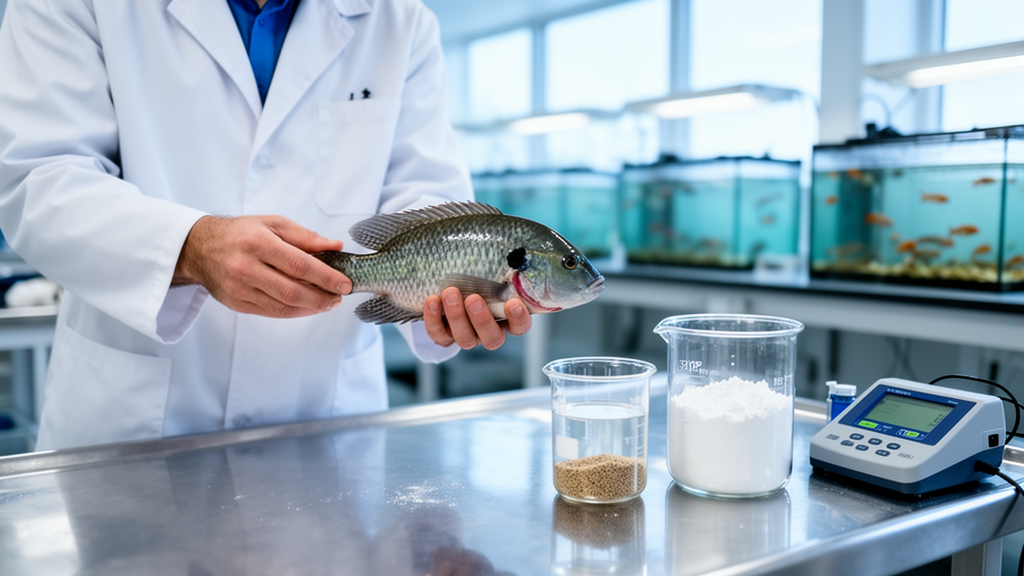
A 30-day feeding trial in Brazil has found that a dietary blend combining a prebiotic, a probiotic, and organic acids measurably changed the physiology of Nile tilapia juveniles, shifting digestive enzyme activity, antioxidant defenses, and blood chemistry, even though the fish grew no faster than those on a standard commercial diet. The study, published in the journal Aquaculture Science and Management, tested the blend at four increasing inclusion levels in juvenile tilapia and reported that the most striking responses appeared in lipase activity and blood cholesterol, while growth performance and the microscopic structure of the intestine, liver, and muscle remained essentially untouched.
The research team, led by Ana Paula Aparecida Wisenfad dos Reis and Dacley Hertes Neu, conducted the experiment in Dourados, Mato Grosso do Sul, with approval from the institutional animal ethics committee under protocol number 10/2022. They distributed 150 juvenile Nile tilapia, each weighing on average 44.89 grams and measuring 12.88 centimeters, across 15 tanks of 200 liters arranged in a water recirculation system. Each tank held ten fish, and the design assigned five treatments with three replicate tanks each. Fish were fed four times daily until apparent satiety, and water quality was monitored weekly, with average temperature of 28.40 degrees Celsius, pH of 7.66, and dissolved oxygen of 5.50 milligrams per liter, all within recommended ranges for the species.
The experimental diets were built on a commercial feed containing 35 percent crude protein, purchased from Cocamar and enriched manually with the additive blend to preserve bacterial survival. The blend itself combined three components: a prebiotic supplied as ActiveMOS, a yeast-derived product containing mannan oligosaccharides and beta-glucans; a probiotic supplied as MultAqua Plus, a mixture of eight bacterial strains including Bacillus subtilis, Bifidobacterium bifidum, Enterococcus faecium, and several Lactobacillus species, each at minimum concentrations of 5.00 times 10 to the ninth colony-forming units per gram; and an organic acid product called BACTI-NIL AQUA, which contains formic acid, ammonium formate, propionic acid, sorbic acid, caprylic acid, and capric acid. The prebiotic and probiotic together made up 60 percent of the blend, with organic acids accounting for the remaining 40 percent. Five dietary levels were prepared: a control with no additive, and four treatments at 2.50, 5.00, 7.50, and 10.0 grams of blend per kilogram of feed.
At the end of the trial, the researchers measured a broad suite of performance variables, including weight gain, biomass gain, feed conversion, daily weight gain, specific growth rate, visceral fat index, hepatosomatic index, intestinal quotient, and survival. None of these differed significantly among the five dietary groups. The authors note that the juveniles were not exposed to significant stressors such as high stocking density, reduced dietary protein, or poor water quality, conditions that might have revealed benefits of the additives more clearly. They also point out that juveniles are generally less susceptible to stressors than fry, the life stage where such additives are most commonly deployed, and that previous studies with individual prebiotics, probiotics, or organic acids in juvenile tilapia have similarly reported no performance improvements.
Where the blend did make a difference was in enzyme activity. Lipase activity was significantly higher in fish fed the 10.0 gram per kilogram diet compared with those fed 5.00 grams per kilogram, while fish receiving 0.00, 2.50, and 7.50 grams per kilogram showed intermediate values that did not differ significantly from either extreme. Alkaline phosphatase activity was consistently higher in every additive-supplemented group than in the control, regardless of dose. Alanine aminotransferase activity was higher in fish fed 5.00 grams per kilogram compared with those fed 7.50 grams per kilogram, and superoxide dismutase activity was elevated in fish receiving 2.50 and 10.0 grams per kilogram relative to the control, 5.00, and 7.50 gram groups. Amylase, protease, aspartate aminotransferase, and catalase activities showed no statistical differences among treatments.
The authors interpret the lipase response in light of the organic acid component. Organic acids acidify the gastrointestinal environment, and diet pH decreased with increasing levels of blend inclusion in the study, a relationship the researchers measured directly. They suggest this acidification enhances lipase activity, though they caution that it remains unclear whether the increase results from enzyme secretion into the intestinal lumen or from microbial activity within it. This uncertainty, they note, may help explain why amylase and protease activities did not change. The rise in alkaline phosphatase across all supplemented groups is an effect the authors associate with symbiotic benefits, although their data also indicated a moderate negative correlation between alkaline phosphatase activity and intestinal villus length, suggesting the enzyme increase was not directly tied to the villus structure where the enzyme acts.
Blood biochemistry also shifted. Cholesterol levels were significantly higher in fish fed the control diet compared with all other treatments, meaning every level of the blend was associated with lower circulating cholesterol. Triglyceride levels peaked in fish fed 7.50 grams per kilogram and were lowest in those fed 2.50 grams per kilogram, with the control, 5.00, and 10.0 gram groups showing intermediate values. Creatinine was higher in fish fed 2.50 grams per kilogram compared with the control and 5.00 gram groups, while glucose showed no differences. The authors propose that the cholesterol reduction may reflect decreased synthesis of the metabolite and increased conversion into bile salts, and they cite evidence that probiotic bacteria can reduce serum lipids through production of short-chain fatty acids that inhibit hepatic cholesterol synthesis or redistribute cholesterol from plasma to the liver. They also note, however, that the blend levels used were insufficient to alter the overall lipid profile of the fish, and that tilapia in the study efficiently utilized dietary lipids without accumulating triglycerides.
Histological examination told a quieter story. The frequency distribution of muscle fibers showed no significant differences across any diameter class, and liver histomorphometry revealed no changes in hepatocyte nucleus diameter, hepatocyte diameter, hepatocyte area, or nucleus area among dietary groups. Intestinal variables, including villus length, width, and area, were likewise unchanged. The authors conclude from the liver enzyme patterns that the immune system was maintained across all treatments, possibly because the animals faced no challenge, and that the absence of histological differences indicates the fish remained healthy throughout the study period.
To integrate these responses, the team applied principal components analysis, a multivariate technique that explores the correlation structure among variables. The first two components together accounted for 63.50 percent of the total variance. The analysis showed that fish fed the control diet and those fed 7.50 grams per kilogram separated more distinctly from the intermediate treatment groups, and that the variables driving this separation were cholesterol, alanine aminotransferase, body weight gain, and alkaline phosphatase, each with absolute loading values above 0.68. The authors suggest that dietary supplementation induced subtle multivariate shifts in performance and physiology that univariate statistical tests alone did not detect, and they position the approach as a potential management tool for evaluating feed additives beyond growth alone.
The study’s conclusions are deliberately measured. Dietary supplementation with the blend modulated specific physiological parameters in Nile tilapia juveniles, particularly biochemical markers and enzyme activities related to lipid metabolism and oxidative responses, while growth performance and tissue histology remained unaffected. The authors emphasize the need for additional research on additive blends, particularly exploring intermediate dosages, alternative ratios of symbiotic components to organic acids, and expanded analyses including markers of oxidative damage such as malondialdehyde and reactive oxygen species, along with the expression of anti-inflammatory genes. For aquaculture producers considering functional feed additives, the findings suggest that such blends may influence metabolic processes in ways that standard growth metrics do not capture, and that a fuller picture of their value will require longer trials, challenge conditions, and a wider panel of physiological measurements.
Subject of Research: Effects of a combined prebiotic, probiotic, and organic acid feed additive on Nile tilapia juveniles
Article Title: A dietary blend of prebiotic, probiotic, and organic acids has been demonstrated to be beneficial for Nile tilapia juveNiles
Article References: dos Reis, A. P. A. W., Godoy, A. C., Lins-Taylor, L., Scardua, M. P., Coneglian, J. G. C., Zanella, J., Ferreira, D. D., de Oliveira, D. F. R., Amorim, K. M. D. O., Honorato, C. A., & Neu, D. H. (2026). A dietary blend of prebiotic, probiotic, and organic acids has been demonstrated to be beneficial for Nile tilapia juveNiles. Aquaculture Science and Management, 3(1), Article 4. https://doi.org/10.1186/s44365-025-00030-6
Image Credits: AI Generated
DOI: 10.1186/s44365-025-00030-6
Keywords: Nile tilapia, aquaculture, feed additives, prebiotics, probiotics, organic acids, digestive enzymes, blood biochemistry, oxidative stress, fish nutrition, functional feeds, histology
News Source: Daisy Hatcher. (October 30, 2026). Prebiotic, Probiotic, and Organic Acid Blend Modulates Tilapia Physiology Without Boosting Growth. Scienmag.