


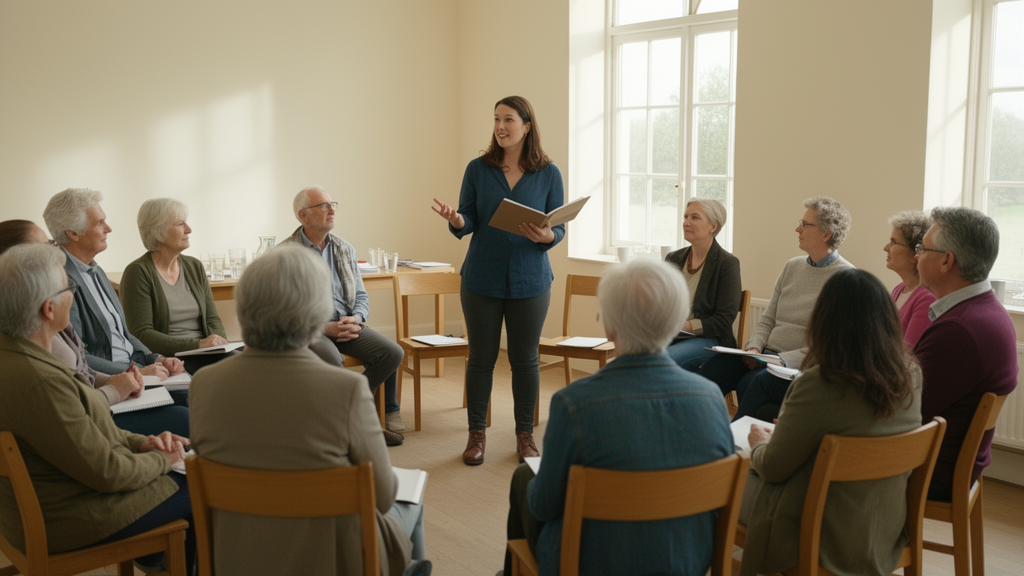
Sexual violence against older adults remains a neglected area of prevention work, and the professionals best placed to change that say targeted training is urgently needed. A new study published in BMC Public Health on 29 October 2026 explored what practitioners who serve older adults or survivors of sexual violence think such training should look like, and their recommendations point to a clear gap in the field.
The study, led by Michelle D. Hand and Madison Shaw, set out to examine training and prevention needs among practitioners, along with their suggestions for refining a bystander training designed to prevent and address sexual violence in later life. The researchers conducted one interview and two focus groups with 16 practitioners who work either with older adults or with survivors of sexual violence. The sessions were recorded, transcribed, and analyzed thematically to identify recurring patterns in what participants said.
Six themes emerged from the analysis. Participants described outreach, representation, and training in an area they characterized as “just neglected.” They also emphasized that cultural, place-based, and generational norms shape stigma around sexual violence in later life, and that stereotypes about older adults and sexual violence must be challenged. A further theme centered on education about the “silent signs” of sexual violence in later life, which participants described as critical. The remaining themes addressed how homelessness, substance use, and domestic violence overlap with sexual violence across the lifespan, and the potential for a virtual training to bridge gaps in knowledge.
According to the study’s background, no known bystander training on sexual violence in later life had been identified prior to this research. The practitioners in this study broadly endorsed the need for such a program, and an online format was largely preferred across the participant dataset. Participants stressed that the training should be interactive, engaging, and offer multiple prompts for reflection.
The authors highlight as a unique strength of the study the well-rounded nature of the recommendations provided by practitioners who work primarily with older adults or with survivors. All of the professionals involved serve at-risk older adults and survivors, yet they do not generally otherwise collaborate to inform prevention. All participants emphasized that a bystander training is expressly needed both for practitioners who serve older adults and for those who serve survivors, in order to prevent and address sexual violence in later life. The findings offer a detailed practitioner-grounded roadmap for developing such training, while the study itself stops short of evaluating any intervention; its contribution lies in documenting what frontline professionals say is missing and what a future training should include.
Subject of Research: Practitioner recommendations for developing bystander training to prevent sexual violence against older adults
Article Title: Closing the training gap: a thematic analysis of service provider recommendations for preventing sexual violence against older adults
Article References: Hand, M. D., & Shaw, M. (2026). Closing the training gap: a thematic analysis of service provider recommendations for preventing sexual violence against older adults. BMC Public Health. https://doi.org/10.1186/s12889-026-29983-6
Image Credits: AI Generated
DOI: 10.1186/s12889-026-29983-6
Keywords: sexual violence, older adults, bystander training, thematic analysis, practitioners, prevention, focus groups, stigma, online training, BMC Public Health, Closing, training
News Source: Ophelia Keating. (October 30, 2026). Practitioners Call for Bystander Training on Sexual Violence Against Older Adults. Scienmag.



