


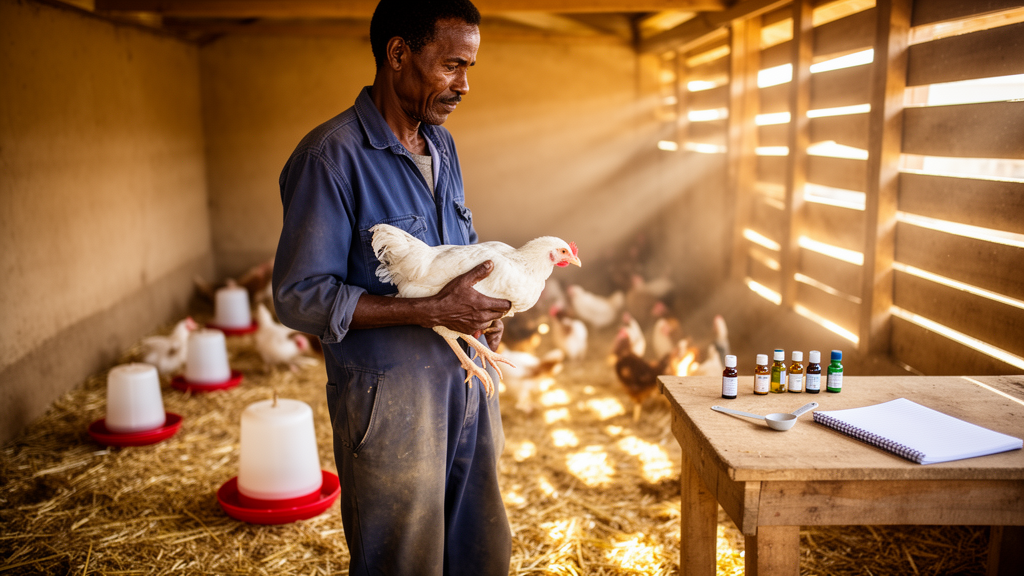
A survey of poultry producers in Hossaina town, in central Ethiopia, has found that most of them hold poor knowledge, negative attitudes and unsafe practices around antimicrobial use and antimicrobial resistance. The study, a questionnaire-based cross-sectional survey conducted between October 2023 and June 2024, assessed 36 individuals drawn from 19 conventional poultry farms in the town. Half of the participants, 50.0 percent, demonstrated poor knowledge about antimicrobial use and resistance, 47.22 percent showed poor attitudes, and 41.60 percent reported poor practices. Only a small minority performed well across the three domains: 22.20 percent scored as having good knowledge, 19.44 percent good attitudes, and 25 percent good practices. The findings, published in the journal Food Safety and Risk, offer a detailed baseline picture of how antimicrobials are understood and handled in a rapidly growing poultry-producing area that had previously been little studied.
The research team, led by Habtamu Endale Tilahun and Debele Abdeta Efa, collected data through face-to-face interviews with the chief managers of the selected farms. A structured questionnaire of 20 questions probed knowledge, attitudes and practices related to drug use and resistance, comprising 12 knowledge questions, 7 attitude questions and 11 practice questions. Correct answers on yes/no items received one point, incorrect answers zero; three-option questions were scored 2, 1 and 0 for correct, neutral and incorrect responses; and five-point Likert items were scored from 1 for strongly disagree to 5 for strongly agree. All scores were summed, converted into discrete variables and scaled to a percentage out of 100, with 100 percent representing the highest possible score. Respondents were then categorised using a slightly adjusted version of Bloom’s original cutoff points: knowledge was classed as good at 76 to 100 percent, moderate at 51 to 75 percent and poor below 50 percent, while attitudes and practices were rated good at 80 to 100 percent, fair at 60 to 79 percent and poor below 60 percent.
The survey population was deliberately defined. The study population consisted of 57 individuals involved in poultry production across the 19 conventional poultry farms, and the required sample size was calculated using Cochran’s formula for proportions, assuming a 5 percent margin of error and a 95 percent confidence level. Because the total population of 57 was finite and below 10,000, a finite population correction was applied, yielding a required sample of 36 respondents. Farms were selected based on farmers’ willingness to participate, and respondents were chosen through proportional-probability sampling according to the number of respondents across each farm. The questionnaire was prepared in English and translated into the local languages, Amharic and Hadiyyisa, during the interviews. Internal consistency of the three domains was assessed with Cronbach’s alpha, returning values of 0.847 for knowledge, 0.872 for attitude and 0.780 for practice, all above the 0.70 threshold considered acceptable.
The demographic profile of the respondents helps explain some of the patterns the survey uncovered. Of the 36 participants, who included farm owners, chief managers and permanent employees, the majority, 80.6 percent, were male, and most were aged 40 years or older. Forty percent had high school education, only 11.1 percent held a university degree, and 8.3 percent were illiterate. Most respondents, 44.4 percent, had three years of experience in poultry production, while 16.7 percent had one year. Some 67.7 percent of producers were engaged in farming layer chickens, and regarding farm size, 52.8 percent of respondents raised fewer than 1,000 chickens while 22.2 percent raised 1,500 or more. Notably, three-quarters of the poultry producers, 75 percent, had no prior information, exposure or training related to veterinary practices or poultry production.
The knowledge gaps documented in the survey were substantial. A majority of respondents, 83.3 percent, were unaware of appropriate treatments for common chicken diseases. Understanding of how antimicrobials should be administered was inconsistent: while 41.7 percent of respondents recognised that different antimicrobials require specific routes of administration that influence efficacy, a considerable proportion, 36.1 percent, held the incorrect understanding that the route of administration does not affect treatment outcomes. Awareness of antimicrobial resistance itself was similarly shaky, with half of the participants unfamiliar with the concept. Although 36.1 percent correctly responded that prolonged use of antimicrobials in poultry contributes to the emergence of resistance, fewer respondents, 55.6 percent combined agreement, recognised the role of sub-therapeutic dosing in driving resistance, suggesting a partial but incomplete understanding of key risk factors. Notably, none of the respondents were aware of the broader drivers of antimicrobial resistance, a gap the authors describe as critical.
Attitude and practice responses reinforced the pattern. Approximately 17 respondents, 47.2 percent, disagreed and 8 respondents, 22.2 percent, strongly disagreed that determining the cause of disease is necessary before prescribing antimicrobials for sick chickens. Around 20 respondents, 55.6 percent, disagreed and 7, or 19.4 percent, strongly disagreed that frequent non-therapeutic use of antimicrobials can lead to resistance. On a more encouraging note, about 4 respondents, 11.1 percent, strongly agreed and 12, or 33.3 percent, agreed that using antimicrobials to promote growth and improve egg production can cause resistance. In terms of practice, approximately 9 respondents, 25.0 percent, purchased antimicrobials for their farms from the market and 14, or 38.9 percent, from animal health workers who visited them. Some 23 respondents, 63.9 percent, stated that they treated sick chickens out of necessity. Around 5 respondents, 13.9 percent, strongly agreed and 8, or 22.2 percent, agreed that sharing farm utensils and equipment can contribute to the spread of antimicrobial-resistant bacteria, and 17 respondents, 47.2 percent, properly disposed of unused and expired antimicrobials.
Statistical analysis revealed which factors shaped these scores. Data were entered into Microsoft Excel and analysed using STATA version 14.0, with logistic regression used to evaluate associations between sociodemographic variables and knowledge, attitude and practice scores at a significance threshold of 0.05, and Pearson’s pairwise correlation used to examine relationships among the three domains. Educational level had a statistically significant impact on knowledge, attitudes and practices, and the effect was graded: respondents with elementary education showed no statistically significant difference in knowledge, attitude or practice compared with those with no formal education, and high school education was also not significantly associated with the scores. In contrast, vocational education was significantly associated with higher knowledge, attitude and practice scores, and the strongest association was observed among university-educated respondents, who had significantly higher scores on all three domains compared with those with no formal education. The type of chickens raised also had a significant effect, with producers involved in layer farming showing notably higher scores than those raising broilers, a difference the authors attribute to the longer production cycle in layer farming, which offers more opportunities to interact with veterinary services and access information about antimicrobials. Receiving training on antimicrobial use and resistance, by contrast, did not have a statistically significant impact, indicating that training alone may not be sufficient to improve these aspects.
The correlations among the three domains were consistently positive and statistically significant. Knowledge correlated with attitude at r = 0.5506 with p = 0.0005, knowledge correlated with practice at r = 0.6420 with p < 0.0001, and attitude correlated with practice at r = 0.5337 with p = 0.0008. The authors interpret the particularly strong connection between knowledge and practice as indicating that knowledge is a key factor shaping producers’ behaviour on antimicrobial utilisation, including decisions about drug administration, dosage and treatment methods, while the positive correlation between attitude and practice emphasises the role of behavioural perceptions and risk awareness in promoting responsible use. These results, they note, support behavioural theories suggesting that sufficient knowledge can positively influence attitudes, which then lead to improved practices, and they align with previous studies of antimicrobial stewardship in livestock production that linked increased awareness and education to more responsible antimicrobial use.
The authors situate these findings within a broader public health and food safety context. Antimicrobial misuse in animals raised for food can intensify the selection pressure that drives bacteria to become resistant, and in Ethiopia weak enforcement of veterinary drug regulations, easy access to antimicrobials without prescriptions, limited diagnostic capabilities and insufficient stewardship programs compound the problem. Antimicrobial misuse can also lead to the bioaccumulation of antibiotic residues in foods of animal origin, exposing consumers to allergic and toxic reactions. Against that backdrop, the authors conclude that poultry producers in the study area exhibited poor knowledge, attitudes and practices regarding antimicrobial use and resistance, underscoring the need for comprehensive regulatory measures and integrated, evidence-based interventions that go beyond conventional training to address structural, educational and behavioural drivers of antimicrobial misuse. They recommend enhancing farmer education, improving veterinary service access and enforcing responsible use policies through integrated One Health stewardship programs, and they advise further research with larger sample sizes and mixed methods to assess the effectiveness of interventions. The study, they stress, provides locally sourced baseline evidence from a setting that has been little studied, and its cross-sectional design means it captures a snapshot of awareness and behaviour at a single point in time rather than change over time.
Subject of Research: A cross-sectional survey of knowledge, attitudes and practices regarding antimicrobial use and resistance among conventional poultry producers in Hossaina town, central Ethiopia.
Article Title: Antimicrobial use and resistance awareness among conventional poultry producers in Hossaina town, Central Ethiopia
Article References: Tilahun, H. E., & Efa, D. A. (2026). Antimicrobial use and resistance awareness among conventional poultry producers in Hossaina town, Central Ethiopia. Food Safety and Risk, 13(1), Article 30. https://doi.org/10.1186/s40550-026-00156-y
Image Credits: AI Generated
DOI: 10.1186/s40550-026-00156-y
Keywords: antimicrobial resistance, antimicrobial use, poultry farming, Ethiopia, knowledge attitudes practices, food safety, One Health, cross-sectional survey, farmer education, veterinary public health, Hossaina town, antimicrobial stewardship
News Source: William Thompson. (October 30, 2026). Poultry Farmers in Central Ethiopia Show Poor Awareness of Antimicrobial Resistance. Scienmag.



