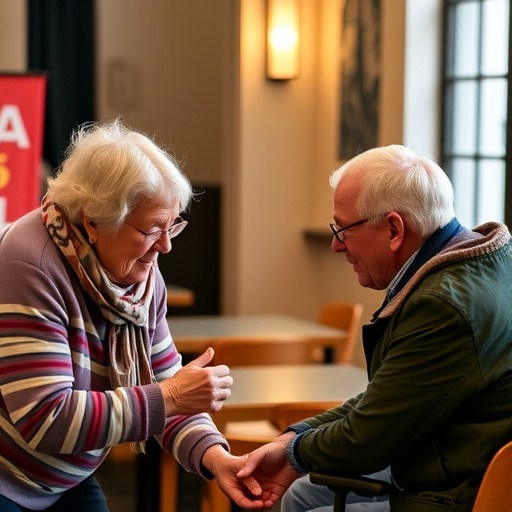
In a groundbreaking mixed-methods study from the Netherlands, researchers have unveiled compelling evidence showing the transformative impact of reablement programs on the quality of life for older adults. The study meticulously explores how tailored interventions aimed at re-empowering elderly individuals can lead to meaningful and lasting positive changes. This research not only contributes to the expanding field of geriatric care but also champions a shift in how societies approach aging populations, focusing on autonomy, functional abilities, and holistic wellbeing.
Reablement, fundamentally, is a rehabilitative strategy designed to enhance an older person’s capacity to manage daily activities independently by targeting physical, cognitive, and social domains. Unlike traditional care models centered on maintenance, reablement emphasizes activation and skill re-acquisition. The Dutch study uncovers the extent to which this proactive program can alter the trajectory of aging, moving away from decline and towards regained competencies and renewed confidence.
The study applied a rigorous mixed-methods approach, integrating quantitative metrics with qualitative insights, providing a comprehensive understanding of the intervention’s impact. This methodological duality allowed the researchers to capture not only measurable improvements in functionality but also the subjective experiences of participants, highlighting nuanced shifts in psychological and social dimensions. Such an approach is vital in geriatric research, as aging encompasses complex biopsychosocial factors rather than purely biomedical phenomena.
Key findings revealed statistically and clinically significant enhancements in participants’ abilities to perform activities of daily living (ADLs), as well as instrumental activities of daily living (IADLs). These outcomes suggest that reablement effectively restores autonomy in a manner that standard care methods do not. Importantly, the program showed efficacy in fostering both short-term improvements and sustained functional gains, suggesting a durable impact rather than transient benefits.
Psychologically, the study reports significant enhancements in participants’ self-efficacy and empowerment. Elderly individuals involved in the reablement program articulated a greater sense of control over their lives and health, which is essential for mental wellbeing and motivation to maintain gains achieved during the intervention. This aligns with recent gerontological theories positing that perceived agency is critical to successful aging.
Qualitative interviews supplemented the quantitative data by elucidating personal narratives that underscore the program’s holistic benefits. Participants described not only physical improvements but also enriched social interactions and heightened feelings of inclusion. These reports illuminate how reablement catalyzes a positive feedback loop where physical health improvements lead to increased social participation, which in turn reinforces overall wellbeing.
Technically, the program incorporated multidisciplinary teams comprising physiotherapists, occupational therapists, nurses, and social workers, each contributing domain-specific expertise. This integrated model ensured that interventions were customized to address individual needs, balancing physical therapy with social support and cognitive stimulation. The multidisciplinary approach is a critical innovation, reflecting modern trends in complex care management for aging populations.
The sustainability of results was another remarkable aspect of the research. Follow-up assessments indicated that functional improvements persisted beyond the active phase of the program, suggesting that the skills and behaviors learned became internalized by participants. This finding is crucial in the context of healthcare resource allocation, as it supports reablement not only as an effective but also economically sustainable strategy.
From a technical perspective, the study deployed validated tools such as the Barthel Index and the Nottingham Extended Activities of Daily Living scale to quantitatively assess changes in functional status. The psychometric robustness of these instruments lends credibility to the reported improvements. Moreover, the integration of qualitative thematic analysis methodologies enriched the data interpretation by providing contextual depth.
A significant technical advancement highlighted by the study pertains to the use of personalized goal-setting frameworks within the reablement program. By leveraging participant-defined objectives, the intervention aligns with motivational theories and increases engagement fidelity. This participant-centered paradigm represents a shift towards precision care, adapting rehabilitation to the unique priorities and challenges faced by each individual.
The relevance of this research transcends national boundaries, addressing universal challenges posed by aging populations worldwide. As demographic shifts swell the proportion of elderly in many societies, interventions like reablement could revolutionize healthcare paradigms by shifting focus from dependency management to functional restoration and prevention. Consequently, policymakers and healthcare providers stand to benefit tremendously by integrating such models into standard care practices.
Furthermore, the study’s implications extend into the realm of technological innovation. The positive outcomes pave the way for integrating digital health tools, such as wearable sensors and tele-rehabilitation, into reablement programs. Such technological integration could facilitate continuous monitoring, personalized feedback, and remote support, significantly amplifying program reach and efficiency.
Despite its promising findings, the study acknowledges limitations, including the modest sample size typical of feasibility studies and potential selection biases, since participants voluntarily engaged in the program. Future research directions emphasized by the authors include large-scale randomized controlled trials to robustly confirm efficacy and cost-effectiveness, as well as exploration of diverse cultural and healthcare settings to assess generalizability.
The research team also called attention to the importance of training and ongoing education for multidisciplinary teams delivering reablement. The complexity of care necessitates not only technical skills but also empathetic communication and motivational interviewing capabilities to effectively inspire and support elderly clients throughout the reablement journey.
In conclusion, this Dutch mixed-methods feasibility study compellingly demonstrates that reablement programs can induce profound and sustainable positive changes in the lives of older adults. By enhancing physical function, psychological resilience, and social engagement, such interventions represent an evolution in geriatric care that aligns with contemporary priorities of autonomy, dignity, and quality of life. The findings mark a pivotal step towards universal implementation of evidence-based reablement, holding promise to transform aging from a period of inevitable decline into a chapter of renewed capability and fulfillment.
Subject of Research: Positive changes following a reablement program designed for older adults in the Netherlands.
Article Title: Positive changes after a reablement program for older people in the Netherlands: a mixed-methods feasibility study.
Article References:
Branderhorst-Pruijssers, E., Metzelthin, S., Mouchaers, I. et al. Positive changes after a reablement program for older people in the Netherlands: a mixed-methods feasibility study. BMC Geriatr (2026). https://doi.org/10.1186/s12877-026-07460-4
Image Credits: AI Generated
DOI: 10.1186/s12877-026-07460-4
Keywords: reablement, older adults, functional independence, geriatric rehabilitation, mixed-methods study, quality of life, multidisciplinary care, aging populations, autonomy, physical function
Tags: activation-based elderly care modelsautonomy in elderly care interventionscognitive and social reablement strategiesDutch reablement program benefits for elderlyenhancing older adults’ functional abilitiesholistic wellbeing in aging populationsmixed-methods study on geriatric carepositive impacts of reablement on agingpsychological effects of reablement programsquality of life improvements in geriatric carere-empowering elderly through rehabilitationsocial dimensions of aging and reablement