Understanding a species’ distribution, differentiation and the factors affecting its genetic diversity is important for sustainable conservation and effective management, as well as rational utilization of a species’ germplasm.
Understanding a species’ distribution, differentiation and the factors affecting its genetic diversity is important for sustainable conservation and effective management, as well as rational utilization of a species’ germplasm.
Genetic diversity, a key component of biodiversity, provides essential information on adaptation and the evolutionary capacity of plant species. Notably, the genetic diversity of forest trees is severely affected by increased harvesting (nuts, barks, timbers, etc.) and human interference (overexploitation, overgrazing, etc.), resulting in habitat fragmentation and considerable reduction of forestland area.
Juglans regia L. (Juglandaceae), popularly known as the common walnut, is a deciduous tree species typically distributed and cultivated in mountainous areas across subtropical and temperate regions, from the Balkans eastward to Asia, including China, Iran, Kazakhstan, Afghanistan and Pakistan. Presently, J. regia is cultivated in more than 60 countries, with China being the leading producer (with 31% of the total harvested) (FAOSTAT, 2023). Walnut is also one of the top three most-consumed nuts in the world.
Despite walnut being one of the top three most-consumed nuts in the world, no comprehensive evaluation of walnut tree population genetics has been undertaken. This is particularly true for walnuts in Afghanistan and the Xinjiang Autonomous Region of China.
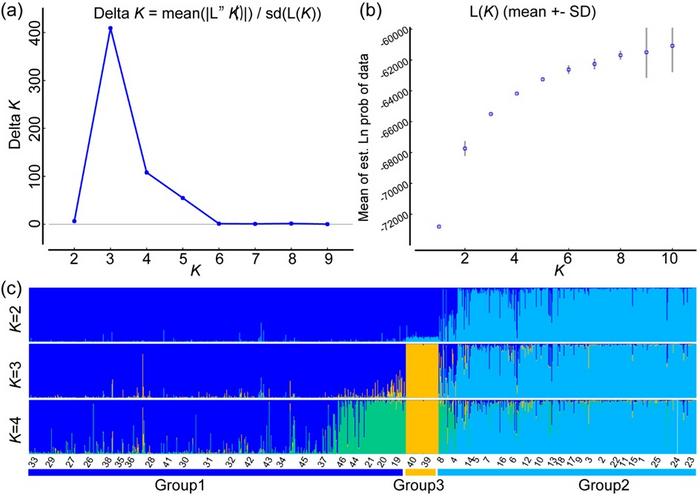
In a new study published in the KeAi journal Plant Diversity, an international team of researchers investigated the genetic diversity and population structure of 1,082 individuals from 46 populations across Central Asia through their walnut research network (see the author list).
“We found moderate genetic diversity of J. regia across Central Asia, with 46 populations clustered into three groups with a weak relationship between genetic and geographic distance,” shares Jie Liu, senior and corresponding author of the study. “Our findings reveal that the western Himalaya might be the core region of common walnut genetic diversity in Central Asia and that, except for two populations in Gongliu Wild Walnut Valley, humans might have introduced walnut populations to Xinjiang, China.”
The observed distribution of the genetic landscape has probably been affected by historical climate fluctuation, breeding system and prolonged anthropogenic activity.
“We propose the conservation of the core genetic diversity resources in the western Himalaya and pay special attention to populations from Gongliu in Xinjiang,” adds Liu. “Our findings enhance the understanding of the genetic variation throughout the distribution range of J. regia in Central Asia, which will provide a key prerequisite for evidence-based conservation and management.”
###
Contact the author: Jie Liu, CAS Key Laboratory for Plant Diversity and Biogeography of East Asia, Kunming Institute of Botany, Chinese Academy of Sciences, [email protected]
The publisher KeAi was established by Elsevier and China Science Publishing & Media Ltd to unfold quality research globally. In 2013, our focus shifted to open access publishing. We now proudly publish more than 100 world-class, open access, English language journals, spanning all scientific disciplines. Many of these are titles we publish in partnership with prestigious societies and academic institutions, such as the National Natural Science Foundation of China (NSFC).
Journal
Plant Diversity
DOI
10.1016/j.pld.2024.06.001
Method of Research
Experimental study
Subject of Research
Not applicable
Article Title
Population genetic insights into the conservation of common walnut (Juglans regia) in Central Asia
COI Statement
The authors declare that they have no known competing financial interests or personal relationships that could have appeared to influence the work reported in this paper.