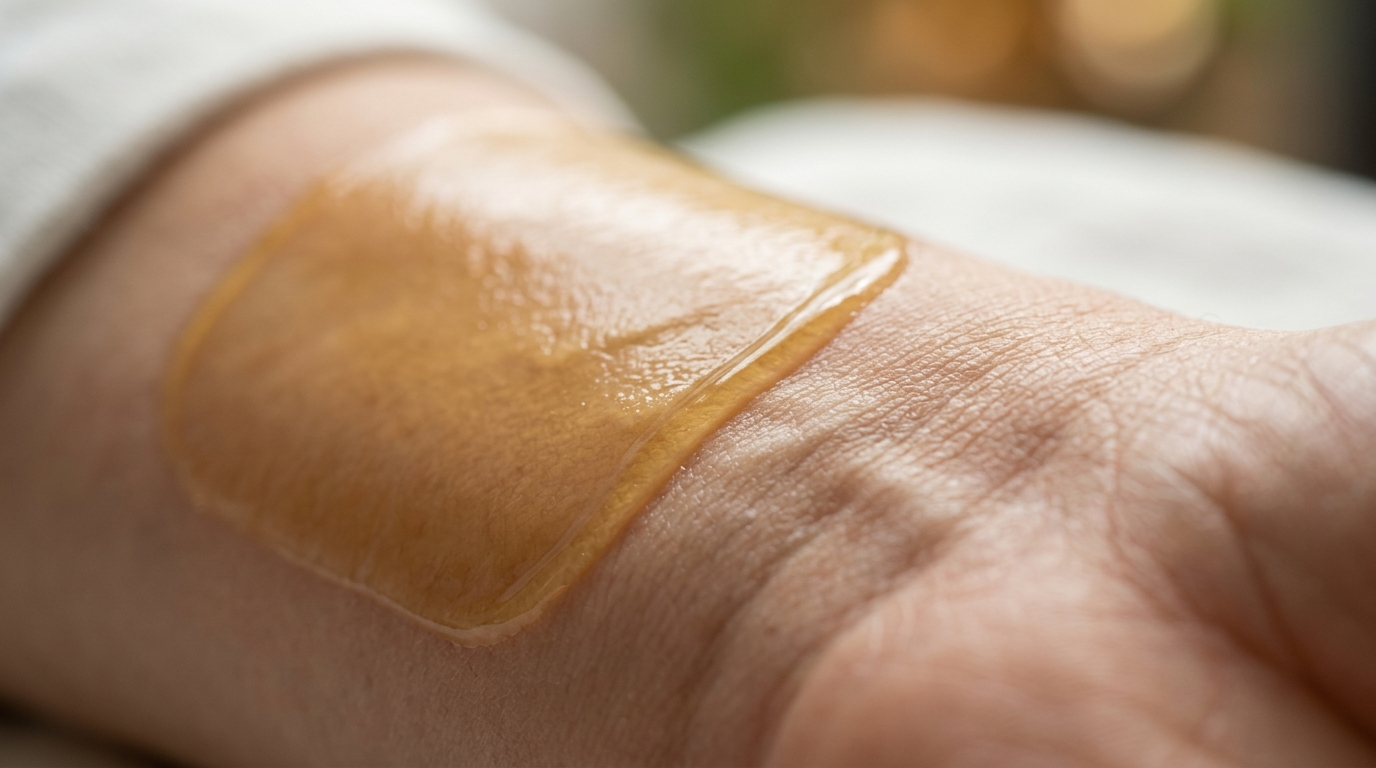
Researchers have developed an in situ film-forming liquid dressing loaded with quercetin that accelerated the healing of severe pressure ulcers in a preclinical rat model, achieving full wound closure in 20 days compared to 25 days for a commercial cadexomer iodine formulation. The investigation, published in Future Journal of Pharmaceutical Sciences by Ayesha Syed and co-workers, addressed the therapeutic hurdles of treating chronic pressure ulcers. These debilitating lesions represent localized tissue trauma that typically arises over bony prominences such as the tailbone, buttocks, shoulder blades, and spine as a consequence of sustained pressure, immobility, friction, and shear forces. Clinical presentations include erythema, edema, tenderness, and purulent exudate, often aggravated by chronic disorders including cancer, cardiovascular disease, malnutrition, and aging skin. Although quercetin exhibits documented antioxidant and anti-inflammatory properties that stimulate fibroblast proliferation, its clinical utility has remained constrained by poor water solubility and low tissue penetration.
Existing treatment strategies for pressure ulcers rely on topical antimicrobials such as silver sulfadiazine, povidone-iodine, and nitrofurazone, alongside analgesics and anti-inflammatory agents including ibuprofen, naproxen sodium, and paracetamol. However, conventional dosage forms display significant clinical shortcomings. Preformed hydrocolloid dressings are expensive, prone to inducing severe dermal hypersensitivity, and cannot be applied safely over exposed tendons, muscles, or bones. Semi-solid ointments and creams adhere poorly to moist wound surfaces, suffering from rapid wash-off by exudate, frequent friction against clothing, and poor patient compliance caused by repetitive daily applications. Hydrogels offer temporary cooling but frequently fail to maintain sustained drug release or long-term moisture balance. Furthermore, traditional bulky dressings restrict oxygen permeability and struggle to conform to irregular anatomical contours, heightening the threat of secondary infection and delayed repair. By contrast, a sprayable liquid dressing provides an adaptable barrier that contours to complex wound beds, prolonging drug contact and enhancing therapeutic localization.
To establish an optimal polymeric vehicle, the researchers conducted an initial screening of candidate polymers at concentrations ranging from 1 to 12 percent weight-by-volume in ethanol-acetone solvent blends. The evaluated materials included Eudragit RSPO, Eudragit L-100, Eudragit S100, Carbopol 940, polyvinyl alcohol, chitosan, polyvinylpyrrolidone (PVP K-30), and hydroxypropyl methylcellulose (HPMC E5). Screened polymers revealed substantial differences in viscosity and drying dynamics. Carbopol 940 demonstrated an excessively high viscosity of 16.5 centipoise and an unworkable film-forming time of 2243 seconds, failing because its molecular expansion requires aqueous neutralization unavailable in organic solvents. Chitosan exhibited limited solubility in neutral organic systems, resulting in defective polymeric dispersion. While Eudragit L-100 formed films within 182 seconds, its anionic, pH-dependent solubility intended for enteric delivery produced inconsistent mechanical coherence under non-ionized topical conditions. In contrast, Eudragit RSPO exhibited a low viscosity of 1.35 centipoise and a rapid film-forming duration of 182 seconds, driven by its neutral polymethacrylate backbone bearing quaternary ammonium groups.
To identify optimal factor combinations without performing exhaustive experimental permutations, the investigators applied a Taguchi L16 (44) orthogonal array design. This statistical approach evaluated four independent variables: polymer type (X1), polymer concentration (X2), plasticizer concentration (X3), and solvent ratio (X4) across sixteen experimental trials. The optimization focused on five critical quality attributes: film-forming time, pH, drying time, spray angle, and viscosity. Signal-to-noise ratio analyses applied “smaller-is-better” criteria to film-forming time, drying time, spray angle, and viscosity, whereas a “larger-is-better” criterion governed pH. Analysis of variance demonstrated that polymer type served as the primary determinant across all parameters, contributing 78.29 percent to film-forming time, 91.18 percent to pH, 65.64 percent to drying time, 58.93 percent to spray angle, and 56.87 percent to viscosity. Polymer concentration acted as the secondary contributor, accounting for 32.91 percent of viscosity and 31.55 percent of spray angle variation. Interaction plots revealed non-parallel lines, confirming significant synergistic interdependencies among the four formulation variables.
The Taguchi optimization identified formulation F5 as the optimal composition, containing 0.1 percent weight-by-volume quercetin, 1 percent Eudragit RSPO, and propylene glycol plasticizer dissolved in a 7:3 ethanol-to-acetone solvent mixture. This solvent system provided balanced evaporation dynamics, wherein volatile acetone rapidly evaporated to set the film structure, while ethanol preserved polymer solvation to ensure gradual chain rearrangement into an intact matrix. Physicochemical evaluations revealed that formulation F5 exhibited a film-forming time of 92 ± 1.4 seconds, an ambient drying time of 100 ± 3.1 seconds, a physiologically compatible pH of 5.73 ± 0.4, an atomization spray angle of 61.64 ± 1.1 degrees, and a viscosity of 1.0 ± 0.03 centipoise. Actuation tests demonstrated reproducible dosing, delivering 0.11, 0.13, and 0.12 milliliters across consecutive sprays. Fiber adherence testing showed minimal cotton attachment (+), confirming low surface stickiness. In water washability testing, 91.28 ± 1.03 percent of the film remained intact following ten minutes of continuous rinsing with distilled water at 100 milliliters per minute.
Ex vivo permeation evaluations using excised Wistar rat abdominal skin mounted on Franz diffusion cells demonstrated marked improvements in quercetin transport from formulation F5 compared to pure quercetin suspension. Across a 24-hour diffusion period in pH 6.8 phosphate buffer at 37 degrees Celsius, formulation F5 achieved a cumulative drug permeation of 26.97 ± 0.3 percent, substantially exceeding the 8.31 ± 0.7 percent recorded for pure quercetin. Permeation kinetics indicated a steady-state flux of 0.0174 micrograms per square centimeter per hour for F5 versus 0.0045 micrograms per square centimeter per hour for the pure drug, yielding an enhancement ratio of 3.89. The formulation also achieved a higher permeability coefficient of 1.74 × 10^-6 centimeters per hour compared to 4.47 × 10^-7 centimeters per hour for pure quercetin. Furthermore, skin retention analysis showed that F5 deposited 0.0708 ± 0.002 milligrams per milliliter of quercetin within the skin tissue, representing a sixteen-fold increase over the 0.00425 ± 0.0003 milligrams per milliliter retained by the pure drug suspension.
Molecular compatibility and chemical stability among the formulation components were examined using attenuated total reflectance Fourier-transform infrared spectroscopy. The spectrum of pure quercetin exhibited characteristic absorption bands at 3280 cm^-1 for phenolic hydroxyl stretching, 1560 cm^-1 for aromatic carbon-carbon double bonds, 1239 cm^-1 for carbon-oxygen stretching, 1358 cm^-1 for carbon-carbon bending, and 996 cm^-1 for carbon-carbon stretching. Pure Eudragit RSPO displayed ester carbonyl stretching at 1722 cm^-1, alkyl carbon-hydrogen stretching at 2950 cm^-1, and carbon-oxygen bands between 1019 and 1219 cm^-1, while propylene glycol showed hydroxyl stretching near 3300 cm^-1. In both the physical mixture and the optimized F5 formulation, all diagnostic functional group peaks of quercetin were preserved without the appearance of new covalent bands or the complete disappearance of existing peaks. A minor displacement of the quercetin hydroxyl band from 3280 cm^-1 to 3378 cm^-1 confirmed intermolecular hydrogen bonding with excipient carbonyl and hydroxyl groups, verifying that physical interactions occurred without chemical degradation.
Preclinical safety was verified through a fourteen-day dermal irritation study conducted on albino Wistar rats divided into three cohorts of six animals each. Shaved dorsal skin areas received once-daily topical applications of untreated control, 50 percent sodium lauryl sulfate solution as a standard irritant, or formulation F5. While the sodium lauryl sulfate group showed pronounced erythema and edema, generating total irritation scores of 4.5 on Day 1, 5.5 on Day 7, and 6.5 on Day 14, formulation F5 produced negligible cutaneous reactions, recording total irritation scores of 1.2, 1.4, and 0.5 across the same intervals. Following safety validation, stage IV pressure ulcers were induced in anesthetized Wistar rats using an ischemia-reperfusion model. Two circular neodymium magnets measuring 12 millimeters in diameter and 5 millimeters in thickness with a magnetic strength of 1000 Gauss were applied across an elevated dorsal skin fold for 12 hours of ischemia followed by 12 hours of reperfusion over ten consecutive days, creating full-thickness skin necrosis.
The F5-treated cohort achieved complete 100 percent wound contraction by Day 20, whereas animals treated with pure quercetin solution and marketed cadexomer iodine required 24 and 25 days, respectively, and untreated controls required 30 days. Tensile strength testing of excised healed tissue revealed that wounds treated with F5 exhibited a rupture resistance of 46,479 ± 3.8 Newtons per square meter, nearly double the 23,033.5 ± 1.2 Newtons per square meter measured in untreated controls and significantly exceeding both pure quercetin (29,430 ± 2.1 Newtons per square meter) and cadexomer iodine (36,515 ± 4.3 Newtons per square meter). Scars treated with F5 contained 0.4752 ± 3.5 milligrams of total hydroxyproline, reflecting elevated collagen synthesis compared to 0.2496 ± 3.1 milligrams in controls.
Histological examination of hematoxylin- and eosin-stained wound specimens on Day 30 revealed extensive re-epithelialization, dense collagen bundle organization, abundant fibroblast proliferation, and active neovascularization in the F5 cohort compared to untreated and reference groups. In stability testing conducted under International Council for Harmonisation intermediate storage conditions of 30 ± 2 degrees Celsius and 65 ± 5 percent relative humidity over six months, formulation F5 showed no significant changes in film-forming time, spray angle, or viscosity, confirming formulation robustness. The authors concluded that the engineered liquid dressing successfully integrates volatile solvent evaporation, polymeric matrix formation, and enhanced permeation to deliver sustained therapeutic action at the wound site.
Subject of Research: Polymeric liquid wound dressings for pressure ulcer management
Article Title: Design and development of polymeric liquid dressing containing quercetin for accelerated wound healing in effective management of pressure ulcers
Article References: Syed, A., Karwa, P., Mallick, S., Hedge, A. M., & Babu, C. A. M. (2026). Design and development of polymeric liquid dressing containing quercetin for accelerated wound healing in effective management of pressure ulcers. Future Journal of Pharmaceutical Sciences, 12(1), Article 73. https://doi.org/10.1186/s43094-026-01003-9
Image Credits: AI Generated
DOI: 10.1186/s43094-026-01003-9
Keywords: Pressure Ulcers, Quercetin, Liquid Dressing, Wound Healing, Eudragit RSPO, Polymer Chemistry, Drug Delivery, Preclinical Research, Design, development, polymeric, liquid
News Source: Ophelia Keating. (November 7, 2026). Polymeric Liquid Dressing Loaded with Quercetin Accelerates Pressure Ulcer Healing. Scienmag.