A chemical fractionation strategy utilizing Triton X-100 enables the simultaneous synthesis of porous carbon electrodes for supercapacitors and substantially enhanced enzymatic saccharification of biomass holocellulose. In conventional biorefinery systems, separating lignocellulosic components remains a formidable technical challenge because typical processing conditions cause severe structural degradation and irreversible condensation of the lignin polymer.
To resolve this processing obstacle, researchers developed a precursor-level polyether-engineering strategy designed to regulate lignin structure directly during the initial biomass fractionation stage. The method introduces the surfactant Triton X-100 into the fractionation system to steer the reactive pathways of the separating biomass components. Rather than allowing lignin to degrade into an unreactive condensed network, the chemical treatment actively promotes the in-situ etherification of the biopolymer, establishing a stable and highly reactive polyether-engineered lignin process stream.
Chemical evaluation of the recovered lignin stream confirmed that the surfactant treatment significantly suppressed unwanted condensation reactions during fractionation. Analysis showed that the polyether-engineered lignin achieved a 24.3 percent to 31.5 percent higher retention of critical beta-O-4 linkages when compared directly to the untreated control stream.
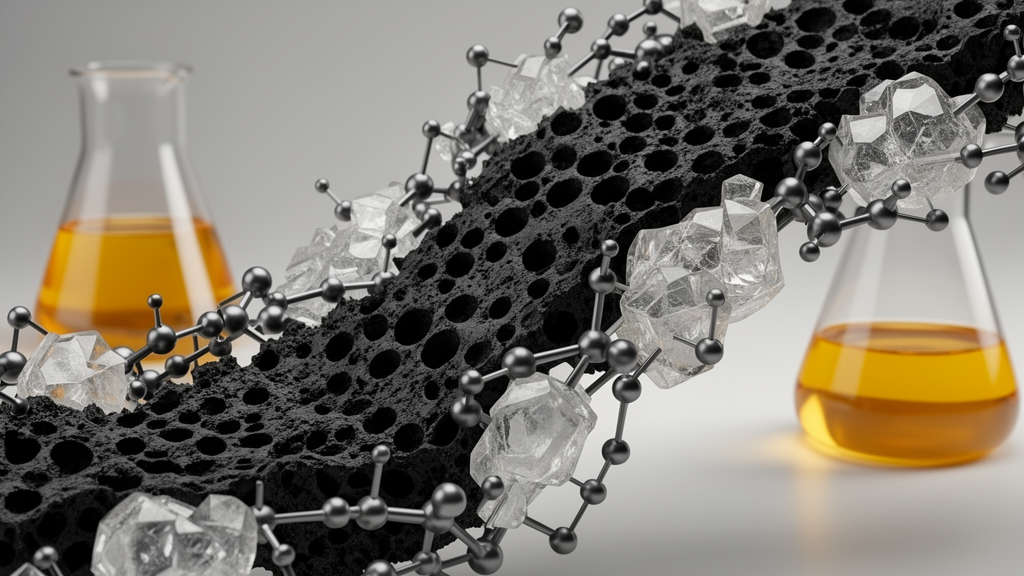
The researchers subsequently transformed the isolated polyether-engineered lignin into hierarchical porous biochar through high-temperature activation with potassium hydroxide. Because the engineered precursor maintained its molecular structural integrity and displayed improved carbonization behavior during thermal treatment, the resulting porous carbon formed an extensive, highly accessible pore structure. The activated material achieved an ultrahigh specific surface area of 3023.7 square meters per gram, markedly outperforming the control biochar, which reached a specific surface area of only 2143.5 square meters per gram.
When evaluated as a supercapacitor electrode, the lignin-derived porous carbon demonstrated strong electrochemical charge storage performance. The material delivered a specific capacitance of 121.2 farads per gram alongside a maximum energy density of 16.7 watt-hours per kilogram.
Simultaneously, the polyether-engineering treatment fundamentally altered the physicochemical characteristics of the residual lignin associated with the holocellulose substrate. The process reduced aliphatic hydroxyl groups by 39.5 percent and phenolic hydroxyl groups by 68.4 percent across the residual biopolymer. By diminishing these specific functional groups, the modification effectively suppressed non-productive cellulase interactions that typically waste enzyme activity, allowing enzymatic hydrolysis to proceed with substantially greater efficiency.
As a consequence of mitigating unproductive enzyme binding, the enzymatic saccharification of the holocellulose fraction yielded dramatic improvements, boosting overall glucose yields by 74.8 percent to 96.5 percent over control levels. The investigation establishes precursor-level lignin engineering as a versatile, dual-benefit route for biorefineries, proving that targeted chemical regulation during initial fractionation can simultaneously govern porous carbon microstructure for energy devices and unlock renewable sugars for downstream biochemical conversion.
Subject of Research: Polyether-engineered biomass fractionation for supercapacitor carbon and holocellulose saccharification
Article Title: Polyether-engineering of lignin enables hierarchical porous carbons for high-performance supercapacitors and enhanced holocellulose saccharification
Article References: Teng, P., Song, G., Li, Z., Qiao, Y., Zheng, Y., Zhong, N., & Hu, J. (2026). Polyether-engineering of lignin enables hierarchical porous carbons for high-performance supercapacitors and enhanced holocellulose saccharification. Advanced Composites and Hybrid Materials. https://doi.org/10.1007/s42114-026-02039-4
Image Credits: AI Generated
DOI: 10.1007/s42114-026-02039-4
Keywords: lignin valorization, holocellulose saccharification, biomass fractionation, Triton X-100, polyether-engineering, hierarchical porous carbon, supercapacitors, biochar, KOH activation, beta-O-4 linkages, specific surface area, specific capacitance, energy density, glucose yield, cellulase interactions, in-situ etherification, biorefineries
News Source: Denise Maddox. (November 19, 2026). Polyether Engineering of Lignin Boosts Supercapacitor Biochar and Sugar Yields. Scienmag.