• HOME
  • NEWS
  • EXPLORE
    • CAREER
      • Companies
      • Jobs
    • EVENTS
    • iGEM
      • News
      • Team
    • PHOTOS
    • VIDEO
    • WIKI
  • BLOG
  • COMMUNITY
    • FACEBOOK
    • INSTAGRAM
    • TWITTER
Wednesday, October 7, 2026
BIOENGINEER.ORG
No Result
View All Result
  • Login
  • HOME
  • NEWS
  • EXPLORE
    • CAREER
      • Companies
      • Jobs
        • Lecturer
        • PhD Studentship
        • Postdoc
        • Research Assistant
    • EVENTS
    • iGEM
      • News
      • Team
    • PHOTOS
    • VIDEO
    • WIKI
  • BLOG
  • COMMUNITY
    • FACEBOOK
    • INSTAGRAM
    • TWITTER
  • HOME
  • NEWS
  • EXPLORE
    • CAREER
      • Companies
      • Jobs
        • Lecturer
        • PhD Studentship
        • Postdoc
        • Research Assistant
    • EVENTS
    • iGEM
      • News
      • Team
    • PHOTOS
    • VIDEO
    • WIKI
  • BLOG
  • COMMUNITY
    • FACEBOOK
    • INSTAGRAM
    • TWITTER
No Result
View All Result
Bioengineer.org
No Result
View All Result
Home NEWS Science News Chemistry

Plant pathogens reorder physical structures of effectors to escape plant recognition

Bioengineer by Bioengineer
September 2, 2020
in Chemistry
Reading Time: 2 mins read
0
IMAGE
Share on FacebookShare on TwitterShare on LinkedinShare on RedditShare on Telegram

IMAGE

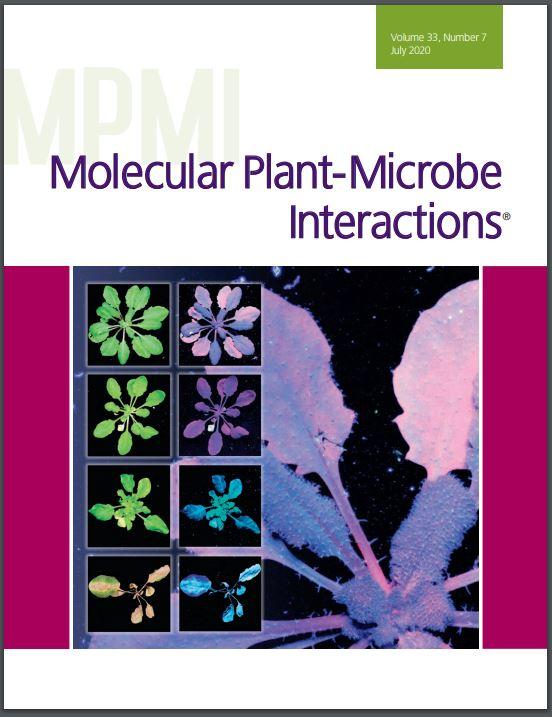
Credit: The American Phytopathology Society

Phytophthora infestans is an oomycete, or water mold, that causes the devastating potato disease known as late blight or potato blight and was responsible for the famous Irish Famine of the 1840s. In a recently published study, a group of scientists focused on the effectors of that pathogen and confirmed that plant pathogens employ an array of mechanisms to escape plant immunity response. These mechanisms explain why integrated resistance in plants cannot last long.

The scientists analyzed the genomic characters of the pathogen’s AVR2 gene and the physical and biochemical properties of its effectors and found a substantial variation in the nucleotide sequences of the AVR2 genes generated from different P. infestans isolates and that these sequence variations were generated by many genetic mechanisms, including base substations, partial translation of the gene to the effectors, a small loss/gain of DNA sequence, and recombination.

“Bioinformatics analyses indicate that the virulent AVR2 effectors are proteins partially lacking three-dimension structure, known as disordered proteins, while avirulent effectors are ordered proteins with predicted crystal structures,” explained Jiasui Zhan, one of the scientists involved in the study. “Each of the virulent effectors has one or two short linear interaction regions of ear-marked characters of disordered proteins. No such regions are found in the avirulent effectors. Furthermore, virulent AVR2 effectors are predicted to be less stable and have a shorter protein half-life than the avirulent effectors.”

These results suggest that plant pathogens adopt a novel mechanism to escape plant recognition through reordering the physical structures of effector proteins. Through combining population genome and in vivo analyses of pathogenicity, Zhan and colleagues were able to draw the evolutionary pattern in groups rather than ad hoc phenomenon of single or a few samples in the similar studies and to verify the evolutionary inferences experimentally with statistical rigidness and robustness.

“This study highlights the fact that a subtle modification in gene sequence such as single base substitution may generate a huge corresponding change in protein properties of effectors and maybe other proteins as well,” Zhan said. “The most surprising discovery is that there is clear difference in protein ordering between virulent and avirulent effectors: all 31 avirulent effectors are ordered proteins with defined structure while all 27 virulent are disordered proteins.”

Multidisciplinary collaboration is essential for durable disease management and evolutionary genetics should play a central role in developing management practices that can minimize pathogen evolution’s to evolve. For more information, read “The Phytophthora infestans AVR2 Effector Escapes R2 Recognition Through Effector Disordering” in the July issue of MPMI.

###

Media Contact
Ashley Bergman Carlin
[email protected]

Related Journal Article

http://dx.doi.org/10.1094/MPMI-07-19-0179-R

Tags: Agricultural Production/EconomicsAgricultureBiochemistryBioinformaticsBiologyFood/Food ScienceGeneticsMicrobiologyPlant Sciences
Share12Tweet8Share2ShareShareShare2

Related Posts

Hospital Superbug's Iron Sensor Revealed as New Target Against Antibiotic Resistance

Hospital Superbug’s Iron Sensor Revealed as New Target Against Antibiotic Resistance

October 7, 2026
Starch-Based Polymer Trio Strips Industrial Wastewater of Color, Turbidity and Dissolved Solids

Starch-Based Polymer Trio Strips Industrial Wastewater of Color, Turbidity and Dissolved Solids

October 7, 2026

Scientists Discover an Umami Peptide from Sea Cucumber That Also Fights Inflammation in Cells

October 6, 2026

Cellulose-Based Sorbent Pulls Critical Metals from Organic Waste Streams in Minutes

October 6, 2026
Please login to join discussion

POPULAR NEWS

  • Alloys That Shrink Their Own Grains: New PIX Mechanism Refines Metals With Heat Alone

    Alloys That Shrink Their Own Grains: New PIX Mechanism Refines Metals With Heat Alone

    29 shares
    Share 12 Tweet 7
  • Endurance Exercise Reshapes the Liver in Males and Females Through Distinct Molecular Routes

    29 shares
    Share 12 Tweet 7
  • Single Transcription Factor PU.1 Rapidly Converts Fibroblasts into Macrophage-Lineage Cells

    29 shares
    Share 12 Tweet 7
  • New Scale Measures How Ready Nurse Educators Really Are for the AI Era

    29 shares
    Share 12 Tweet 7

About

We bring you the latest biotechnology news from best research centers and universities around the world. Check our website.

Follow us

Recent News

Alloys That Shrink Their Own Grains: New PIX Mechanism Refines Metals With Heat Alone

Endurance Exercise Reshapes the Liver in Males and Females Through Distinct Molecular Routes

Single Transcription Factor PU.1 Rapidly Converts Fibroblasts into Macrophage-Lineage Cells

Subscribe to Blog via Email

Success! An email was just sent to confirm your subscription. Please find the email now and click 'Confirm' to start subscribing.

Join 85 other subscribers
  • Contact Us

Bioengineer.org © Copyright 2023 All Rights Reserved.

Welcome Back!

Login to your account below

Forgotten Password?

Retrieve your password

Please enter your username or email address to reset your password.

Log In
No Result
View All Result
  • Homepages
    • Home Page 1
    • Home Page 2
  • News
  • National
  • Business
  • Health
  • Lifestyle
  • Science

Bioengineer.org © Copyright 2023 All Rights Reserved.