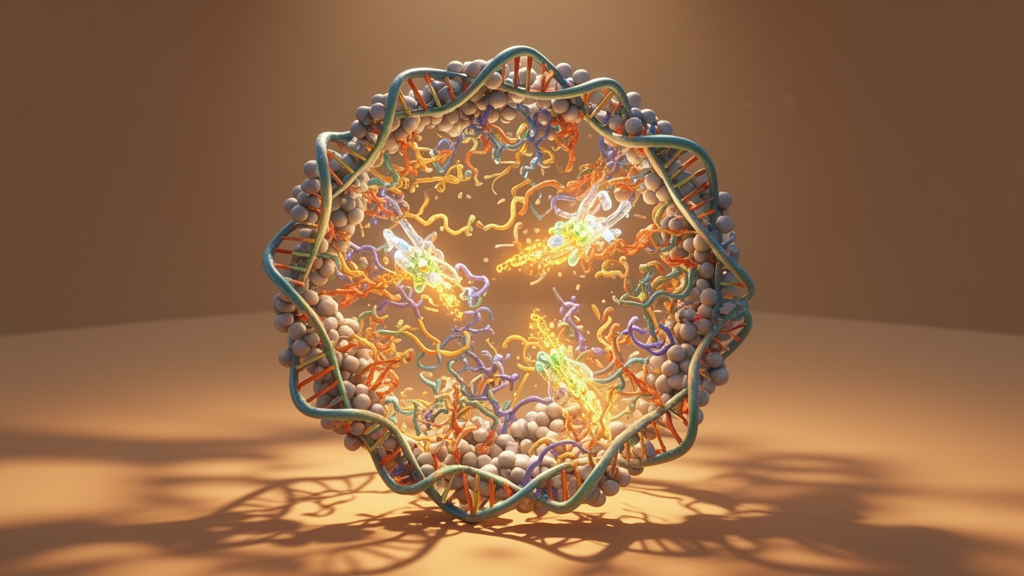
Plants confront a wide variety of environmental challenges that severely restrict growth, development, and overall agricultural productivity, including extreme temperatures, water scarcity, soil salinity, limited nutrient availability, ultraviolet radiation, and heavy metal contamination. Because plants are sessile organisms anchored in place throughout their lifecycles, they cannot escape fluctuating environmental conditions and must rely on rapid, flexible molecular mechanisms to regulate gene expression. A comprehensive scientific review published in Horticulture Advances by researchers Abdullah Zaid, Anand Singh, and Kamal Uddin synthesizes evidence demonstrating how four primary epigenetic mechanisms—DNA methylation, histone modifications, small RNA-mediated gene silencing, and chromatin remodeling—operate as an interconnected regulatory network to control chromatin architecture and reprogram transcription without altering the underlying genomic sequence.
At the foundation of this epigenetic architecture lies DNA methylation, which occurs in cytosine contexts designated as CG, CHG, and CHH. In model systems like Arabidopsis thaliana and various crop species, this process is governed by specific enzymes: Methyltransferase 1 maintains CG methylation, Chromomethylase 3 regulates CHG contexts, and Domains Rearranged Methyltransferase 2 mediates de novo methylation across all sequence contexts via the RNA-directed DNA methylation pathway. In this pathway, specialized RNA polymerases IV and V, RNA-dependent RNA polymerase 2, and Dicer-like endonucleases generate 24-nucleotide small interfering RNAs that guide methylation complexes to targeted genomic loci. Concurrently, DNA demethylation catalyzed by Repressor of Silencing 1 and DEMETER-like glycosylases prevents hypermethylation, maintaining a dynamic equilibrium that dictates promoter accessibility, regulates transposable-element activity, and shapes stress-induced transcription.
Transposable elements serve as critical epigenetic hubs within plant genomes, frequently residing within or immediately adjacent to stress-responsive genes. Under non-stress conditions, transposable elements are heavily targeted by DNA methylation and dimethylated histone H3 lysine 9 to maintain robust transcriptional silencing and protect genome integrity. When severe environmental stress occurs, partial derepression of these mobile elements generates small interfering RNAs, alters local chromatin accessibility, and modulates the transcription of flanking stress-inducible genes. In maize, for example, the introduction of a miniature inverted-repeat transposable element into the promoter of a NAC transcription factor gene leads to transcriptional suppression driven by RNA-directed DNA methylation and H3K9me2 deposition. Such stress-triggered shifts in transposable-element activity can alter alternative splicing and intragenic methylation patterns across diverse plant taxa.
Under drought conditions, plants orchestrate complex hormonal and epigenetic adjustments to restrict water loss and maintain cellular hydration. Abscisic acid synthesis increases substantially, triggering signaling cascades that intersect with chromatin-modifying enzymes. Brassinosteroid signaling activates BRI1-EMS-Suppressor 1, which recruits a transcriptional repressor complex composed of TOPLESS and Histone Deacetylase 19 to deacetylate chromatin at the ABA-Insensitive 3 locus, downregulating abscisic acid signaling during early seedling establishment. Simultaneously, drought exposure elevates active marks, such as trimethylated histone H3 lysine 4 and acetylated histone H3 lysine 9, within the promoter regions of critical dehydration-responsive genes including Responsive to Desiccation 29A, RD29B, RD22, and RAP2.4. Following recovery, H3K9 acetylation and RNA polymerase II occupancy rapidly decline, whereas the reduction in H3K4me3 occurs at a much slower rate.
Histone demethylases and ATP-dependent chromatin remodelers further fine-tune this drought response through targeted epigenetic switches. In Arabidopsis, the Jumonji-C domain-containing histone demethylases JMJ30 and JMJ32 activate SNF1-Related Protein Kinase 2.8 by removing the repressive trimethylated histone H3 lysine 27 mark from its promoter, thereby upregulating ABI3 transcription and contributing to regulated growth arrest. Chromatin Remodeling 12, an SNF2/Brahma-type chromatin remodeler, similarly induces temporary growth arrest when exposed to heat and drought. The histone methyltransferase Arabidopsis Trithorax 1 plays a parallel vital role: dehydration enhances ATX1 binding to the promoter of Nine-cis-epoxycarotenoid dioxygenase 3, driving H3K4me3 accumulation and robust transcription, whereas atx1 mutants exhibit a forty percent reduction in abscisic acid content, enlarged stomatal apertures, and heightened drought sensitivity.
Salinity stress exposes plants to simultaneous osmotic shock and severe sodium ion toxicity, demanding an integrated transcriptional response that balances ion exclusion with cellular protection. Epigenetic networks regulate this adaptation through a bimodal mechanism governing the high-affinity potassium transporter HKT1 and the R2R3-MYB transcription factor MYB74. Constitutive CG methylation mediated by MET1 establishes a baseline constraint on HKT1 expression to avoid lethal sodium overload, while stress-inducible non-CG hypermethylation driven by the RNA-directed DNA methylation machinery enables rapid, reversible suppression of sodium uptake. Conversely, the MYB74 promoter, heavily methylated and repressed by 24-nucleotide small interfering RNAs under benign conditions, undergoes coordinated loss of CHH methylation and small RNAs within hours of salt exposure, resulting in substantial transcriptional activation of downstream tolerance pathways.
Histone acetylation and higher-order chromatin modifications actively reinforce this salinity regulatory logic. General Control Non-Repressed 5, a histone acetyltransferase, stimulates the expression of cell-wall remodeling factors such as Chitinase-Like 1, Polygalacturonase Involved in Expansion 3, and MYB54 by catalyzing H3K9 and H3K14 acetylation. In contrast, the class I deacetylase HDA19 represses salt tolerance by removing acetyl groups from the promoters of abscisic acid receptor genes PYL4, PYL5, and PYL6. Plant-specific HD2 family deacetylases, including HD2C, physically interact with HDA6 and associate with histone H3 to suppress ABA1 and ABI2 transcription under normal conditions, an inhibition that high salinity relieves. Furthermore, RNA Polymerase II-Associated Factor 1 and Cap Binding Complex facilitate H3K4me3 enrichment at critical loci such as RD29A, COR47, and P5CS1 to maintain efficient transcriptional elongation.
Heat and cold stresses similarly elicit tightly calibrated chromatin remodeling and epitranscriptomic modifications. Extreme heat induces expression of DNA methyltransferases MET1, CMT3, and DRM2 alongside RNA polymerases IV and V, driving genome-wide methylation changes while reversing silencing at loci like SDC to promote thermotolerance. Active marks H3K9ac and H3K4me3 accumulate on heat shock protein genes, supported by histone chaperones Anti-Silencing Factor 1a and 1b and methyltransferases ATX1 and SDG25. During cold stress, activation of the C-Repeat Binding Factor and Cold-Responsive pathways depends on chromatin remodeling. The CHD3-type remodeler PICKLE modulates H3K27me3 deposition, and pkl mutants display impaired CBF3 and COR expression alongside severe freezing sensitivity. Concurrently, the WD40 repeat protein HOS15 targets HD2C for proteasomal degradation, shifting chromatin into an open, permissive state required for cold acclimation.
Beyond immediate survival, epigenetic mechanisms establish intragenerational and transgenerational stress memory, allowing primed plants to respond faster and more robustly to recurring stresses. Transcriptional memory after heat or osmotic shock is maintained through prolonged retention of active H3K4me3 marks, sustained by low nucleosome turnover and stable transcription factor associations. Epitranscriptomic modifications, including N6-methyladenosine and 5-methylcytosine, add a posttranscriptional regulatory layer that governs mRNA stability and translation during heat and salt stress. In certain contexts, stress-induced DNA hypomethylation and altered transposable-element activity persist through meiosis, transmitting enhanced stress tolerance across vegetative or sexual generations. The authors emphasize that translating these molecular insights into climate-resilient crops will require moving beyond short-term laboratory protocols toward multi-omics profiling under recurrent field conditions and targeted epigenome editing.
Beyond drought and temperature extremes, epigenetic mechanisms govern plant responses to nutrient availability. In nitrate assimilation, systemic negative feedback under high nitrogen conditions depends on High Nitrogen-Insensitive 9, also known as AtIWS1, which promotes the deposition of repressive histone H3 lysine 27 trimethylation at the root nitrate transporter NRT2.1 locus to suppress transcription; hni9-1 mutants fail to establish this repression due to impaired H3K27me3 enrichment. Micronutrient balance similarly involves targeted chromatin modifications. Root-to-shoot iron movement requires General Control Non-Repressed 5, which associates with the Ferric Reductase Defective 3 promoter to modulate H3K6 and H3K14 acetylation, whereas symmetric dimethylation of histone H4 arginine 3 negatively regulates iron homeostasis. Under phosphorus deficiency, plants remodel DNA methylation by altering the expression of MET1, DRM1, and DRM2 while upregulating the histone methyltransferase AtSUVH4 to increase repressive H3K27me3 marks, conserving resources until selective locus demethylation reactivates phosphorus uptake pathways.
Solar radiation also triggers specific chromatin and DNA methylation changes that influence development and metabolism. Ultraviolet-B radiation engages the photoreceptor UV Resistance Locus 8, which physically interacts with Domains Rearranged Methyltransferase 2 to suppress de novo DNA methylation. In the medicinal plant Artemisia annua, ultraviolet-B exposure induces promoter hypomethylation at the Double-Bond Reductase 2 gene within WRKY transcription factor-binding domains, activating artemisinin biosynthesis. In Camellia sinensis, blue and ultraviolet-A light alter histone H3 lysine 4 methylation via the methyltransferase CsSDG36, modulating leaf mesophyll thickness, stomatal density, and secondary metabolites including flavonoids, theanine, caffeine, and beta-carotene. Furthermore, parental exposure to ultraviolet-C radiation establishes heritable epigenomic diversity in Arabidopsis offspring, increasing DNA methylation across CG, CHG, and CHH sites with notable CHH hypomethylation.
Temporal analyses and ancestral exposure studies illustrate how environmental cues alter methylation kinetics and transmit adaptations across generations. In a comparative time-course study examining sixty annual clones of stress-tolerant Populus simonii exposed to salinity, osmotic deficit, heat, and cold, DNA methylation increased within three hours across all treatments. Heat stress triggered peak methylation at six hours that remained steady throughout treatment, whereas osmotic and cold stresses produced gradual increases that culminated in the highest methylation levels after twenty-four hours. Long-term inheritance has also been documented under heavy metal stress in rice, which upregulates heavy metal-transporting P-type ATPases. This stress alters the DNA methylation profile of the Tos17 retrotransposon, establishing an epigenetic modification that can be passed down for up to three generations.
Subject of Research: Epigenetic mechanisms of plant abiotic stress responses and stress memory
Article Title: Epigenetic mechanism of abiotic stress responses in plants
Article References: Zaid, A., Singh, A., & Uddin, K. (2026). Epigenetic mechanism of abiotic stress responses in plants. Horticulture Advances, 4(1), Article 7. https://doi.org/10.1007/s44281-025-00096-1
Image Credits: AI Generated
DOI: 10.1007/s44281-025-00096-1
Keywords: plant epigenetics, abiotic stress, DNA methylation, histone modifications, chromatin remodeling, small RNAs, RdDM pathway, stress memory, drought tolerance, salinity stress, heat stress, cold acclimation, transposable elements, epitranscriptomics, crop resilience, m6A modification, transgenerational inheritance
News Source: Juliet Wilcox. (November 19, 2026). Plant Epigenetic Networks Dynamically Reprogram Gene Expression to Withstand Severe Environmental Stresses. Scienmag.