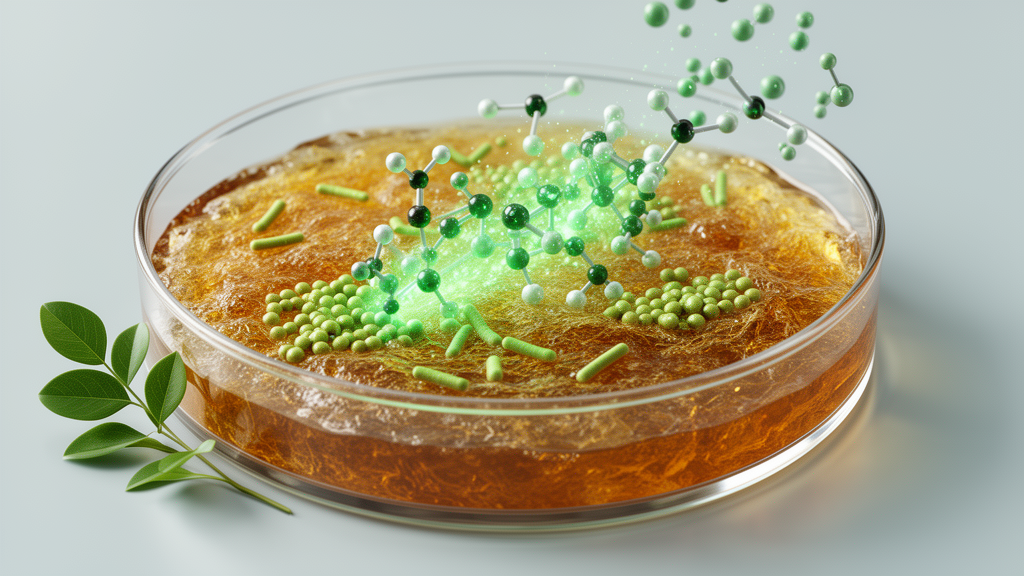
Five plant-derived phytochemicals reduced biofilm formation and impaired efflux-pump activity in laboratory tests involving Pseudomonas aeruginosa PAO1, according to the 2026 study. Mirificin, forsythoside A, salvianolic acid A, epigallocatechin gallate and epicatechin gallate produced dose-dependent inhibition of biofilm formation, with more than 75% reduction in biofilm biomass at the higher treatment concentrations tested. The compounds also significantly increased intracellular accumulation of ethidium bromide and Hoechst dye, a result interpreted by the researchers as evidence of reduced efflux-pump activity.
Salvianolic acid A produced the strongest inhibition among the phytochemicals examined, reaching activity comparable to the positive-control efflux-pump inhibitor PAβN at 100 µM. The investigation was an in vitro laboratory study of a single bacterial strain, not a trial in people or animals. Its methods combined biofilm-inhibition assays with fluorescence-based efflux measurements, advanced imaging and quantitative reverse-transcription PCR, or qRT-PCR.
The fluorescence assays used ethidium bromide, N-phenyl-1-naphthylamine and Hoechst dye to assess compound accumulation in relation to efflux-pump function. The researchers evaluated the phytochemicals as potential efflux-pump inhibitors and antibiotic adjuvants, substances that could enhance antimicrobial activity by limiting a bacterial mechanism associated with resistance. Treatment with the tested compounds significantly increased the amount of ethidium bromide and Hoechst dye retained within the bacterial cells.
Salvianolic acid A at 100 µM showed the highest inhibitory activity in this assessment and was comparable to PAβN. These observations came from controlled laboratory assays rather than from an infection model or a study of treatment outcomes. The results therefore show that the compounds can inhibit relevant pump-associated activity under the tested conditions, but they do not establish that the phytochemicals improve antibiotic efficacy in patients, resolve infections or replace conventional antimicrobial treatment.
Gene-expression analysis supplied an additional level of evidence. Following treatment with salvianolic acid A, qRT-PCR detected significant downregulation of the efflux-pump genes mexA , mexB and oprM . The same treatment significantly reduced expression of the quorum-sensing genes rhlI and rhlR .
The researchers interpreted these transcriptional changes as confirmation of the efflux-pump inhibitory activity observed in the laboratory assays. The qRT-PCR findings and the dye-accumulation measurements were separate components of the study; the report does not establish that the imaging results were caused by changes in the expression of these particular genes. Among the five phytochemicals, salvianolic acid A emerged as the leading candidate in this set because it combined the highest measured efflux-pump inhibition with significant downregulation of pump-associated genes.
The scope remains limited to in vitro testing of PAO1 with selected compounds and specific laboratory endpoints. The study’s data are available upon reasonable request.
Subject of Research: In vitro testing of plant-derived efflux-pump inhibitors against Pseudomonas aeruginosa PAO1
Article Title: Evaluation of phytochemical-mediated inhibition of the efflux pump in Pseudomonas aeruginosa PAO1
Article References: Sarmah, A., Kumar, A., Selvaraj, A. A., Rameshkumar, N., Rani, R., Wilson Santhosh Kumar, A., & Ravichandran, V. (2026). Evaluation of phytochemical-mediated inhibition of the efflux pump in Pseudomonas aeruginosa PAO1. Molecular Biology Reports, 53(1), Article 1479. https://doi.org/10.1007/s11033-026-12660-7
Image Credits: AI Generated
DOI: 10.1007/s11033-026-12660-7
Keywords: Pseudomonas aeruginosa, PAO1, efflux-pump inhibition, salvianolic acid A, phytochemicals, biofilm formation, antimicrobial resistance, qRT-PCR, laboratory assays, Evaluation, phytochemical-mediated, inhibition
News Source: Drew Townsend. (October 21, 2026). Plant compounds inhibit P. aeruginosa efflux pumps and biofilms in vitro. Scienmag.