• HOME
  • NEWS
  • EXPLORE
    • CAREER
      • Companies
      • Jobs
    • EVENTS
    • iGEM
      • News
      • Team
    • PHOTOS
    • VIDEO
    • WIKI
  • BLOG
  • COMMUNITY
    • FACEBOOK
    • INSTAGRAM
    • TWITTER
Sunday, May 17, 2026
BIOENGINEER.ORG
No Result
View All Result
  • Login
  • HOME
  • NEWS
  • EXPLORE
    • CAREER
      • Companies
      • Jobs
        • Lecturer
        • PhD Studentship
        • Postdoc
        • Research Assistant
    • EVENTS
    • iGEM
      • News
      • Team
    • PHOTOS
    • VIDEO
    • WIKI
  • BLOG
  • COMMUNITY
    • FACEBOOK
    • INSTAGRAM
    • TWITTER
  • HOME
  • NEWS
  • EXPLORE
    • CAREER
      • Companies
      • Jobs
        • Lecturer
        • PhD Studentship
        • Postdoc
        • Research Assistant
    • EVENTS
    • iGEM
      • News
      • Team
    • PHOTOS
    • VIDEO
    • WIKI
  • BLOG
  • COMMUNITY
    • FACEBOOK
    • INSTAGRAM
    • TWITTER
No Result
View All Result
Bioengineer.org
No Result
View All Result
Home NEWS Science News Biology

Pitt and UPMC researchers collaborate to save more organs for transplants

Bioengineer by Bioengineer
February 11, 2018
in Biology
Reading Time: 2 mins read
0
Share on FacebookShare on TwitterShare on LinkedinShare on RedditShare on Telegram
IMAGE

Credit: Swanson School of Engineering

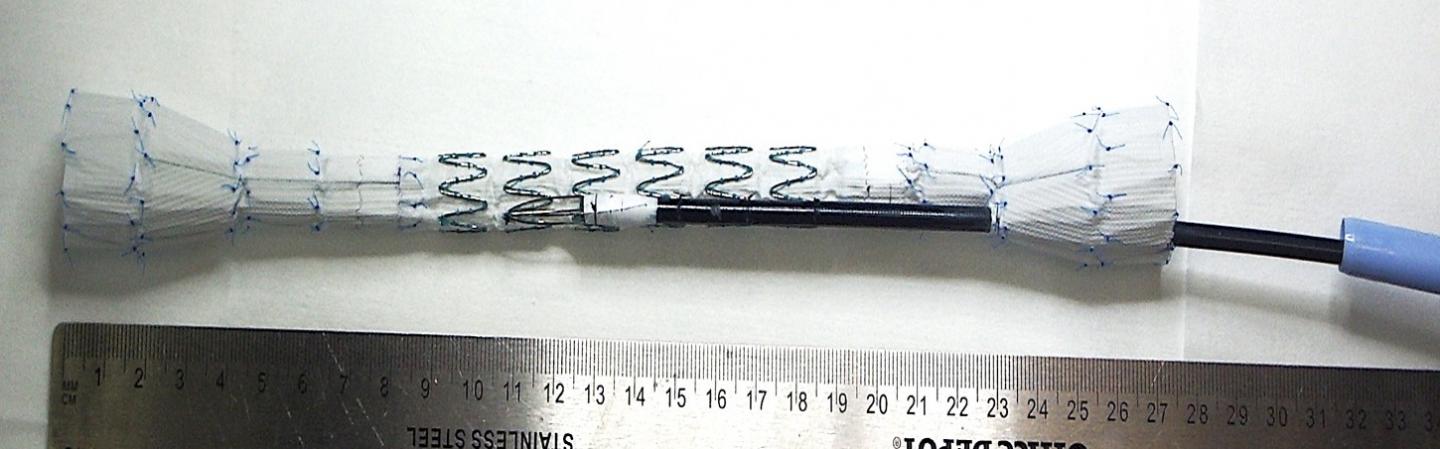
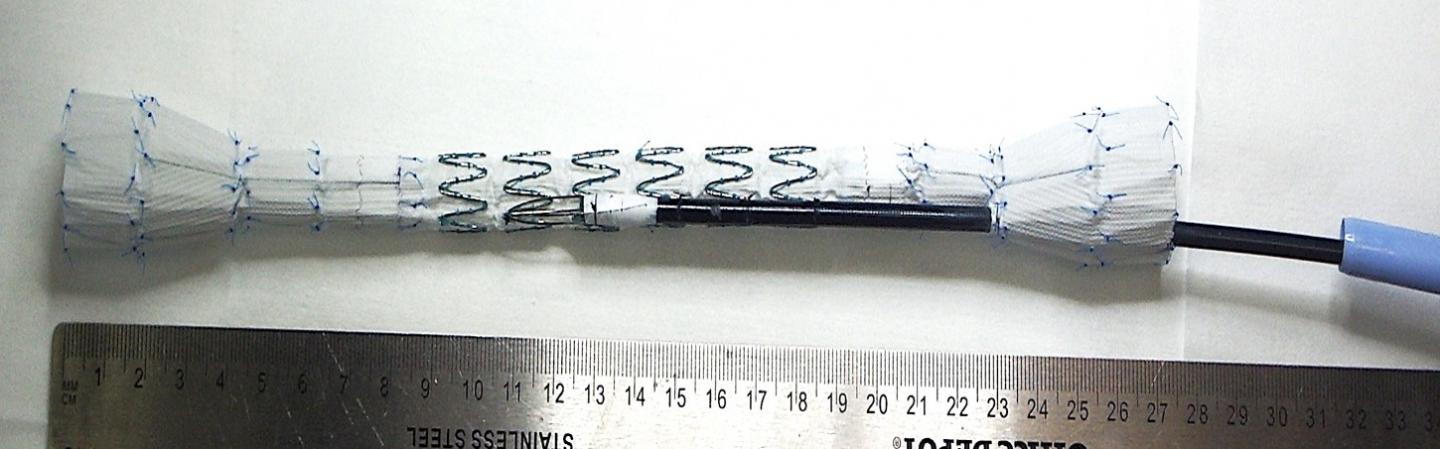
PITTSBURGH (October 30, 2017) … Each year, the United States suffers an extreme shortage of organ donations, with only a quarter of patients in need receiving a transplant. Many transplantable organs are lost when a donor's heart fails, and the organs stop receiving vital blood flow. Researchers at the University of Pittsburgh can potentially double the amount of successful organ donations by developing a novel stent to maintain blood flow to organs, even during the donor's final heart beats.

The National Institutes of Health awarded a four-year, $1.3 million R01 grant to a University of Pittsburgh research collaboration between the Department of Surgery and the Department of Industrial Engineering. The study titled "An Organ Perfusion Stent as an Alternative to Surgery in Donor Organ Recovery" will develop a dual chamber organ perfusion stent made of smart material to direct selective blood flow during transplant surgeries.

Leading the study are Principal Investigators Bryan W. Tillman, assistant professor in the Division of Vascular Surgery at University of Pittsburgh Medical Center (UPMC); Youngjae Chun, associate professor of industrial engineering and bioengineering; and Sung Kwon Cho, associate professor of mechanical engineering and materials science at Pitt's Swanson School of Engineering.

The stent will isolate visceral arteries–which supply blood to many major organs–without disturbing the heart. To make the stent, the research team will use a superelastic material with a flexible shape memory effect called nitinol, or nickel titanium.

"The shape memory behavior of nitinol is critical for endovascular devices such as stents, filters, and occluders, because at low temperatures, nitinol can easily be collapsed, inserted into a catheter, and delivered into the body," said Dr. Chun. "Once inside, the body heat will change nitinol's properties to be superplastic without any actuation force, which is really beneficial for a wide-range of catheter-based procedures."

The organ perfusion stent can be inserted by a clinician into the femoral artery after the delivery of a guide wire and a catheter. This small puncture or "needlestick" method allows clinicians to maintain selective blood flow to certain organs without disrupting others' natural functioning. The much larger organ stent in its compressed state can be delivered to the desired organ and deployed.

"We can target the kidneys, pancreas, and liver," said Dr. Chun. "Transplants involving any major organs connected to the main aorta will be able to benefit from this new technology."

###

Other collaborators include William C. Clark, professor of mechanical engineering and materials science at Pitt; Ryan Dzadony, associate director of the UPMC School of Perfusion; Anthony J. Demetris, Starzl Professor of Liver and Transplant Pathology at UPMC; and Amit Tevar, associate professor of surgery at the Thomas E. Starzl Transplant Institute.

Media Contact

Paul Kovach
[email protected]
412-624-0265

http://www.pitt.edu

Original Source

http://www.engineering.pitt.edu/News/2017/Chun-Organ-Transplant-Stent/

Share12Tweet8Share2ShareShareShare2

Related Posts

Uncovering C. elegans Immunity via Genetic Screens — Biology

Uncovering C. elegans Immunity via Genetic Screens

May 16, 2026
Single mother must adapt swiftly — the survival of her colony depends on it — Biology

Single mother must adapt swiftly — the survival of her colony depends on it

May 15, 2026

Why Are Nearly Everyone Right-Handed? It Might Be Linked to How We Learned to Walk

May 15, 2026

Excessive Neuronal Activity Initiates Severe Autoimmune Brain Disorder

May 15, 2026
Please login to join discussion

POPULAR NEWS

  • Research Indicates Potential Connection Between Prenatal Medication Exposure and Elevated Autism Risk

    844 shares
    Share 338 Tweet 211
  • New Study Reveals Plants Can Detect the Sound of Rain

    730 shares
    Share 291 Tweet 182
  • Salmonella Haem Blocks Macrophages, Boosts Infection

    62 shares
    Share 25 Tweet 16
  • Breastmilk Balances E. coli and Beneficial Bacteria in Infant Gut Microbiomes

    58 shares
    Share 23 Tweet 15

About

We bring you the latest biotechnology news from best research centers and universities around the world. Check our website.

Follow us

Recent News

Noncanonical Sulfur Metabolism, Immunity Altered in Down Syndrome

Physical Resilience Linked to Aging Views in Chinese Elders

Tau T205 Phosphorylation Controls Memory and Engrams

Subscribe to Blog via Email

Enter your email address to subscribe to this blog and receive notifications of new posts by email.

Join 82 other subscribers
  • Contact Us

Bioengineer.org © Copyright 2023 All Rights Reserved.

Welcome Back!

Login to your account below

Forgotten Password?

Retrieve your password

Please enter your username or email address to reset your password.

Log In
No Result
View All Result
  • Homepages
    • Home Page 1
    • Home Page 2
  • News
  • National
  • Business
  • Health
  • Lifestyle
  • Science

Bioengineer.org © Copyright 2023 All Rights Reserved.