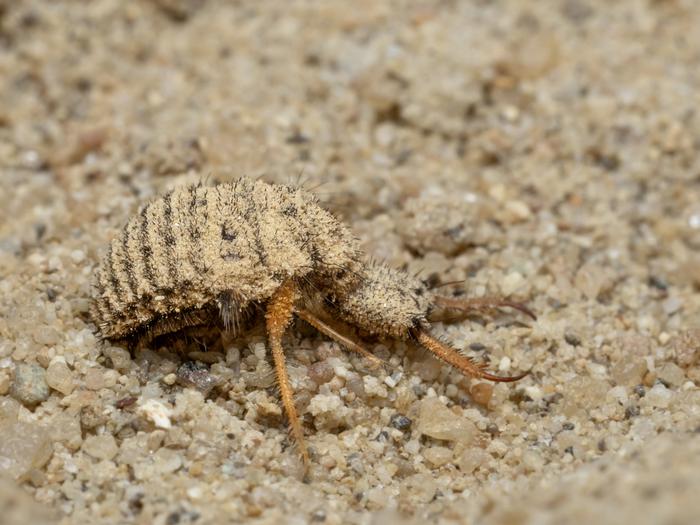
The larvae of net-winged insects are predators that use venom to catch and digest other arthropods. Well-known members of this order are the families of green lacewings and antlions. Green lacewing larvae are often used as beneficial insects in greenhouses because they feed on aphids and are therefore sometimes called “aphid lions”. Antlions are only found in dry, sandy habitats where they build funnel traps in the sand and wait for insect prey. As there are not many insects in this barren environment, antlions cannot be picky about their prey. The food supply is very limited, so they must overpower and quickly kill even large and defensive prey insects to survive. To do this, they need powerful venom that can effectively paralyze their prey and prevent them from escaping.
The larvae of net-winged insects are predators that use venom to catch and digest other arthropods. Well-known members of this order are the families of green lacewings and antlions. Green lacewing larvae are often used as beneficial insects in greenhouses because they feed on aphids and are therefore sometimes called “aphid lions”. Antlions are only found in dry, sandy habitats where they build funnel traps in the sand and wait for insect prey. As there are not many insects in this barren environment, antlions cannot be picky about their prey. The food supply is very limited, so they must overpower and quickly kill even large and defensive prey insects to survive. To do this, they need powerful venom that can effectively paralyze their prey and prevent them from escaping.
Complex venom produced by venom apparatus with three different venom glands
The research team, led by Heiko Vogel from the Max Planck Institute for Chemical Ecology and Andreas Vilcinskas from the University of Giessen, wanted to find out more about antlion venom. In particular, the researchers wanted to know where the venom comes from and whether it is produced by symbiotic bacteria, which organs are responsible for venom production, what the composition of the venom is, and how the venom system and toxicity of the venom differs from that of the related green lacewing larvae.
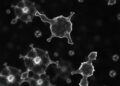
The research team used a variety of molecular biological, histological and three-dimensional reconstruction methods to study gene expression, protein diversity and the structure of the venom glands. The scientists also used HCR-RNA-FISH, a combination of fluorescence in situ hybridization (FISH) and hybridization chain reaction (HCR), to visualize and measure the distribution and amount of RNA molecules in individual cells. The researchers were able to show that three different tiny venom glands in the antlion are involved in the secretion of venom and produce different venom proteins.
Antlions get by without help from bacteria
Analysis using fluorescence in situ hybridization to visualize bacteria in the tissue also showed that antlions are apparently free of bacterial symbiotic partners. This result surprised the research team. “It is astonishing that antlions have no bacteria in their bodies. On the one hand, this is unusual, as most animals harbor a large number of microorganisms, especially in the gut, some of which are essential for survival. On the other hand, we had expected bacteria in the venom system, as it was previously assumed that certain venom proteins in antlion venom are produced by bacteria”, says Martin Kaltenpoth, who heads the Department of Insect Symbiosis at the Max Planck Institute for Chemical Ecology.
The special venom apparatus is an adaptation to the antlion’s ecological niche
Andreas Vilcinskas from the University of Giessen, head of the “Bioresources” department at the Fraunhofer Institute for Molecular Biology and Applied Ecology (IME), continues to keep an eye on the effectiveness and complexity of the antlion venom: “We were able to show that antlion venom is highly effective when injected into insects. However, we don’t know which substances are responsible for this toxicity. It would be interesting to find out which components play which roles in this very complex venom and how it differs from other insect venoms. The toxins found only in the antlion are particularly interesting”, he says, looking ahead to further research.
Journal
Communications Biology
DOI
10.1038/s42003-024-06666-9
Method of Research
Experimental study
Subject of Research
Animals
Article Title
Divergent venom effectors correlate with ecological niche in neuropteran predators
Article Publication Date
13-Aug-2024