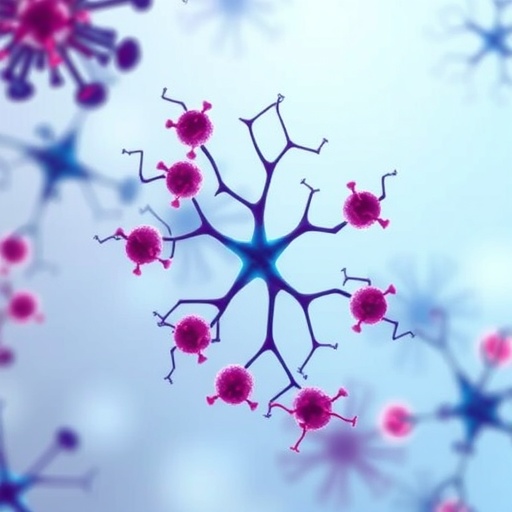
For the first time, scientists have developed and applied a groundbreaking technique to measure boron within individual live cancer cells, promising to revolutionize the way researchers understand and optimize cancer treatments. This novel approach offers unprecedented insights into how boron-based drugs behave in head and neck tumour cells, presenting new pathways to enhance the emerging therapy known as Boron Neutron Capture Therapy (BNCT).
BNCT is a highly targeted cancer treatment that hinges on delivering boron-containing compounds specifically into cancerous cells. Once the boron accumulates at therapeutic levels within the tumour, the area is irradiated with neutrons. This neutron bombardment triggers a nuclear reaction exclusive to boron atoms, leading to the selective destruction of cancer cells while sparing the surrounding healthy tissues. The success of this therapy, however, critically depends on the precise timing and quantity of boron accumulation within tumour cells, a factor that has been notoriously difficult to measure until now.
Researchers from the University of Birmingham, supported by the Rosetrees Trust, have pioneered the use of single-cell inductively coupled plasma mass spectrometry (scICP-MS) to quantitatively analyze boron uptake and retention in individual cancer cells in real-time. Unlike traditional bulk measurement techniques that average boron levels across thousands or even millions of cells — thereby masking cellular heterogeneity — this method uniquely reveals the diverse cellular responses within a tumour microenvironment.
Achieving this breakthrough required overcoming formidable technical challenges, foremost the maintenance of live cells in conditions compatible with the highly sensitive ICP-MS instrumentation. The team meticulously optimized the cell culture medium and refined the sample introduction system to ensure that individual tumour cells remain viable long enough for real-time boron measurements. This delicate balance between biological viability and analytical sensitivity was key to capturing authentic boron uptake kinetics.
The study, published in the Journal of Analytical Atomic Spectrometry, details the kinetic analysis of boron therapeutics in head and neck cancer cells using a complementary combination of bulk ICP-MS and the cutting-edge single-cell approach. With this dual strategy, researchers could map both the overall boron burden and its distribution variability at the cellular level, unveiling insights critical for refining BNCT protocols.
The implications of these findings are profound. Cellular heterogeneity within tumours often dictates treatment success or failure, with some cancer cells absorbing boron efficiently while others do not. Dr. James Coverdale, lead researcher, emphasizes that understanding this variability opens doors to precision treatment schedules and drug formulations tailored to maximize boron uptake and retention, thereby enhancing therapeutic efficacy.
Moreover, the application of scICP-MS enables the identification of specific cellular transport pathways responsible for boron internalization. This revelation not only elucidates fundamental drug-cell interactions but also guides the rational design of next-generation boron delivery agents that optimize cellular entry and retention.
Co-first author Jack Finch highlights that this novel measurement technique will serve as an invaluable tool for screening and comparing emerging BNCT drug candidates. By revealing the timing and magnitude of boron presence in live tumour cells, it empowers researchers to fine-tune neutron irradiation protocols to align with peak intracellular boron concentrations — a critical factor for maximizing tumour cell kill rates.
This innovative research also carries significant implications for advancing personalized medicine paradigms in head and neck cancers, which rank among the most prevalent forms of cancer in the United Kingdom. According to Cancer Research UK, these cancers collectively account for approximately three percent of all new cancer diagnoses, underscoring the pressing need for more effective, targeted treatment strategies.
Notably, this single-cell analytical approach could extend beyond BNCT, offering a versatile platform for studying a wide array of metal-based therapeutics and their interactions within diverse tumour settings. As modern oncology increasingly embraces precision targeting, technologies capable of dissecting drug distribution at the level of individual cells will be invaluable.
The intricate coordination between biological experimentation and sophisticated mass spectrometry exemplified by this study sets a new standard for therapeutic investigation. By shedding light on the dynamic transport and retention of boron in live cancer cells, this work paves the way for enhanced BNCT treatment planning, potentially improving outcomes for patients afflicted with challenging head and neck malignancies.
In summary, this pioneering investigation demonstrates the power of single-cell ICP-MS in decoding the kinetics of boron drug delivery in cancer cells. It reveals critical heterogeneity within tumours, uncovers transport mechanisms vital for therapeutic success, and highlights the importance of timing in neutron irradiation. These insights collectively propel BNCT closer to becoming a precision medicine tool for effectively combating head and neck cancer.
Subject of Research: Cells
Article Title: Kinetic analysis of boron therapeutics in head and neck cancer cells by complementary bulk ICP-MS and single-cell (scICP-MS) approaches
News Publication Date: 14-Aug-2025
Web References: https://pubs.rsc.org/en/content/articlelanding/2025/ja/d5ja00228a
References: 10.1039/D5JA00228A
Keywords: Head and neck cancer, Cancer, Radiation therapy
Tags: Boron detection in cancer cellsBoron Neutron Capture Therapyboron-based drug optimizationcancer cell boron accumulationhead and neck cancer therapyindividual cell analysis in drug researchinnovative cancer treatment techniquesnuclear reaction in cancer cellsprecision medicine in oncologyreal-time cancer researchsingle-cell mass spectrometrytargeted cancer treatment