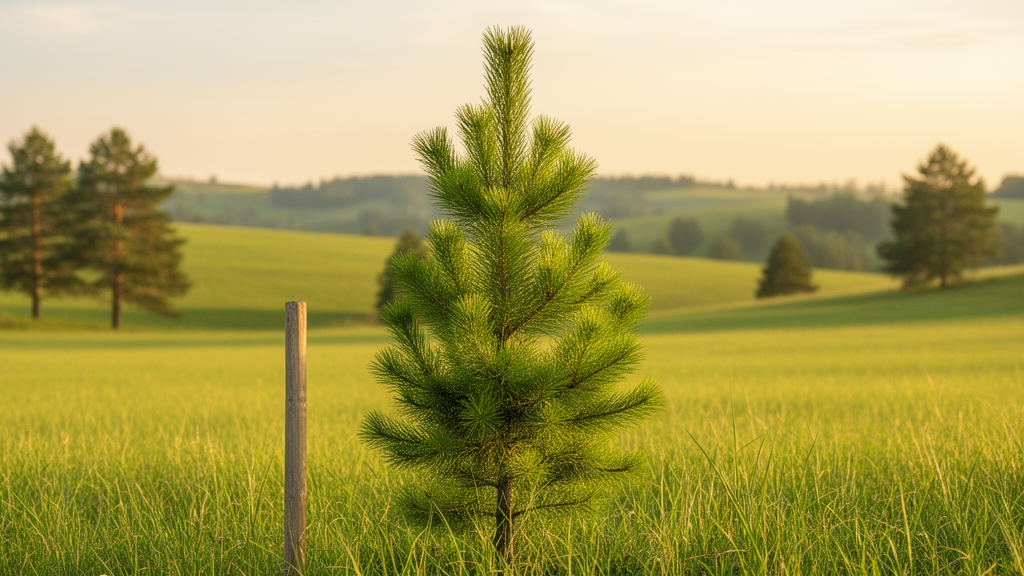
Conifers planted in the Southern Hemisphere grow up to four times faster and are more drought-resistant than the same trees growing in their native ranges, according to a study published in Nature. The finding came from an international team of more than two dozen researchers who examined growth rates across 192 sites on four continents, comparing pines, spruces, firs, cedars and other conifers in both their native and nonnative habitats.
The result surprised the researchers because ecological theory predicts a tradeoff between how fast a plant can grow and how tolerant it is of stressful conditions. “That result is surprising because ecological theory predicts that there should be a tradeoff between how fast a plant can grow and how tolerant it would be of stressful conditions,” said Stephen Brewer, an ecologist and professor of biology at the University of Mississippi, who was among the study’s authors.
The discovery matters because rising atmospheric carbon dioxide concentrations are driving a push for afforestation, the planting of trees in areas where none grew before, as a way of storing carbon. “With the elevated carbon dioxide concentrations in the atmosphere contributing to climate change, there’s a desire or push for afforestation, or planting trees in areas where there weren’t any before, as carbon sinks,” Brewer said. “For that to be effective, you want the trees to grow quickly and not die in droughts.”
The exact cause of the trees’ increased resilience requires further study, but the researchers found that Northern Hemisphere conifers planted in the Southern Hemisphere had higher concentrations of carbohydrates, such as sugars and starches, which can be used to store energy during stressful seasons. “This phenomenon of skipping the growth-stress tolerance trade-off is something crucial that this study is reporting,” said Alex Fajardo, a researcher at the Institute of Ecology and Biodiversity and professor at the University of Talca. “It is also valuable that we pursued finding the physiological mechanism responsible for this: an increase in carbon reserves needed for drought tolerance.”
Although the findings position conifers as well-suited for afforestation efforts, the researchers cautioned that more factors are involved. “The easy answer to this question is to advocate for plantations with nonnative conifers that can both grow (quickly) and tolerate drought,” Fajardo said. “However, this decision has some serious risks, as nonnative conifer plantations, particularly in the Southern Hemisphere, have come with high biodiversity and social costs.”
Pines and Douglas firs, two of the trees the researchers studied, do not naturally grow in the Southern Hemisphere, but they have been planted in countries including Chile, Brazil and South Africa as part of the lumber industry for decades. The problem, Brewer said, is that these pines are not necessarily staying in their plantations. “They are actually expanding into natural, native habitats,” he said. In Brazil, he noted, pines are escaping into the Cerrado, a savanna, where they grow much faster and essentially eliminate the native vegetation, becoming a significant problem.
The issue of encroaching pines has also affected Mississippi, Brewer said. Local lumber industries began replacing longleaf pines with slash pines in the 1930s because of their faster growth rate. Both species are native to Mississippi, but longleaf pines are more fire-resistant, and the threat of fire wiping out entire stands has prompted many foresters and nonprofit agencies to return to the more resilient longleaf. “I’ve seen wildfires completely eliminate entire stands of slash pines, whether that’s in Mississippi or in the Southern Hemisphere,” Brewer said. He added that the Cerrado receives rainfall comparable to the Mississippi Gulf Coast and is a savanna for the same reason the coast has longleaf pine savannas: fire. “Fire is what maintains those savannas, and if you plant slash pines in really high densities, there could be an actual elevated fire risk, too.”
The researchers also found that native Southern Hemisphere trees in the genus Nothofagus, known as southern beeches, performed relatively well in both growth and drought-tolerance measures. “In our study, we also found that native angiosperms of the genus Nothofagus did a decent job growing and tolerating drought,” Fajardo said. “They may be a more potentially sustainable alternative.”
The study, published in Nature under the title “Pines grow faster and are more drought resilient in the Southern Hemisphere,” suggests that fast-growing, drought-tolerant conifers could serve as strong candidates for carbon storage, while highlighting the ecological risks that planting nonnative trees outside their home ranges can carry.
Subject of Research: Growth and drought resilience of conifers planted outside their native ranges
Article Title: Researchers study why some trees thrive far from home
Article References: Researchers study why some trees thrive far from home. Original publication (Bibliographic details unavailable.)
Image Credits: AI Generated
DOI: Not provided
Keywords: conifers, pines, afforestation, carbon sinks, drought tolerance, Southern Hemisphere, Nothofagus, invasive species, Nature, forest ecology, carbohydrate reserves, biodiversity
News Source: Gavin Prescott. (October 28, 2026). Pines grow up to four times faster far from home, study finds. Scienmag.