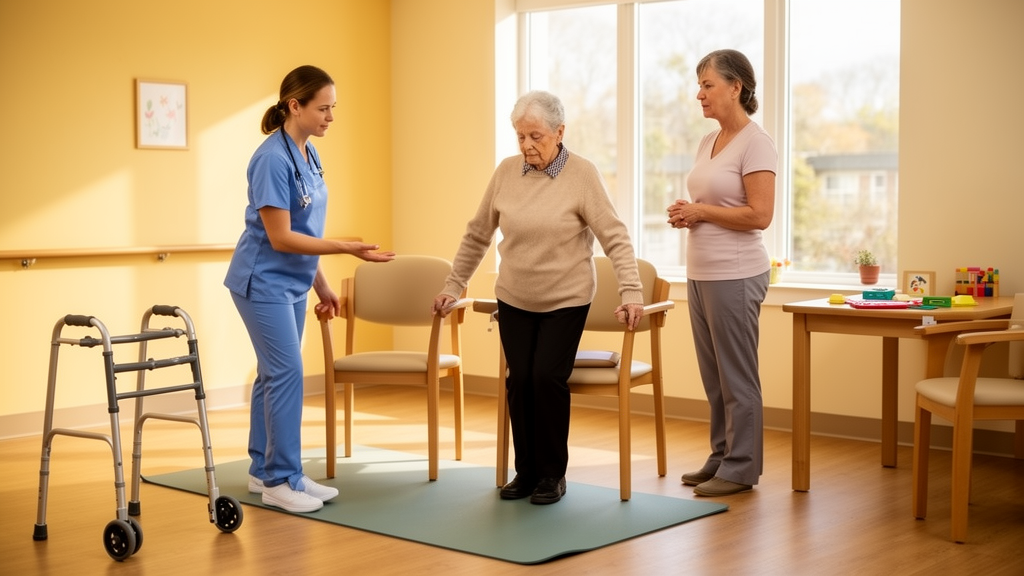
A randomized controlled pilot trial involving 67 pairs of community-dwelling people with dementia and their informal primary caregivers found that a combined rehabilitation and caregiver-support program was feasible to deliver and evaluate. All 36 caregivers assigned to the intervention received individual assistance from team staff, 23 attended group sessions, and 21 completed a survey after the final session. Among those 21 respondents, 20 (95%) reported increased knowledge about supporting the person with dementia, while 19 (90%) reported improved coping strategies.
The trial was not designed or powered to establish whether the program improved clinical outcomes, and the available data did not resolve that question. Participants entered the study as caregiver–resident pairs, with 36 assigned to the intervention and 31 to usual care. Of the 67 caregivers, 37 were spouses and 26 were adult children.
The program provided multiprofessional rehabilitation for the person with dementia and assessments, group sessions, and individual support for the informal caregiver. It comprised one 20-week intervention period and two four-week follow-up periods after five and 14 months. Caregiver outcome assessments were conducted at baseline and at five, 12, 24, and 36 months.
Blinded assessors used the Caregiver Burden Scale to measure caregiver burden, the 15-item Geriatric Depression Scale to assess depressive symptoms, and the Short Form 36–Health Survey to evaluate health-related quality of life. At 36 months, participation was 100% in the intervention group and 87% in the control group for the depression and quality-of-life assessments. Rates for the burden assessment were lower at 69% and 61%, respectively.
Missing data were attributed primarily to mortality. Although the study demonstrated that repeated assessments could be organized across an extended period, the shrinking number of participants available for some measures also limited the strength of comparisons between groups. No significant between-group differences were observed in caregiver depressive symptoms or caregiver burden.
At 24 and 36 months, some health-related quality-of-life subscales showed differences favoring the control group. Those findings cannot establish that the intervention caused worse quality of life: the trial was small, lacked the statistical power to determine effectiveness, and was affected by attrition and other missing data. Its clearest feasibility findings instead came from participation and uptake.
Every intervention-group caregiver was assessed and received individual support, most who attended the final survey reported greater knowledge and better coping, and the program’s components could be delivered through a structured interdisciplinary approach. The authors concluded that further evaluation in an adequately powered randomized controlled trial was warranted. They also proposed examining continuous support over a longer period and refining assessment procedures by conducting evaluations while interventions were still underway, which could provide more direct information about changes associated with rehabilitation and caregiver support.
Subject of Research: Feasibility of interdisciplinary rehabilitation for people with dementia and their informal primary caregivers
Article Title: Feasibility of a multidimensional interdisciplinary rehabilitation program for people with dementia and their informal primary caregivers – a randomized pilot trial with a caregiver focus
Article References: Conradsson, M., Olofsson, B., Holmberg, H., Lindelöf, N., Nilsson, I., Gustafson, Y., & Littbrand, H. (2026). Feasibility of a multidimensional interdisciplinary rehabilitation program for people with dementia and their informal primary caregivers – a randomized pilot trial with a caregiver focus. BMC Geriatrics, 26(1), Article 1326. https://doi.org/10.1186/s12877-026-08532-1
Image Credits: AI Generated
DOI: 10.1186/s12877-026-08532-1
Keywords: dementia rehabilitation, informal caregivers, randomized pilot trial, multiprofessional care, caregiver burden, depressive symptoms, health-related quality of life, feasibility study, Feasibility, multidimensional, interdisciplinary, rehabilitation
News Source: Cassandra Pierce. (October 21, 2026). Pilot trial finds combined dementia rehabilitation and caregiver support feasible. Scienmag.