• HOME
  • NEWS
  • EXPLORE
    • CAREER
      • Companies
      • Jobs
    • EVENTS
    • iGEM
      • News
      • Team
    • PHOTOS
    • VIDEO
    • WIKI
  • BLOG
  • COMMUNITY
    • FACEBOOK
    • INSTAGRAM
    • TWITTER
Tuesday, September 1, 2026
BIOENGINEER.ORG
No Result
View All Result
  • Login
  • HOME
  • NEWS
  • EXPLORE
    • CAREER
      • Companies
      • Jobs
        • Lecturer
        • PhD Studentship
        • Postdoc
        • Research Assistant
    • EVENTS
    • iGEM
      • News
      • Team
    • PHOTOS
    • VIDEO
    • WIKI
  • BLOG
  • COMMUNITY
    • FACEBOOK
    • INSTAGRAM
    • TWITTER
  • HOME
  • NEWS
  • EXPLORE
    • CAREER
      • Companies
      • Jobs
        • Lecturer
        • PhD Studentship
        • Postdoc
        • Research Assistant
    • EVENTS
    • iGEM
      • News
      • Team
    • PHOTOS
    • VIDEO
    • WIKI
  • BLOG
  • COMMUNITY
    • FACEBOOK
    • INSTAGRAM
    • TWITTER
No Result
View All Result
Bioengineer.org
No Result
View All Result
Home NEWS Science News Chemistry

PicoRuler: molecular rulers for high-resolution microscopy

Bioengineer by Bioengineer
December 1, 2023
in Chemistry
Reading Time: 3 mins read
0
Moleculare Nano Rulers
Share on FacebookShare on TwitterShare on LinkedinShare on RedditShare on Telegram

Latest super-resolution microscopy methods now achieve an optical resolution in the range of a few nanometres. This corresponds to a resolution in the range of the size of cellular molecules. However, it has not yet been possible to verify the resolution actually achieved on cellular building blocks such as multiprotein complexes – because there were no biomolecular reference systems that could be labelled with dyes at precisely defined positions at a distance of a few nanometres.
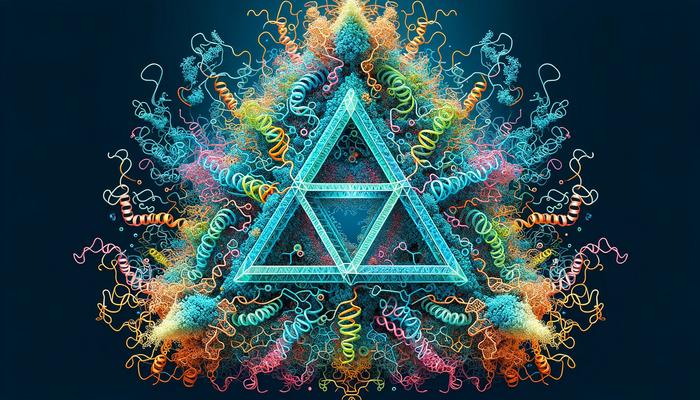
Moleculare Nano Rulers

Credit: Gerti Beliu, DALL-E 3 / University of Würzburg

Latest super-resolution microscopy methods now achieve an optical resolution in the range of a few nanometres. This corresponds to a resolution in the range of the size of cellular molecules. However, it has not yet been possible to verify the resolution actually achieved on cellular building blocks such as multiprotein complexes – because there were no biomolecular reference systems that could be labelled with dyes at precisely defined positions at a distance of a few nanometres.

A team led by Dr Gerti Beliu and Professor Markus Sauer from the Rudolf Virchow Centre – Center for Integrative and Translational Bioimaging at Julius-Maximilians-Universität (JMU) Würzburg in Bavaria, Germany, has now provided a turning point. In the journal Advanced Materials, they present novel biocompatible molecular rulers, the PicoRulers (Protein-based Imaging Calibration Optical Rulers).

Using genetic code expansion and click chemistry, the team has succeeded in constructing these customised molecular rulers. They can be used as precise biomolecular reference structures in fluorescence microscopy.

Technological Masterpiece: Precision at Molecular Level

The PicoRulers are based on the three-part protein PCNA (Proliferating Cell Nuclear Antigen), which plays a central role in DNA replication and repair. Through the precise introduction of unnatural amino acids at precisely defined positions, this protein has been modified in such a way that fluorescent dyes or other molecules can be specifically clicked onto it with minimal linkage error.

This enables researchers to test the resolution of the latest super-resolution microscopy methods with unprecedented precision on a precisely defined cellular biomolecule.

Markus Sauer is enthusiastic: “The ability to resolve real biological structures at sub-10-nanometre level marks a new era in biological imaging. Compared to previously used artificial macromolecules, our PicoRulers are not only characterised by their biological compatibility. They also enable unrivalled precision for testing resolution under realistic conditions.”

Opening the Door to Investigate Complex Processes in Cells

The application of this technology extends far beyond the traditional boundaries of microscopy. “Our PicoRulers are not only a tool for more precise measurements, but also open the door to a deeper and more detailed investigation of complex processes that take place within our cells,” explains Gerti Beliu.

Strong Potential for Future Applications

The further development of the PicoRulers may change biological and medical imaging with molecular resolution in the long term. For the first time, they make it possible to validate and improve the resolution potential of new super-resolution microscopy methods on biological samples. This makes them a valuable tool for the future elucidation of the molecular organisation and interaction of biomolecules in cells.


Journal

Advanced Materials

DOI

10.1002/adma.202310104

Method of Research

Experimental study

Subject of Research

Not applicable

Article Title

PCNA as protein-based nanoruler for sub-10 nm fluorescence imaging.

Article Publication Date

27-Nov-2023

Share12Tweet8Share2ShareShareShare2

Related Posts

β-Sitosterol from Ipomoea carnea Jacq. As a promising anti-inflammatory agent: Evidence from in silico modeling and in vitro validation

β-Sitosterol from Ipomoea carnea Jacq. As a promising anti-inflammatory agent: Evidence from in silico modeling and in vitro validation

August 31, 2026
Graded membranes point to a sustainable route for refining complex petroleum

Graded membranes point to a sustainable route for refining complex petroleum

August 31, 2026

Round-robin tests quantify catalyst activity and deactivation in CO2 hydrogenation modelling

August 30, 2026

Researchers reveal guiding principles for electrochemical synthesis of multimetallic nanocrystals

August 30, 2026

POPULAR NEWS

  • β-Sitosterol from Ipomoea carnea Jacq. As a promising anti-inflammatory agent: Evidence from in silico modeling and in vitro validation

    29 shares
    Share 12 Tweet 7
  • Design, fabrication and characterization of a wearable Fiber Bragg grating sensor for cardiorespiratory monitoring using finger plethysmography

    29 shares
    Share 12 Tweet 7
  • KAIST opens the era of industrial-scale microbial foods, proposing growth strategies for the next-generation protein market

    29 shares
    Share 12 Tweet 7
  • Virologist awarded $2 million NIH grant to investigate how virus-infected cells live and die

    29 shares
    Share 12 Tweet 7

About

We bring you the latest biotechnology news from best research centers and universities around the world. Check our website.

Follow us

Recent News

β-Sitosterol from Ipomoea carnea Jacq. As a promising anti-inflammatory agent: Evidence from in silico modeling and in vitro validation

Design, fabrication and characterization of a wearable Fiber Bragg grating sensor for cardiorespiratory monitoring using finger plethysmography

KAIST opens the era of industrial-scale microbial foods, proposing growth strategies for the next-generation protein market

Subscribe to Blog via Email

Enter your email address to subscribe to this blog and receive notifications of new posts by email.

Join 85 other subscribers
  • Contact Us

Bioengineer.org © Copyright 2023 All Rights Reserved.

Welcome Back!

Login to your account below

Forgotten Password?

Retrieve your password

Please enter your username or email address to reset your password.

Log In
No Result
View All Result
  • Homepages
    • Home Page 1
    • Home Page 2
  • News
  • National
  • Business
  • Health
  • Lifestyle
  • Science

Bioengineer.org © Copyright 2023 All Rights Reserved.