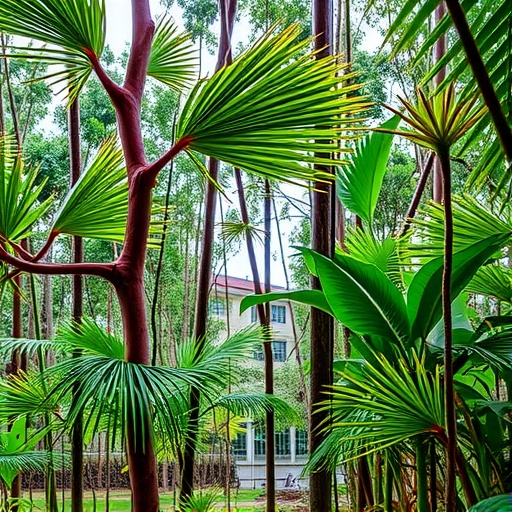
A subtropical tree has revealed how forests may survive a future defined by hotter temperatures, rising atmospheric carbon dioxide and increasingly erratic rainfall. In a study of Dendropanax trifidus, researchers found that drought resistance and recovery after rewatering were not controlled by a single “stress gene” or one isolated physiological trait. Instead, the species appeared to rely on a coordinated survival strategy involving photoprotective regulation, flexible carbon allocation and rapid adjustment of photosynthetic machinery. The findings offer a detailed view of how trees can protect their leaves when water shortages prevent them from safely using sunlight, while also preserving enough energy to rebuild growth once water returns. Because Dendropanax trifidus is an evergreen broadleaf species native to East Asian forests, its response may provide clues about how woody plants in warm, humid ecosystems could respond to the combined pressures of climate change rather than to drought, heat or elevated carbon dioxide acting alone.
The central challenge begins when soil moisture falls. Under normal conditions, leaves absorb light energy and use it to drive photosynthesis, converting carbon dioxide and water into carbohydrates. During drought, however, stomata close to limit water loss through transpiration. This restricts the entry of carbon dioxide into the leaf while sunlight continues to strike the photosynthetic apparatus. The resulting imbalance can overload chloroplasts, the organelles where photosynthesis occurs, and generate reactive oxygen species capable of damaging proteins, membranes and pigments. The study indicates that Dendropanax trifidus countered this danger by strengthening photoprotective regulation. Rather than allowing excess light energy to accumulate, the leaves redirected or safely dissipated it as heat through mechanisms associated with non-photochemical quenching. This process reduces the pressure placed on photosystem II, the light-harvesting complex particularly vulnerable to drought-induced photoinhibition, and helps prevent irreversible damage during prolonged water limitation.
The tree’s response was further shaped by atmospheric carbon dioxide and temperature. Elevated carbon dioxide can partially reduce stomatal opening, allowing plants to conserve water, but it can also alter the balance between carbon gain and carbon use. Warmer conditions increase evaporative demand and accelerate metabolism, potentially intensifying drought stress even when soil moisture declines by the same amount. In Dendropanax trifidus, the interaction between these factors appeared to stimulate a finely tuned physiological adjustment rather than a simple increase or decrease in photosynthesis. Carbon dioxide enrichment supported water-use efficiency by enabling the plant to assimilate carbon while losing less water through its leaves. At the same time, elevated temperature imposed additional demands on membranes, enzymes and respiratory metabolism. The tree’s capacity to maintain protective systems under this combined pressure suggests that its climate response depends on coordination between gas exchange, energy dissipation and the distribution of newly fixed carbon.
One of the most important findings concerned carbon reallocation. When drought limits photosynthesis, plants must decide where their remaining carbon should go. Investment in new leaves and shoots may be reduced, while maintenance of roots, vascular tissues and protective compounds becomes more urgent. The study suggests that Dendropanax trifidus redirected carbon away from immediate expansion and toward structures and metabolites that improve survival. Soluble sugars may serve several functions in this process: they provide respiratory fuel, help stabilize cellular membranes and contribute to osmotic adjustment by assisting cells in retaining water. Carbon may also be transferred below ground, supporting root activity and improving the plant’s ability to exploit remaining moisture. This reallocation is not simply a sign of reduced growth. It is an active economic strategy in which the tree temporarily sacrifices construction of new biomass to preserve the machinery required for recovery. Under elevated carbon dioxide, the plant may have had a larger carbon supply available for this balancing act, although higher temperature could alter how efficiently that carbon was stored or consumed.
The recovery phase after rewatering revealed why drought survival cannot be judged only by the appearance of a plant during stress. Once water became available again, Dendropanax trifidus was able to restore photosynthetic activity through the reactivation of damaged or downregulated processes and the continued use of protective mechanisms. Rewatering can itself be dangerous because a leaf that has been exposed to drought may suddenly receive water while its photosynthetic system remains chemically unbalanced. Rapid reopening of stomata can increase carbon dioxide entry, but if electron transport and carbon fixation do not recover at the same speed, oxidative stress may persist. The tree’s photoprotective regulation helped control this transition, allowing light energy to be processed safely while photosynthesis returned. Carbon previously retained in storage tissues could then be mobilized to repair proteins, rebuild membranes and support renewed leaf and root growth. This capacity for coordinated recovery may be as important as drought tolerance itself, especially in regions where rainfall arrives in short, intense episodes after extended dry periods.
The researchers’ observations also emphasize that elevated carbon dioxide is not a universal shield against climate stress. Although additional carbon dioxide can improve intrinsic water-use efficiency, it does not eliminate the effects of heat. High temperatures can increase vapor pressure deficits, meaning that the atmosphere draws water from leaves more strongly even when air humidity appears relatively high. Heat can also accelerate respiration, consume stored carbohydrates and disrupt the stability of photosynthetic proteins. Dendropanax trifidus appeared to benefit when carbon dioxide enrichment was combined with its photoprotective and carbon-allocation responses, but the outcome depended on the balance between carbon availability and thermal demand. This distinction matters because many experiments examine elevated carbon dioxide or drought separately, while natural forests experience multiple stresses simultaneously. A tree that performs well under extra carbon dioxide in a cool greenhouse may respond very differently when heat, dry soil and high atmospheric demand occur together in the field.
The findings carry broader implications for predicting forest carbon cycles. Models often treat photosynthesis as the primary measure of plant performance, yet drought-resistant species can remain physiologically active even while reducing visible growth. Carbon absorbed from the atmosphere may be stored in roots, soluble sugars, protective pigments or repair systems rather than converted immediately into wood. If such allocation patterns are overlooked, models could overestimate short-term growth during favorable conditions or underestimate the capacity of trees to recover after drought. At the same time, stored carbon is not automatically permanent. It can be rapidly consumed during respiration, redirected to roots or released if tissues die. Understanding where carbon goes during stress is therefore essential for estimating whether forests will continue to function as carbon sinks in a warmer world. The Dendropanax trifidus response demonstrates that resilience involves both the preservation of photosynthetic machinery and the strategic management of carbon before, during and after water shortage.
The study also points toward practical questions for forest conservation and climate adaptation. Species capable of regulating excess light, conserving water and reallocating carbon may be better equipped to withstand repeated droughts, but resilience has limits. Frequent stress can reduce reserves before they are fully restored, while successive heat waves may damage leaves faster than photoprotective systems can respond. For forest managers, this means that selecting or preserving trees should involve more than measuring growth under well-watered conditions. Traits such as recovery speed, root investment, pigment protection, carbohydrate storage and the stability of photosystem II may provide more informative indicators of long-term survival. For scientists, Dendropanax trifidus offers a useful system for examining how evergreen trees integrate environmental signals at the levels of stomatal control, chloroplast protection, carbohydrate metabolism and whole-plant growth. As atmospheric carbon dioxide continues to rise, the decisive question will not be whether trees receive more carbon, but whether they can safely deploy it while defending their tissues against heat and dehydration.
Subject of Research: Drought resistance and post-rewatering recovery in Dendropanax trifidus under elevated carbon dioxide and temperature
Article Title: Drought resistance and post-rewatering recovery of Dendropanax trifidus under elevated CO2 and temperature are mediated by photoprotective regulation and carbon reallocation
Image Credits: AI Generated
Keywords: Dendropanax trifidus, drought resistance, rewatering recovery, elevated CO2, temperature stress, photoprotection, photosynthesis, carbon reallocation, non-photochemical quenching, plant climate resilience
Tags: adaptive photosynthetic responses in evergreen broadleaf treescarbon reallocation strategies for climate changeclimate change impacts on East Asian forest speciesDendropanax trifidus drought resiliencedrought stress and leaf energy managementeffects of rising atmospheric CO2 on forest speciesforest survival strategies under erratic rainfallimplications of climate change on subtphotoprotective regulation in subtropical treesphysiological traits of drought-resistant woody plantsplant drought recovery mechanismsrapid adjustment of photosynthetic machinery in trees