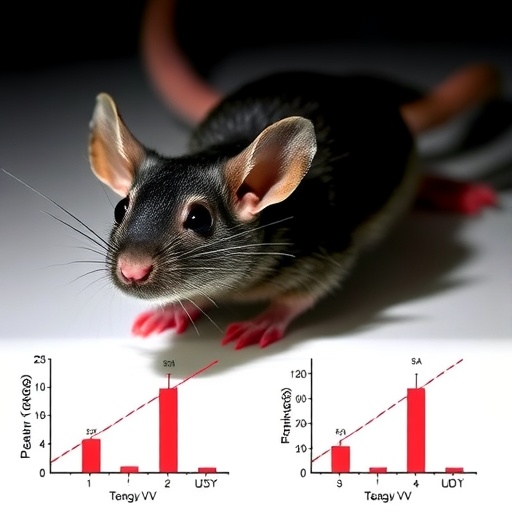
Etoxazole, a mite-killing pesticide sprayed on everything from apples and strawberries to cotton and ornamental plants, has long carried a reputation as one of the gentler chemicals in the agricultural arsenal. Because it targets a biochemical process unique to arthropods—the construction of chitin, the tough material that forms insect and mite shells—regulators and manufacturers have largely assumed that mammals, which make no chitin at all, have little to fear from it. A new study published in Scientific Reports now complicates that comfortable picture. In experiments on female Wistar rats, the study by B. Bati reports that etoxazole produced measurable disturbances in cholinergic nerve signaling, provoked inflammatory responses, and inflicted damage on DNA, with all three categories of harm intensifying as the dose increased. The findings, dose-dependent across the board, suggest that a compound engineered to be selectively lethal to mites may not be biologically invisible to mammals after all.
Etoxazole belongs to the oxazoline class of acaricides and was developed in the 1990s as growers wrestled with resistance to older miticides. Its mode of action is elegant in its specificity: the compound interferes with chitin biosynthesis, the molecular assembly line that mites and insects rely on to build new exoskeletons as they molt. Starved of chitin, developing mites cannot complete ecdysis and die. Mammals possess no chitin and no molting machinery, and therefore—so the reasoning went—no meaningful molecular target for the chemical. That logic underpinned etoxazole’s favorable toxicological profile in registration dossiers, and the compound is now approved on a long list of food crops across major producing regions, with residues routinely detected on fruit and in processed foods. But selectivity of mode of action is not the same as absence of biological activity, and toxicologists have increasingly begun to probe what “low mammalian toxicity” actually means at the level of cells and molecules.
The new work was designed to answer precisely that question. Female Wistar rats, a standard outbred laboratory strain widely used in toxicological research, were assigned to groups receiving different doses of etoxazole, allowing a dose-response picture rather than a simple exposed-versus-unexposed comparison. The design matters because dose-dependence is one of the hallmarks toxicologists look for when judging whether an observed effect is a genuine consequence of a chemical or mere biological noise: if harm climbs in step with exposure, causation becomes far harder to dismiss. After the exposure period, the animals were evaluated across three distinct but interconnected domains—the functional state of the cholinergic system, which governs acetylcholine signaling throughout the nervous system; markers of inflammation, the immune system’s generic alarm response; and genotoxicity, the damage inflicted directly or indirectly on genetic material. The study reports that etoxazole left fingerprints in all three domains, and that the fingerprints deepened with every increase in dose.
The cholinergic findings are arguably the most unexpected. The cholinergic system transmits signals at the junctions between nerve cells and between nerves and muscles using the neurotransmitter acetylcholine. Once acetylcholine has delivered its message, the enzyme acetylcholinesterase rapidly breaks it down, resetting the synapse for the next signal. Nerve agents and many organophosphate and carbamate pesticides work by blocking acetylcholinesterase, causing acetylcholine to accumulate and nerve cells to fire uncontrollably. Etoxazole was never designed to touch this system, and its mode of action in mites has nothing to do with neurotransmission. Yet the study reports cholinergic perturbation in the exposed rats, scaling with dose. Interference with cholinergic regulation, even when it falls short of outright enzyme poisoning, can translate into altered neuromuscular coordination, disturbed autonomic control of organs, and subtle impairments in cognition and mood—outcomes that standard acute toxicity testing, focused on survival and gross symptoms, is poorly equipped to detect.
The inflammatory results point in a complementary direction. Inflammation is the body’s double-edged first response to injury: in the short term it recruits immune cells and repair machinery to damaged tissue, but when provoked chronically or systemically it becomes a driver of disease, implicated in cardiovascular disease, metabolic dysfunction, liver injury, and cancer. The study documents an inflammatory response in etoxazole-exposed rats that intensified with dose, consistent with the chemical acting as a low-grade systemic irritant to mammalian tissue. Such signaling typically travels through well-characterized molecular channels—pro-inflammatory messenger proteins such as tumor necrosis factor-alpha and interleukin-1 beta, coordinated in large part by the NF-kappaB transcription factor pathway—and sustained activation of these pathways by environmental chemicals is increasingly recognized as one route by which everyday exposures translate into long-term pathology.
Most consequential of all are the genotoxic findings. Genotoxicity refers to a chemical’s capacity to damage DNA, whether directly, by attacking the genetic material itself, or indirectly, through reactive molecules that do the attacking. It is the endpoint most tightly linked to cancer risk, because mutations in critical genes can set a cell on the path to uncontrolled division, and it is also associated with reproductive harm when it strikes the DNA of germ cells. The study reports DNA-damaging effects in the exposed animals that grew with dose, a pattern toxicologists treat with particular seriousness because it implies a monotonic relationship between exposure and molecular injury. A dose-dependent genotoxic signal does not by itself prove carcinogenicity, and regulators generally require extensive follow-up before acting on such a signal alone. But it flags etoxazole as a chemical whose interaction with mammalian cells warrants far closer scrutiny than its “low risk” label has historically invited.
A unifying thread runs through all three effect categories: oxidative stress, the imbalance that arises when reactive oxygen species—the chemically aggressive byproducts of oxygen metabolism—overwhelm the cell’s antioxidant defenses. Superoxide radicals, hydrogen peroxide, and hydroxyl radicals are normal fixtures of cellular life, generated continuously in mitochondria and neutralized continuously by enzymes such as superoxide dismutase, catalase, and glutathione peroxidase. Many pesticides tilt this balance, and the resulting oxidative surplus can simultaneously damage membranes, perturb enzymes—including, indirectly, the cholinesterases—and attack DNA, producing the oxidized bases and strand breaks that genotoxicity assays detect. Oxidative stress also activates inflammatory signaling, which in turn generates more reactive oxygen species, creating a self-reinforcing loop. That a single chemical exposure registers simultaneously in cholinergic, inflammatory, and genotoxic readouts is therefore less three separate findings than three windows onto one underlying disturbance.
The choice of female rats is itself scientifically meaningful. Sex is an increasingly acknowledged variable in toxicology: females and males differ in body composition, in the activity of the liver enzymes that metabolize foreign chemicals, in hormonal milieu, and in the regulation of immune and inflammatory responses, and these differences can translate into different sensitivities to the same compound. Studying females also raises questions relevant to reproductive health, since a chemical that damages DNA or inflames tissue in a non-pregnant adult raises obvious concerns for developing embryos when exposure occurs before or during gestation. The study does not settle how etoxazole behaves in males, in other species, or in pregnancy, but by documenting harm in one mammalian sex across multiple doses it weakens the argument that the compound can be assumed benign across the board.
None of this means that a single piece of treated fruit poses an acute danger, and the findings should be read through the oldest lens in toxicology: the dose makes the poison. Maximum residue limits exist precisely to keep dietary intake far below the levels at which effects emerge in animal studies, and residues on food typically correspond to exposures far below the doses toxicologists administer deliberately to map a chemical’s hazards. But dose-response data of exactly the kind the new study provides are what regulators need to test whether those safety margins are adequate. Real-world exposure is also rarely a single-dose affair: consumers encounter etoxazole alongside dozens of other pesticide residues, over years, in combinations whose joint effects are almost never tested, while populations with above-average exposure—farm workers, communities near treated fields—sit closer to the upper end of the exposure curve.
For pesticide safety, the study lands at an uncomfortable but familiar juncture. Selective toxicity—the principle that a chemical can be lethal to a pest and harmless to everything else—remains one of the most powerful ideas in agricultural chemistry, and etoxazole’s chitin-targeting mechanism is a textbook example. What the new results underscore is that selectivity of the designed mechanism does not guarantee silence elsewhere in the biochemistry of non-target organisms. Mammalian cells are dense networks of interacting pathways, and a foreign molecule entering them has many ways of doing harm that no registration study can anticipate in advance. The dose-dependent cholinergic, inflammatory, and genotoxic effects documented in female Wistar rats do not sound a death knell for a compound farmers genuinely need against resistant mites. They do, however, make a strong case that etoxazole’s toxicological file is incomplete—and that its next chapter should be written with the same molecular rigor the new study brings to the question.
Subject of Research: Dose-dependent cholinergic, inflammatory, and genotoxic effects of the acaricide etoxazole following exposure in female Wistar rats.
Subject of Research: Technology and Engineering
Article Title: Dose-dependent cholinergic, inflammatory, and genotoxic effects of etoxazole in female Wistar rats
Article References: Bati, B. (2026). Dose-dependent cholinergic, inflammatory, and genotoxic effects of etoxazole in female Wistar rats. Scientific Reports. https://doi.org/10.1038/s41598-026-69539-7
Image Credits: AI Generated
DOI: 10.1038/s41598-026-69539-7
Keywords: etoxazole, acaricide, chitin synthesis inhibitor, cholinergic toxicity, acetylcholinesterase, inflammation, genotoxicity, DNA damage, oxidative stress, female Wistar rats, dose-dependent toxicity, pesticide safety
Cite Scienmag News
APA
MLA
Chicago
Denise Maddox. (August 30, 2026). Pesticide etoxazole causes dose-dependent nerve, inflammation, and DNA damage in female rats. Scienmag. https://scienmag.com/pesticide-etoxazole-causes-dose-dependent-nerve-inflammation-and-dna-damage-in-female-rats/
Denise Maddox. “Pesticide etoxazole causes dose-dependent nerve, inflammation, and DNA damage in female rats.” Scienmag, 30 August 2026, https://scienmag.com/pesticide-etoxazole-causes-dose-dependent-nerve-inflammation-and-dna-damage-in-female-rats/. Accessed 30 August 2026.
Denise Maddox. “Pesticide etoxazole causes dose-dependent nerve, inflammation, and DNA damage in female rats.” Scienmag. August 30, 2026. https://scienmag.com/pesticide-etoxazole-causes-dose-dependent-nerve-inflammation-and-dna-damage-in-female-rats/
Copy citation
Download RIS
Tags: biological effects of agricultural pesticides on non-target specieschitin biosynthesis inhibition effectschitin biosynthesis inhibitors and mammalian safetyDNA damage from chemical pesticidesDNA damage from pesticidesDNA integrity and chemical exposuredose-dependent nerve damage from acaricidesdose-dependent nerve damage from etoxazoleeffects of oxazoline class pesticides on mammalsenvironmental health risks of mite-killing chemicalsEtoxazole pesticide toxicity in mammalsimpact of acaricides on mammalian healthinflammation caused by agricultural chemicalsinflammation caused by pesticide exposurelong-term effects of mite-specific pesticideslong-term health implications of pesticide exposuremechanisms of pesticide-induced inflammation and cellular damageneurotoxicity of pesticide residuespesticide impact on female rat nervous systempesticide toxicity in mammalspesticide-induced inflammatory responsesregulatory considerations for pesticide safetysafety assessment of etoxazole in mammals