

• HOME
  • NEWS
  • EXPLORE
    • CAREER
      • Companies
      • Jobs
    • EVENTS
    • iGEM
      • News
      • Team
    • PHOTOS
    • VIDEO
    • WIKI
  • BLOG
  • COMMUNITY
    • FACEBOOK
    • INSTAGRAM
    • TWITTER
Thursday, April 2, 2026
BIOENGINEER.ORG
No Result
View All Result
  • Login
  • HOME
  • NEWS
  • EXPLORE
    • CAREER
      • Companies
      • Jobs
        • Lecturer
        • PhD Studentship
        • Postdoc
        • Research Assistant
    • EVENTS
    • iGEM
      • News
      • Team
    • PHOTOS
    • VIDEO
    • WIKI
  • BLOG
  • COMMUNITY
    • FACEBOOK
    • INSTAGRAM
    • TWITTER
  • HOME
  • NEWS
  • EXPLORE
    • CAREER
      • Companies
      • Jobs
        • Lecturer
        • PhD Studentship
        • Postdoc
        • Research Assistant
    • EVENTS
    • iGEM
      • News
      • Team
    • PHOTOS
    • VIDEO
    • WIKI
  • BLOG
  • COMMUNITY
    • FACEBOOK
    • INSTAGRAM
    • TWITTER
No Result
View All Result
Bioengineer.org
No Result
View All Result
Home NEWS Science News Health

Peste des petits ruminants: a model for use in eradicating the disease

Bioengineer by Bioengineer
July 30, 2018
in Health
Reading Time: 2 mins read
0
Share on FacebookShare on TwitterShare on LinkedinShare on RedditShare on Telegram
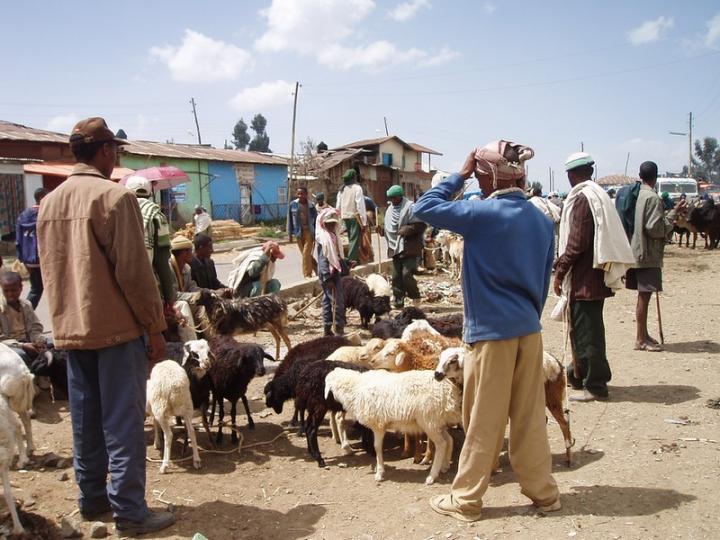
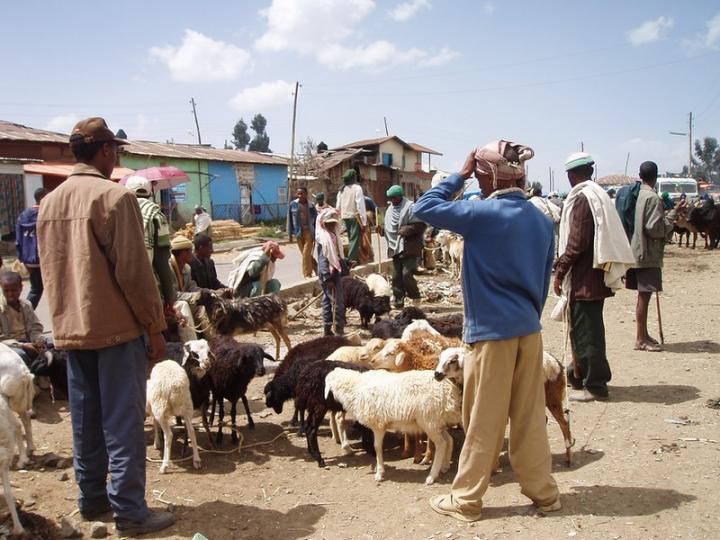
IMAGE

Credit: © ENVT, A. Waret-Szkuta

Eradicating peste des petits ruminants is an ambitious objective that is neveretheless looking increasingly realistic, notably thanks to a targeted vaccination strategy centring on production systems that act as a virus reservoir. This was the conclusion drawn by a scientific study published in the journal PNAS.

In theory, the peste des petits ruminants control strategy relies on mass vaccination campaigns. However, although the existing vaccine provides lifelong immunity, such campaigns are both costly and highly complex to implement from a logistical point of view.

The study was initiated by CIRAD and conducted by the Royal Veterinary College (RVC, University of London), in collaboration with Ethiopian and European partners*. The researchers combined a dynamic model that simulates virus spread with a national serological study. The information obtained served to assess the level of virus transmission within endemic zones and the vaccine coverage required to halt transmission and eliminate the disease. The results also suggested that some pastoral production systems act as virus reservoirs from which the virus can spread.

For Guillaume Fournié, an epidemiologist at the RVC, "identifying high-risk populations and adapting vaccination strategies to local situations is vital in order to cut the cost of eradicating the disease while boosting the chances of success".

"Peste des petits ruminants causes huge economic losses and is a particular threat to the livelihoods and food security of the most vulnerable farmers", François Roger, a CIRAD epidemiologist and co-author of the study, points out. "In view of the limited budgets currently allocated for control of the disease and the numerous constraints in the field, effective decision support tools are vital."

The OIE and FAO, with the support of the European Union in particular, are launching a global programme to eradicate the disease within fifteen years. This would make peste des petits ruminants the third infectious disease to be eradicated, after smallpox and rinderpest.

Peste des petits ruminants, a devastating disease

This highly contagious viral disease affects almost a billion sheep and goats in Africa, the Middle East and Asia. It causes substantial economic losses due to high morbidity and mortality rates. The role of wild ruminants in the spread of the disease is still largely undetermined, but models could be used to understand it better, like here with buffalos in Africa.

###

*National Veterinary Institute (Ethiopia), INRA-ENVT (France), Epicentre (France), London School of Hygiene & Tropical Medicine (UK), City University of Hong Kong (China).

Media Contact

Sophie Della Mussia
[email protected]
33-467-617-594

http://www.cirad.fr/

Original Source

https://www.cirad.fr/en/news/all-news-items/press-releases/2018/peste-des-petits-ruminants-model http://dx.doi.org/10.1073/pnas.1711646115

Share12Tweet8Share2ShareShareShare2

Related Posts

Gut Microbiota and SCFA Biomarkers in Early PD Diagnosis

April 1, 2026

Lack of Access to Dental Care Linked to Increased Risk of Cardiovascular Disease and Dementia

April 1, 2026

Breakthrough Gene Editing Therapy Offers Hope for Severe Sickle Cell Disease

April 1, 2026

Metabolic Signatures Link VAT Mass to Liver Disease

April 1, 2026
Please login to join discussion

POPULAR NEWS

  • blank

    Revolutionary AI Model Enhances Precision in Detecting Food Contamination

    96 shares
    Share 38 Tweet 24
  • Imagine a Social Media Feed That Challenges Your Views Instead of Reinforcing Them

    1006 shares
    Share 398 Tweet 249
  • Promising Outcomes from First Clinical Trials of Gene Regulation in Epilepsy

    51 shares
    Share 20 Tweet 13
  • Popular Anti-Aging Compound Linked to Damage in Corpus Callosum, Study Finds

    44 shares
    Share 18 Tweet 11

About

We bring you the latest biotechnology news from best research centers and universities around the world. Check our website.

Follow us

Recent News

Twist Angle Shapes Superconductivity in WSe2

Paul Ohodnicki Leads Team Developing Transformers for High-Voltage DC Power Grids

Illinois Tech Computer Science Researcher Recognized with IEEE Chicago Section Award

Subscribe to Blog via Email

Enter your email address to subscribe to this blog and receive notifications of new posts by email.

Join 78 other subscribers
  • Contact Us

Bioengineer.org © Copyright 2023 All Rights Reserved.

Welcome Back!

Login to your account below

Forgotten Password?

Retrieve your password

Please enter your username or email address to reset your password.

Log In
No Result
View All Result
  • Homepages
    • Home Page 1
    • Home Page 2
  • News
  • National
  • Business
  • Health
  • Lifestyle
  • Science

Bioengineer.org © Copyright 2023 All Rights Reserved.
