• HOME
  • NEWS
  • EXPLORE
    • CAREER
      • Companies
      • Jobs
    • EVENTS
    • iGEM
      • News
      • Team
    • PHOTOS
    • VIDEO
    • WIKI
  • BLOG
  • COMMUNITY
    • FACEBOOK
    • INSTAGRAM
    • TWITTER
Tuesday, November 17, 2026
BIOENGINEER.ORG
No Result
View All Result
  • Login
  • HOME
  • NEWS
  • EXPLORE
    • CAREER
      • Companies
      • Jobs
        • Lecturer
        • PhD Studentship
        • Postdoc
        • Research Assistant
    • EVENTS
    • iGEM
      • News
      • Team
    • PHOTOS
    • VIDEO
    • WIKI
  • BLOG
  • COMMUNITY
    • FACEBOOK
    • INSTAGRAM
    • TWITTER
No Result
View All Result
Bioengineer.org
No Result
View All Result
Home NEWS Science News Biology

Permafrost Vegetation Resilience Reversed After 2008 Despite Continued Greening

by
November 8, 2026
in Biology
Reading Time: 2 mins read
0
Permafrost Vegetation Resilience Reversed After 2008 Despite Continued Greening

Permafrost Vegetation Resilience Reversed After 2008 Despite Continued Greening

Share on FacebookShare on TwitterShare on LinkedinShare on RedditShare on Telegram

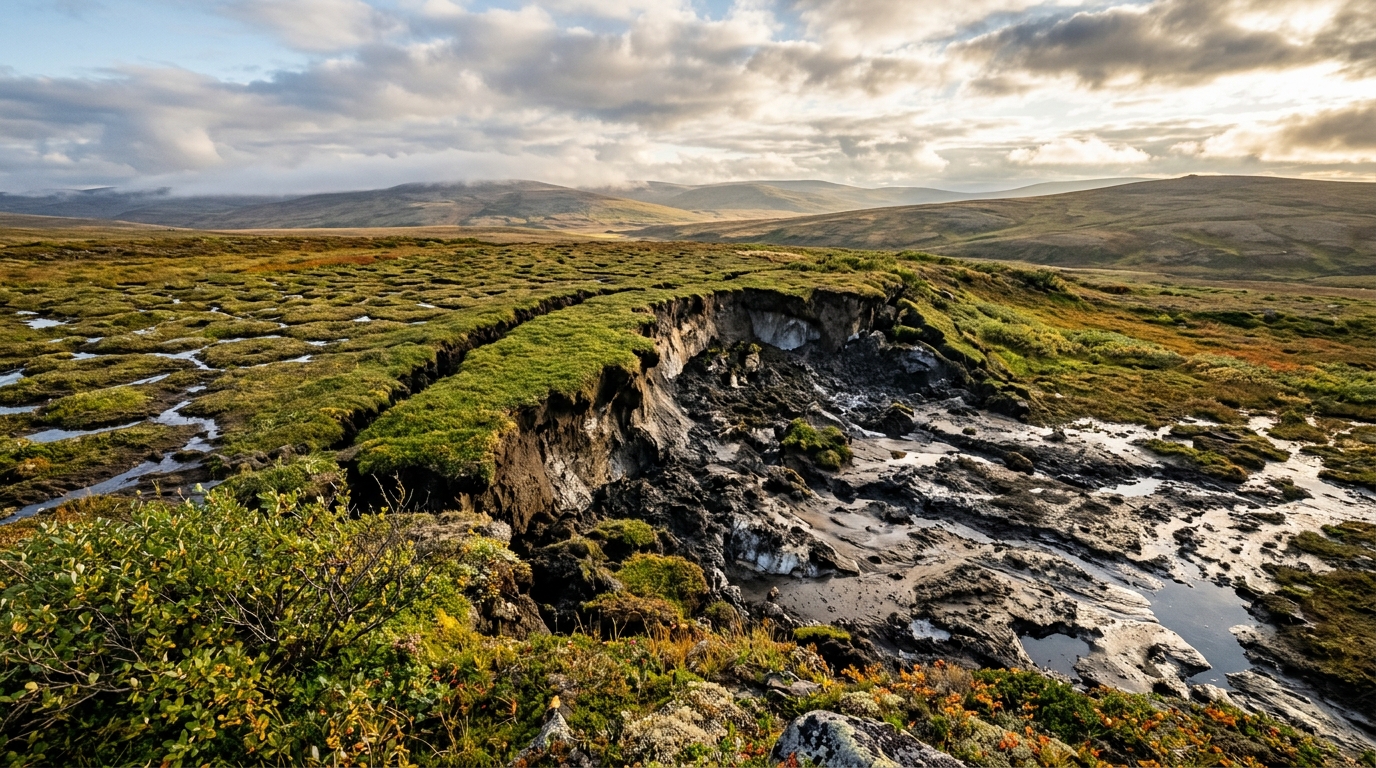
Analysis of satellite observations spanning from 2000 to 2023 demonstrates that vegetation resilience across permafrost ecosystems underwent a widespread reversal after 2008, despite persistent greening trends across these high-latitude regions. Rapid warming in permafrost environments is actively destabilizing ecosystem functioning, creating mounting concerns regarding how plant communities can withstand and recover from natural disturbances. While vegetation resilience initially showed an increase during the earlier portion of the observational record, that trajectory experienced a widespread reversal after 2008.

Evaluating environmental predictors alongside atmospheric moisture conditions revealed that this post-2008 decline in vegetation resilience was most strongly associated with intensifying atmospheric drought. In examining the broader drivers of regional drying, investigations into ocean evaporation and atmospheric moisture transport suggest that shifts in oceanic moisture supply may have contributed to the elevated atmospheric drought conditions observed across permafrost landscapes after 2008. These findings identify atmospheric drought as a key constraint governing permafrost vegetation stability and suggest that ocean–land moisture interactions are involved in modulating this process.

Satellite assessments and environmental records indicate that wildfires further amplified losses in vegetation resilience within fire-disturbed areas.

The empirical findings also reveal a decoupling between continued vegetation greening and underlying ecological resilience, which carries critical consequences for regional carbon dynamics. Despite satellite evidence indicating ongoing greening across permafrost ecosystems, the post-2008 downturn in vegetation resilience signals a notable destabilization of plant carbon uptake. This documented relationship between vegetation resilience variations and carbon-uptake variability indicates that greenness metrics alone do not reflect the true capacity of permafrost plant life to sustain stable carbon capture under climate stress.

Current process-based and predictive models fail to capture this observed reversal in vegetation resilience, indicating a substantial underestimation of climate risks threatening high-latitude carbon sinks. Improving the representation of atmospheric drought, moisture dynamics, and wildfire impacts within predictive models is essential for accurately evaluating the future stability of permafrost ecosystems.

Subject of Research: Reversal of vegetation resilience in permafrost ecosystems

Article Title: Widespread reversal of vegetation resilience in permafrost ecosystems

Article References: Guo, Z., Wang, J., Smith, T., Li, W., Zhang, K., Wu, J., Zhou, Y., & Gong, P. (2026). Widespread reversal of vegetation resilience in permafrost ecosystems. Nature Plants. https://doi.org/10.1038/s41477-026-02462-x

Image Credits: AI Generated

DOI: 10.1038/s41477-026-02462-x

Keywords: permafrost ecosystems, vegetation resilience, atmospheric drought, wildfires, carbon sinks, satellite observations, climate change, moisture transport, Widespread, reversal, vegetation, resilience

News Source: Drew Townsend. (November 8, 2026). Permafrost Vegetation Resilience Reversed After 2008 Despite Continued Greening. Scienmag.


Tags: atmospheric droughtcarbon sinksClimate Changemoisture transportpermafrost ecosystemsresiliencereversalsatellite observationsvegetationvegetation resilienceWidespreadwildfires
Share12Tweet7Share2ShareShareShare1

Related Posts

Experiential Workshop Expands Mexican Students' Understanding of Bat Diets and Ecological Roles

Experiential Workshop Expands Mexican Students’ Understanding of Bat Diets and Ecological Roles

November 17, 2026
Engineered Escherichia Coli Produces C14-Enriched Lipid Adjuvant Homologs in Bioreactor Batches

Engineered Escherichia Coli Produces C14-Enriched Lipid Adjuvant Homologs in Bioreactor Batches

November 17, 2026

Swine Fever Virus Disrupts Blood-Testis Barrier Integrity in Laboratory Models

November 17, 2026

Natural History Museum Digitizes Hundreds of Jason Londt Robber Fly Types

November 17, 2026

POPULAR NEWS

  • Review Highlights Multi-Level Factors Influencing Clinical AI Adoption by Healthcare Providers

    Review Highlights Multi-Level Factors Influencing Clinical AI Adoption by Healthcare Providers

    29 shares
    Share 12 Tweet 7
  • Gut Microbiota and Metabolites Influence Immunotherapy Response in Liver Cancer

    29 shares
    Share 12 Tweet 7
  • Nonlinear Sex-Specific Remodeling of the TCRβ Repertoire During Adult Aging

    29 shares
    Share 12 Tweet 7
  • Capped Nanovials Enable Extended Cell Growth and Screening in UCLA Study

    29 shares
    Share 12 Tweet 7

About

We bring you the latest biotechnology news from best research centers and universities around the world. Check our website.

Follow us

Recent News

Fusobacterium nucleatum Extracellular Vesicles Trigger Neuroinflammation and Anxiety-Like Behaviors via IL-1β

Experiential Workshop Expands Mexican Students’ Understanding of Bat Diets and Ecological Roles

Immune Cell Exhaustion May Drive Neurodegeneration in Alzheimer’s and Parkinson’s

Subscribe to Blog via Email

Enter your email address to subscribe to this blog and receive notifications of new posts by email.

Join 88 other subscribers
  • Contact Us

Bioengineer.org © Copyright 2023 All Rights Reserved.

Welcome Back!

Login to your account below

Forgotten Password?

Retrieve your password

Please enter your username or email address to reset your password.

Log In
No Result
View All Result
  • Homepages
    • Home Page 1
    • Home Page 2
  • News
  • National
  • Business
  • Health
  • Lifestyle
  • Science

Bioengineer.org © Copyright 2023 All Rights Reserved.