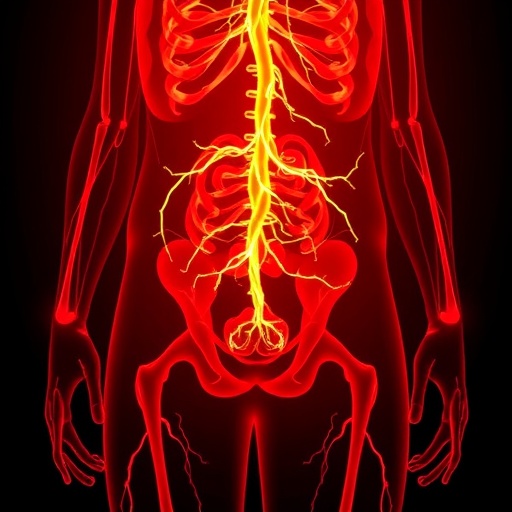
In a groundbreaking discovery, researchers have uncovered a novel mechanism by which the body regulates energy balance and guards against obesity, revealing a surprising role for the perineurium—the protective sheath surrounding nerves. This study elucidates how leptin, a hormone crucial for appetite and metabolism regulation, interfaces with the sympathetic nervous system through the perineurium to modulate body weight.
Leptin is well-known for its function in signaling satiety and regulating energy expenditure via the central nervous system. However, the intricacies of how these leptin signals translate into physiological actions controlling metabolism have remained elusive. The new research demonstrates that the perineurium does not merely serve as a passive barrier but actively integrates leptin signals with sympathetic nerve outputs, thus acting as a critical node in the body’s defense against excessive fat accumulation.
Using a combination of advanced imaging, molecular biology, and electrophysiological techniques, scientists traced the pathway from leptin receptors expressed in the perineurium to its downstream effects on sympathetic outflow. They found that leptin binding in the perineurium modulates sympathetic nervous activity directed at adipose tissue, enhancing lipolysis and thermogenesis—processes essential for fat breakdown and heat production.
This intricate signaling web reveals how the nervous system and endocrine cues are exquisitely linked through the perineurial interface to maintain metabolic homeostasis. Disruption of leptin’s action within the perineurium resulted in blunted sympathetic nerve responses and increased susceptibility to diet-induced obesity, highlighting its critical role in obesity prevention.
The findings challenge the traditional view of the perineurium as simply a structural component and establish it as an active participant in metabolic regulation. This perineurial leptin-sympathetic axis could represent a promising therapeutic target to combat obesity and metabolic disorders that have reached pandemic proportions worldwide.
Importantly, the research underscores the complexity of leptin resistance, a hallmark of obesity, suggesting that impaired communication at the perineurial level might contribute to the diminished metabolic effects of leptin observed in obese individuals. Targeting this newly identified leptin integration site could pave the way for innovative treatments restoring leptin sensitivity and metabolic health.
As obesity continues to impose significant health burdens globally, unveiling such previously unrecognized physiological pathways opens fresh avenues for research and drug development. The perineurium’s role as a metabolic integrator reshapes our understanding of nervous system involvement in energy balance beyond brain-centered mechanisms.
This discovery bridges neurobiology and metabolism, emphasizing the importance of peripheral neural structures in hormonal regulation of body weight. Future studies will explore how modulation of perineurial function can be harnessed for precise, effective obesity therapies, heralding a new era in metabolic medicine.
Subject of Research: Integration of leptin signaling with sympathetic nervous system activity via the perineurium in regulating obesity
Article Title: The perineurium integrates leptin with its sympathetic outflow to protect against obesity
Article References:
Sarker, G., Haberman, E., Chandran, A. et al. The perineurium integrates leptin with its sympathetic outflow to protect against obesity. Nat Metab (2026). https://doi.org/10.1038/s42255-026-01555-3
Image Credits: AI Generated
DOI: https://doi.org/10.1038/s42255-026-01555-3
Tags: advanced imaging in neuroendocrine researchelectrophysiological studies of sympathetic activityleptin signaling pathways in obesity preventionleptin-perineurium interactionleptin’s impact on thermogenesis and lipolysismolecular techniques in nerve tissue analysisneural control of adipose tissue functionneural mechanisms of fat metabolismnovel insights into neuroendocrineprotective nerve sheaths in metabolic regulationrole of perineurium in nerve signal modulationsympathetic nervous system and energy regulation