• HOME
  • NEWS
  • EXPLORE
    • CAREER
      • Companies
      • Jobs
    • EVENTS
    • iGEM
      • News
      • Team
    • PHOTOS
    • VIDEO
    • WIKI
  • BLOG
  • COMMUNITY
    • FACEBOOK
    • INSTAGRAM
    • TWITTER
Wednesday, October 21, 2026
BIOENGINEER.ORG
No Result
View All Result
  • Login
  • HOME
  • NEWS
  • EXPLORE
    • CAREER
      • Companies
      • Jobs
        • Lecturer
        • PhD Studentship
        • Postdoc
        • Research Assistant
    • EVENTS
    • iGEM
      • News
      • Team
    • PHOTOS
    • VIDEO
    • WIKI
  • BLOG
  • COMMUNITY
    • FACEBOOK
    • INSTAGRAM
    • TWITTER
No Result
View All Result
Bioengineer.org
No Result
View All Result
Home NEWS Science News Technology

Peptide-modified nanocellulose achieves high organic-load removal in laboratory dairy-wastewater study

by
October 21, 2026
in Technology
Reading Time: 2 mins read
0
Peptide-modified nanocellulose achieves high organic-load removal in laboratory dairy-wastewater study

Dairy Waste Turned Into Peptide Nanocellulose That Cleans Dairy Wastewater

Share on FacebookShare on TwitterShare on LinkedinShare on RedditShare on Telegram

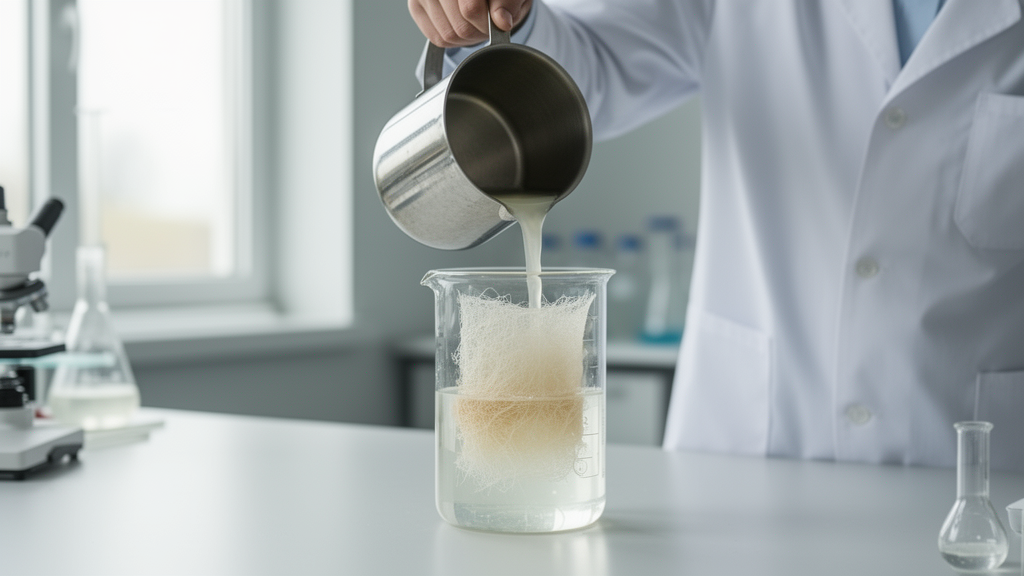
A laboratory study reported that peptide-modified crystalline nanocellulose removed high proportions of organic-load indicators from industrial dairy wastewater under optimized test conditions. The Scientific Reports article abstract reports maximum removal efficiencies of 97.80% for chemical oxygen demand (COD), 93.60% for five-day biochemical oxygen demand (BOD₅) and 96.40% for total organic carbon (TOC) at a dosage of 300 mg L⁻¹, pH 6.5, a contact time of 35 minutes, a peptide-to-cellulose mass ratio of 3:1 and a temperature of 25 °C.

The researchers produced the bio-adsorbent from dairy sludge and crustacean waste. They optimized the tested operating variables—pH from 3 to 10, adsorbent dosage from 100 to 500 mg L⁻¹, contact time from 15 to 55 minutes, peptide-to-cellulose mass ratio from 0.5:1 to 3:1, and temperature from 15 to 55 °C—using response surface methodology based on a central composite design. Field-emission scanning electron microscopy, X-ray diffraction, Fourier-transform infrared spectroscopy, nitrogen adsorption and thermogravimetric analysis were used to characterize peptide functionalization, mesoporous structure and thermal stability.

Analysis of variance identified pH and adsorbent dosage as the most significant factors, each with p-values below 0.0001. The fitted quadratic models had an R² of 0.9519, and experimental validation yielded a relative error below 0.50%. These are model-based optimization results for the laboratory experimental system. In separate reuse testing over five successive adsorption–desorption cycles, the material retained approximately 95% COD removal, 92% BOD₅ removal and 89% TOC removal.

The abstract provides evidence that peptide-modified nanocellulose may function as a bio-based adsorbent for organic-load removal under the reported conditions, while also linking the material to waste valorization. It does not report performance at pilot or full scale, comparisons with other treatment methods, detailed adsorption mechanisms, cost, energy use or the effects of co-occurring wastewater constituents. Consequently, the results should not be taken as proof of broad effectiveness in operating dairy-wastewater treatment facilities.

Subject of Research: Laboratory optimization of peptide-modified nanocellulose for organic-load removal from dairy wastewater

Article Title: Peptide-modified nanocellulose from dairy waste for organic compound removal in dairy wastewater

Article References: Rastgar, S., Hanachi, P., & Walker, T. R. (2026). Peptide-modified nanocellulose from dairy waste for organic compound removal in dairy wastewater. Scientific Reports. https://doi.org/10.1038/s41598-026-76352-9

Image Credits: AI Generated

DOI: 10.1038/s41598-026-76352-9

Keywords: dairy wastewater, nanocellulose, bio-adsorbent, chemical oxygen demand, biochemical oxygen demand, total organic carbon, response surface methodology, waste valorization, adsorption, circular economy, Peptide-modified, dairy

News Source: Denise Maddox. (October 20, 2026). Peptide-modified nanocellulose achieves high organic-load removal in laboratory dairy-wastewater study. Scienmag.


Tags: adsorptionbio-adsorbentbiochemical oxygen demandchemical oxygen demandcircular economydairydairy wastewaternanocellulosePeptide-modifiedresponse surface methodologytotal organic carbonwaste valorization
Share12Tweet7Share2ShareShareShare1

Related Posts

Morphological study describes new Ezembius centipede species from Yunnan, China

Morphological study describes new Ezembius centipede species from Yunnan, China

October 21, 2026
New 1.37-mm round fungus beetle from Brunei distinguished by arrow-shaped genital tip

New 1.37-mm round fungus beetle from Brunei distinguished by arrow-shaped genital tip

October 21, 2026

Hybrid heel-strike harvester reaches 8.5 milliwatts in laboratory testing

October 21, 2026

2023 data paper establishes soft-bottom macrobenthos baseline for Chrysi and Mikronisi

October 21, 2026

POPULAR NEWS

  • Efgartigimod associated with improved daily function in 21 adults with generalized myasthenia gravis; immune findings limited to one patient

    Efgartigimod associated with improved daily function in 21 adults with generalized myasthenia gravis; immune findings limited to one patient

    29 shares
    Share 12 Tweet 7
  • Identifying and prioritizing key risk factors in internet-based shared nursing services from the nurses’ perspective: a hybrid multi-criteria decision-making approach

    29 shares
    Share 12 Tweet 7
  • Repurposed darifenacin and betamethasone potentiate streptomycin against resistant Staphylococcus aureus in vitro

    29 shares
    Share 12 Tweet 7
  • Shandong study maps NTM susceptibility and links cavities to lower cure

    29 shares
    Share 12 Tweet 7

About

We bring you the latest biotechnology news from best research centers and universities around the world. Check our website.

Follow us

Recent News

Efgartigimod associated with improved daily function in 21 adults with generalized myasthenia gravis; immune findings limited to one patient

Identifying and prioritizing key risk factors in internet-based shared nursing services from the nurses’ perspective: a hybrid multi-criteria decision-making approach

Repurposed darifenacin and betamethasone potentiate streptomycin against resistant Staphylococcus aureus in vitro

Subscribe to Blog via Email

Enter your email address to subscribe to this blog and receive notifications of new posts by email.

Join 85 other subscribers
  • Contact Us

Bioengineer.org © Copyright 2023 All Rights Reserved.

Welcome Back!

Login to your account below

Forgotten Password?

Retrieve your password

Please enter your username or email address to reset your password.

Log In
No Result
View All Result
  • Homepages
    • Home Page 1
    • Home Page 2
  • News
  • National
  • Business
  • Health
  • Lifestyle
  • Science

Bioengineer.org © Copyright 2023 All Rights Reserved.