• HOME
  • NEWS
  • EXPLORE
    • CAREER
      • Companies
      • Jobs
    • EVENTS
    • iGEM
      • News
      • Team
    • PHOTOS
    • VIDEO
    • WIKI
  • BLOG
  • COMMUNITY
    • FACEBOOK
    • INSTAGRAM
    • TWITTER
Monday, May 18, 2026
BIOENGINEER.ORG
No Result
View All Result
  • Login
  • HOME
  • NEWS
  • EXPLORE
    • CAREER
      • Companies
      • Jobs
        • Lecturer
        • PhD Studentship
        • Postdoc
        • Research Assistant
    • EVENTS
    • iGEM
      • News
      • Team
    • PHOTOS
    • VIDEO
    • WIKI
  • BLOG
  • COMMUNITY
    • FACEBOOK
    • INSTAGRAM
    • TWITTER
  • HOME
  • NEWS
  • EXPLORE
    • CAREER
      • Companies
      • Jobs
        • Lecturer
        • PhD Studentship
        • Postdoc
        • Research Assistant
    • EVENTS
    • iGEM
      • News
      • Team
    • PHOTOS
    • VIDEO
    • WIKI
  • BLOG
  • COMMUNITY
    • FACEBOOK
    • INSTAGRAM
    • TWITTER
No Result
View All Result
Bioengineer.org
No Result
View All Result
Home NEWS Science News Health

Penn State engineer developing device that may be able to test for COVID-19

Bioengineer by Bioengineer
April 2, 2020
in Health
Reading Time: 2 mins read
0
IMAGE
Share on FacebookShare on TwitterShare on LinkedinShare on RedditShare on Telegram

IMAGE

Credit: Gihoon Choi, Penn State

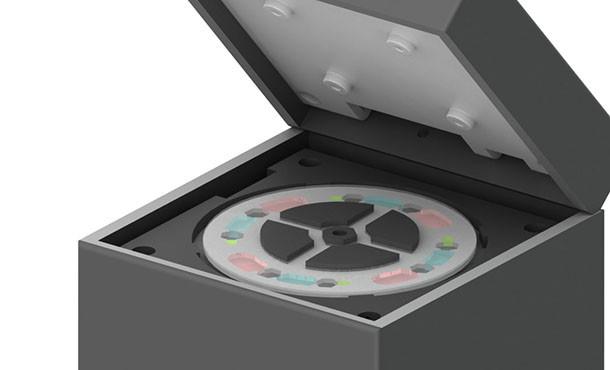
A point-of-care testing device that may help diagnose the novel coronavirus disease (COVID-19) is under development by Weihua Guan, assistant professor of electrical engineering in Penn State’s College of Engineering.

This research is supported by Penn State seed funding that has been awarded for “research with the potential for significant and rapid impact on human health with respect to the disease (COVID-19) and the causal virus (SARS-CoV-2),” according to the call for proposals from the Huck Institutes of the Life Sciences.

Asymptomatic carriers of COVID-19 can be contagious, so early diagnosis may prove critical to controlling the spread of the disease. Guan is working to create a nucleic acid testing (NAT) method for COVID-19, which potentially could identify early asymptomatic cases by detecting genetic material instead of antigens or antibodies as traditional tests do. The advantage of a NAT method is that the virus can be detected through its genetic biomarker — RNA in the case of COVID-19 — making this method of detection one of the best for early diagnosis.

Guan previously created NAT point-of-care diagnostic devices for detecting malaria and HIV, with the help of two National Science Foundation awards.

“The technology is essentially a platform technology that can be extended toward an array of infectious diseases,” Guan said. “When we learned the genomic sequence of the SARS-CoV-2 in early February of this year, we started looking into designing the nucleic acid testing right away. My graduate students, Gihoon Choi, Zifan Tang and Tianyi Liu, have made excellent and swift progress, which has enabled us to move forward quickly.”

While Guan’s research currently is a solo endeavor, in the next phase of research, he will partner with pathogen labs to validate the technology. He is already in conversations about collaborating with several clinicians and scientists at the Penn State College of Medicine. He credits these professional connections to recent events organized by the newly established Center for Biodevices, which is led by mechanical and biomedical engineering professor Mary Frecker.

If successfully validated, this research could create a point-of-care NAT that would allow for sample-to-answer testing in a fully automated and streamlined device with a turnaround time of less than 45 minutes, according to Guan.

“I am extremely excited about the impact of this research on urgent societal needs and its potential contributions for capacity enhancement for testing COVID-19,” Guan said. “I really appreciate the timely support from the Materials Research Institute and Huck Institutes of the Life Sciences through the Coronavirus Research Seed Fund.”

###

Media Contact
A’ndrea Elyse Messer
[email protected]

Tags: Biomedical/Environmental/Chemical EngineeringElectrical Engineering/ElectronicsInfectious/Emerging DiseasesTechnology/Engineering/Computer Science
Share12Tweet8Share2ShareShareShare2

Related Posts

DKC1 Drives Colorectal Cancer via Sphingolipid Disruption

May 18, 2026

Health and Carbon Footprint of Barcelona’s Water Choices

May 18, 2026

Compression Spurs Tumor Spread via Malate-Microtubule Pathway

May 18, 2026

Exosomal S100A9 Fuels Breast Cancer Spread

May 18, 2026
Please login to join discussion

POPULAR NEWS

  • Research Indicates Potential Connection Between Prenatal Medication Exposure and Elevated Autism Risk

    844 shares
    Share 338 Tweet 211
  • New Study Reveals Plants Can Detect the Sound of Rain

    731 shares
    Share 292 Tweet 182
  • Salmonella Haem Blocks Macrophages, Boosts Infection

    62 shares
    Share 25 Tweet 16
  • Breastmilk Balances E. coli and Beneficial Bacteria in Infant Gut Microbiomes

    58 shares
    Share 23 Tweet 15

About

We bring you the latest biotechnology news from best research centers and universities around the world. Check our website.

Follow us

Recent News

Soliton Microcombs Enable Photonic Wireless Transmission at 112 Gbps Over 560 GHz

In-Depth Analysis Reveals Advances in Multiple Sclerosis Research Models

Detecting Magnetic States Through Photocurrent in Atomically Thin Magnetic Materials

Subscribe to Blog via Email

Enter your email address to subscribe to this blog and receive notifications of new posts by email.

Join 82 other subscribers
  • Contact Us

Bioengineer.org © Copyright 2023 All Rights Reserved.

Welcome Back!

Login to your account below

Forgotten Password?

Retrieve your password

Please enter your username or email address to reset your password.

Log In
No Result
View All Result
  • Homepages
    • Home Page 1
    • Home Page 2
  • News
  • National
  • Business
  • Health
  • Lifestyle
  • Science

Bioengineer.org © Copyright 2023 All Rights Reserved.