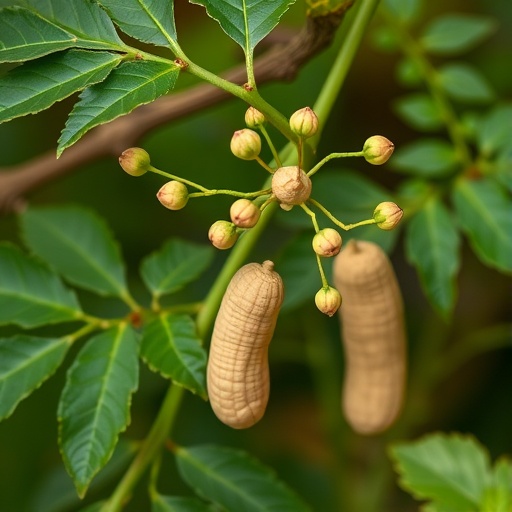
In a groundbreaking study published in BMC Genomics, researchers have unveiled the intricate tapestry of terpene synthases within the peanut plant, scientifically known as Arachis hypogaea L. This extensive genome-wide analysis sheds light on the complex mechanisms behind terpenoid biosynthesis, providing insight into how these fundamental biochemical pathways interact. The findings not only underscore the importance of terpenes in plant physiology but also highlight their potential implications for agricultural innovation and biotechnological applications.
Terpenes are a diverse class of organic compounds that play critical roles in plant ecology, serving as natural pesticides, attracting pollinators, and contributing to the aroma and flavor of many fruits and herbs. The study of terpenes, therefore, is vital for understanding plant resilience and adaptation. With peanuts being an economically significant crop around the world, a detailed understanding of their biosynthetic pathways could unlock new avenues for improving yield and sustainability.
The research team, led by Chunmei and colleagues, meticulously mapped out the terpene synthase gene family within the genome of peanuts. This was achieved through high-throughput sequencing technologies and bioinformatics approaches that allowed for a comprehensive identification and categorization of these enzymes. By leveraging advanced computational methods, they successfully annotated various terpene synthase genes, paving the way for a deeper understanding of their roles in metabolic pathways.
One of the pivotal findings of this research is the discovery of potential cross-talk among terpenoid biosynthesis pathways. The researchers observed that terpene synthases do not operate in isolation; instead, they interact with other metabolic pathways, suggesting a tightly regulated network that could respond adaptively to environmental stimuli. This insight may have far-reaching consequences for breeding programs aimed at enhancing peanut resilience to abiotic stresses such as drought or salinity.
Moreover, the study delves into the evolutionary implications of the terpene synthase gene family. By conducting phylogenetic analyses, the researchers traced the evolutionary history of these genes in peanuts and related species. The results not only reveal the conservation of these critical enzymes across species but also highlight the diversification processes that may have led to the unique terpene profiles observed in peanuts.
The implications of enhanced terpenoid biosynthesis are not limited to agricultural value; terpenes are also significant in the pharmaceutical industry. The diverse array of terpenes produced by plants has been shown to possess numerous bioactive properties, including antimicrobial, anti-inflammatory, and anticancer effects. As such, insights gained from the peanut terpene synthase analysis could inform the discovery of novel therapeutic compounds, further demonstrating the clout of this research beyond just crop improvement.
The study also acknowledges the challenges faced in analyzing the terpene synthase gene family. With a vast number of genes potentially involved in terpenoid biosynthesis, closely related gene duplicates pose a significant hurdle in attributing functional roles to individual synthases. The researchers addressed this complexity by applying a combination of genomic, transcriptomic, and metabolomic data to discern functional redundancies and the unique contributions of certain enzymes.
As the scientific community continues to grapple with the relevance of terpenes within ecological frameworks, this research emerges as a harbinger of new possibilities. By unlocking the genetic mechanisms underlying terpene production, researchers may find new strategies to enhance not only the yield but also the nutritional quality of peanuts. Such advancements could play a crucial role in addressing global food security challenges, particularly in regions heavily reliant on peanuts as a staple crop.
In light of climate change and the pressing need for sustainable agricultural practices, understanding the genetic and biochemical foundations of plant resilience is more important than ever. The comprehensive genome-wide analysis offers a blueprint for future studies geared towards harnessing the power of plant metabolomics. As the findings circulate through the scientific community, they promise to ignite further research into the potential applications of manipulating terpene synthase activity for enhanced crop performance.
The implications of the study extend into the realm of synthetic biology as well. By integrating knowledge of terpene biosynthesis with gene editing technologies such as CRISPR/Cas9, researchers may be equipped to design crops that can produce higher yields of economically valuable terpenes. This could not only improve the agricultural output but also align with consumer preferences for natural and health-promoting ingredients in food products.
Furthermore, the study addresses the issue of climate adaptation and the role of terpenes in plant stress responses. Understanding how and when these compounds are produced in response to environmental challenges could unlock new strategies for crop management in the face of unpredictable weather patterns. The researchers advocate for more work to be done in field settings to monitor terpene expression and its impacts on plant fitness under varying conditions.
As the realization of the importance of terpenes in plant biology becomes more recognized, the call for comprehensive databases of terpene synthase genes and their functions in various plant species is echoed in this study. Such repositories would serve as invaluable resources for researchers and plant breeders alike, fostering collaborative efforts toward cultivating crops that are not only resilient but also endowed with enhanced traits beneficial for human health.
In summary, the genome-wide analysis of terpene synthase family in peanuts provides a treasure trove of insights into the complex nature of terpenoid biosynthesis. Chunmei, Fuyang, Han, and their colleagues have painted a detailed picture that could lead to revolutionary advancements in both agricultural practices and the pharmaceutical landscape. Their pioneering work has set the stage for future explorations in plant biochemistry, with repercussions that stretch far beyond the humble peanut.
As researchers continue to unravel the mysteries of plant biosynthesis, the growing interest in terpenes not only speaks to their significance in the natural world but also heralds a broader understanding of plant biology’s potential to contribute to human wellbeing. With ongoing studies likely to emerge from this foundation, the relationship between terpene synthases and various environmental factors will remain an intriguing field for exploration in plant sciences for years to come.
Subject of Research: Terpene Synthase Family in Peanut (Arachis hypogaea)
Article Title: Genome-wide analysis of terpene synthase family in peanut (Arachis hypogaea L.) explores the potential cross-talk in terpenoid biosynthesis.
Article References: Chunmei, L., Fuyang, Y., Han, J. et al. Genome-wide analysis of terpene synthase family in peanut (Arachis hypogaea L.) explores the potential cross-talk in terpenoid biosynthesis. BMC Genomics 26, 952 (2025). https://doi.org/10.1186/s12864-025-12013-x
Image Credits: AI Generated
DOI: 10.1186/s12864-025-12013-x
Keywords: Terpene synthases, terpenoid biosynthesis, Arachis hypogaea, cross-talk, genomics, plant metabolism, agriculture, sustainability.
Tags: agricultural innovation through terpenesArachis hypogaea L biosynthesisbioinformatics in terpene analysisbiotechnological applications of terpenesgenome-wide analysis of peanutshigh-throughput sequencing in plant researchimproving peanut crop yieldpeanut terpene synthase analysisplant ecological roles of terpenessustainability in agriculture through terpenesterpene synthase gene family mappingterpenoid biosynthesis pathways