• HOME
  • NEWS
  • EXPLORE
    • CAREER
      • Companies
      • Jobs
    • EVENTS
    • iGEM
      • News
      • Team
    • PHOTOS
    • VIDEO
    • WIKI
  • BLOG
  • COMMUNITY
    • FACEBOOK
    • INSTAGRAM
    • TWITTER
Friday, May 8, 2026
BIOENGINEER.ORG
No Result
View All Result
  • Login
  • HOME
  • NEWS
  • EXPLORE
    • CAREER
      • Companies
      • Jobs
        • Lecturer
        • PhD Studentship
        • Postdoc
        • Research Assistant
    • EVENTS
    • iGEM
      • News
      • Team
    • PHOTOS
    • VIDEO
    • WIKI
  • BLOG
  • COMMUNITY
    • FACEBOOK
    • INSTAGRAM
    • TWITTER
  • HOME
  • NEWS
  • EXPLORE
    • CAREER
      • Companies
      • Jobs
        • Lecturer
        • PhD Studentship
        • Postdoc
        • Research Assistant
    • EVENTS
    • iGEM
      • News
      • Team
    • PHOTOS
    • VIDEO
    • WIKI
  • BLOG
  • COMMUNITY
    • FACEBOOK
    • INSTAGRAM
    • TWITTER
No Result
View All Result
Bioengineer.org
No Result
View All Result
Home NEWS Science News

Peacock colors inspire ‘greener’ way to dye clothes

Bioengineer by Bioengineer
February 1, 2017
in Science News
Reading Time: 2 mins read
0
Share on FacebookShare on TwitterShare on LinkedinShare on RedditShare on Telegram
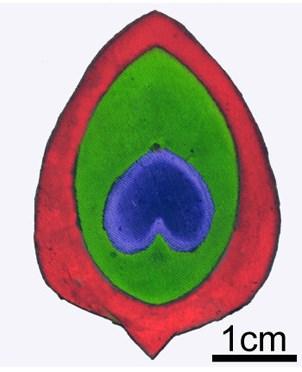
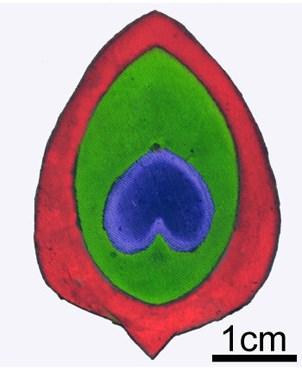
IMAGE

Credit: American Chemical Society

"Fast fashion" might be cheap, but its high environmental cost from dyes polluting the water near factories has been well documented. To help stem the tide of dyes from entering streams and rivers, scientists report in the journal ACS Applied Materials & Interfaces a nonpolluting method to color textiles using 3-D colloidal crystals.

Dyes and pigments are chemical colors that produce their visual effect by selectively absorbing and reflecting specific wavelengths of visible light. Structural or physical colors — such as those of opals, peacock feathers and butterfly wings — result from light-modifying micro- and nanostructures. Bingtao Tang and colleagues wanted to find a way to color voile textiles with structural colors without creating a stream of waste.

The researchers developed a simple, two-step process for transferring 3-D colloidal crystals, a structural color material, to voile fabrics. Their "dye" included polystyrene nanoparticles for color, polyacrylate for mechanical stability, carbon black to enhance color saturation and water. Testing showed the method could produce the full spectrum of colors, which remained bright even after washing. In addition, the team said that the technique did not produce contaminants that could pollute nearby water.

###

The authors acknowledge funding from the National Natural Science Foundation of China, the Fundamental Research Funds for the Central Universities (China), and Dalian University's Program for Innovative Research Team, Program for Liaoning Excellent Talents and Program for New Century Excellent Talents.

The abstract that accompanies this study is available here.

The American Chemical Society is a nonprofit organization chartered by the U.S. Congress. With nearly 157,000 members, ACS is the world's largest scientific society and a global leader in providing access to chemistry-related research through its multiple databases, peer-reviewed journals and scientific conferences. ACS does not conduct research, but publishes and publicizes peer-reviewed scientific studies. Its main offices are in Washington, D.C., and Columbus, Ohio.

To automatically receive news releases from the American Chemical Society, contact [email protected].

Follow us on Twitter | Facebook

Media Contact

Katie Cottingham
[email protected]
301-775-8455
@ACSpressroom

http://www.acs.org

############

Story Source: Materials provided by Scienmag

Share12Tweet8Share2ShareShareShare2

Related Posts

Pladienolide B and Cisplatin Boost Autophagy Pathway

May 8, 2026

Intravenous Tenecteplase Administered Before Endovascular Therapy Shows Promise for Ischemic Stroke Patients Within 4.5 to 24 Hours

May 8, 2026

The 28th European Congress of Endocrinology Kicks Off Tomorrow

May 8, 2026

Nanoscale Directional Dark Field X-Ray Microscopy

May 8, 2026
Please login to join discussion

POPULAR NEWS

  • Research Indicates Potential Connection Between Prenatal Medication Exposure and Elevated Autism Risk

    837 shares
    Share 335 Tweet 209
  • New Study Reveals Plants Can Detect the Sound of Rain

    725 shares
    Share 290 Tweet 181
  • Scientists Investigate Possible Connection Between COVID-19 and Increased Lung Cancer Risk

    68 shares
    Share 27 Tweet 17
  • Salmonella Haem Blocks Macrophages, Boosts Infection

    61 shares
    Share 24 Tweet 15

About

We bring you the latest biotechnology news from best research centers and universities around the world. Check our website.

Follow us

Recent News

Pladienolide B and Cisplatin Boost Autophagy Pathway

Intravenous Tenecteplase Administered Before Endovascular Therapy Shows Promise for Ischemic Stroke Patients Within 4.5 to 24 Hours

The 28th European Congress of Endocrinology Kicks Off Tomorrow

Subscribe to Blog via Email

Enter your email address to subscribe to this blog and receive notifications of new posts by email.

Join 82 other subscribers
  • Contact Us

Bioengineer.org © Copyright 2023 All Rights Reserved.

Welcome Back!

Login to your account below

Forgotten Password?

Retrieve your password

Please enter your username or email address to reset your password.

Log In
No Result
View All Result
  • Homepages
    • Home Page 1
    • Home Page 2
  • News
  • National
  • Business
  • Health
  • Lifestyle
  • Science

Bioengineer.org © Copyright 2023 All Rights Reserved.