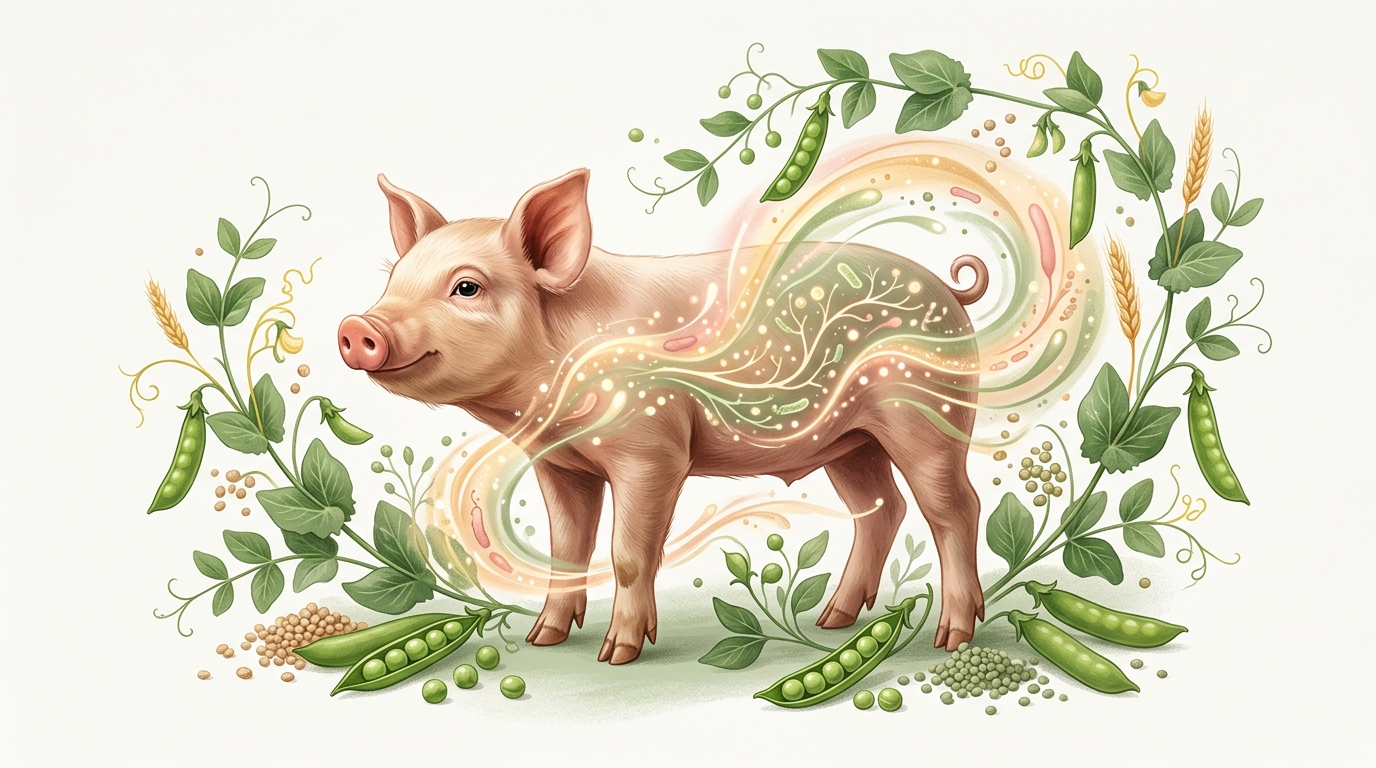
Weaning is one of the most stressful transitions in a piglet’s life. The sudden shift from sow’s milk to solid feed can disturb digestive function, trigger digestive disorders and stall growth, which is why nutritionists are constantly searching for new feed ingredients that can ease the dietary change. A study published in BMC Veterinary Research examined whether pea cream, a co-product of pea starch extraction, could serve this role. Because it is a by-product of food processing, pea cream does not compete directly with human food supplies, making it an attractive candidate for sustainable pig nutrition.
The research team took an unusually thorough approach, combining a piglet feeding trial with laboratory experiments on digestion and cell culture. Piglets were assigned to one of four experimental diets: a control diet, a diet containing pea cream, a diet with pea flour, and a diet supplemented with wood flour. Digestive contents and tissue samples collected from the animals were used to characterise how the diets affected the gut in vivo. In parallel, the researchers performed in vitro digestion of each diet and applied the resulting digesta to IPEC-J2 cells, a porcine intestinal epithelial cell line, to assess how the digested feeds influenced epithelial cell responses.
The in vitro digestion experiments produced a striking result. All four diets, including the pea cream formulation, achieved protein hydrolysis of approximately 98 percent, meaning nearly all of the protein in each feed was broken down into smaller components during simulated digestion. The presence of both soluble and insoluble dietary fibres in the pea-based ingredients did not interfere with this protein availability.
In the feeding trial, the researchers monitored plasma haptoglobin concentrations as an indicator of the post-weaning inflammatory response. Haptoglobin typically rises after weaning as piglets cope with the stress of dietary and environmental change. In this study, haptoglobin followed the expected post-weaning pattern across all groups, and the researchers concluded that none of the diets, including those containing pea products, had adverse effects on this parameter.
Intestinal integrity, a key measure of gut health during the weaning period, was maintained overall regardless of which diet the piglets received. The gut barrier is vulnerable during weaning, and damage to it can allow harmful substances to cross into the bloodstream, contributing to digestive disorders.
Muscle growth measurements provided further reassurance.
The combined methodology was central to the study’s design. While the in vitro work characterised how pea cream behaves during digestion, breaking down its protein fraction and interacting with intestinal epithelial cells in culture, the in vivo feeding trial confirmed the physiological relevance of those observations through direct measurements of intestinal integrity, growth performance and muscle development in living animals.
The authors conclude that pea cream appears to be a promising ingredient for piglets, with potential use as a feed component supporting the dietary transition at weaning.
Subject of Research: Effects of a pea starch-extraction co-product on intestinal integrity and muscle growth in weaning piglets
Article Title: Effects of a pea co-product on intestinal integrity and muscle growth in piglets: an in vitro and in vivo approach for the weaning period
Article References: Grondin, M., Mayeur-Nickel, F., Vincent, A., Trefeu, C., Wiart-Letort, S., Dessauge, F., & Grundy, M. M. L. (2026). Effects of a pea co-product on intestinal integrity and muscle growth in piglets: an in vitro and in vivo approach for the weaning period. BMC Veterinary Research. https://doi.org/10.1186/s12917-026-06062-x
Image Credits: AI Generated
DOI: 10.1186/s12917-026-06062-x
Keywords: piglets, weaning, pea cream, intestinal integrity, muscle growth, in vitro digestion, IPEC-J2, animal nutrition, feed ingredients, sustainable livestock, protein hydrolysis, haptoglobin
News Source: Drew Townsend. (November 4, 2026). Pea Co-Product Shows Promise for Weaning Piglets’ Gut Health and Growth. Scienmag.