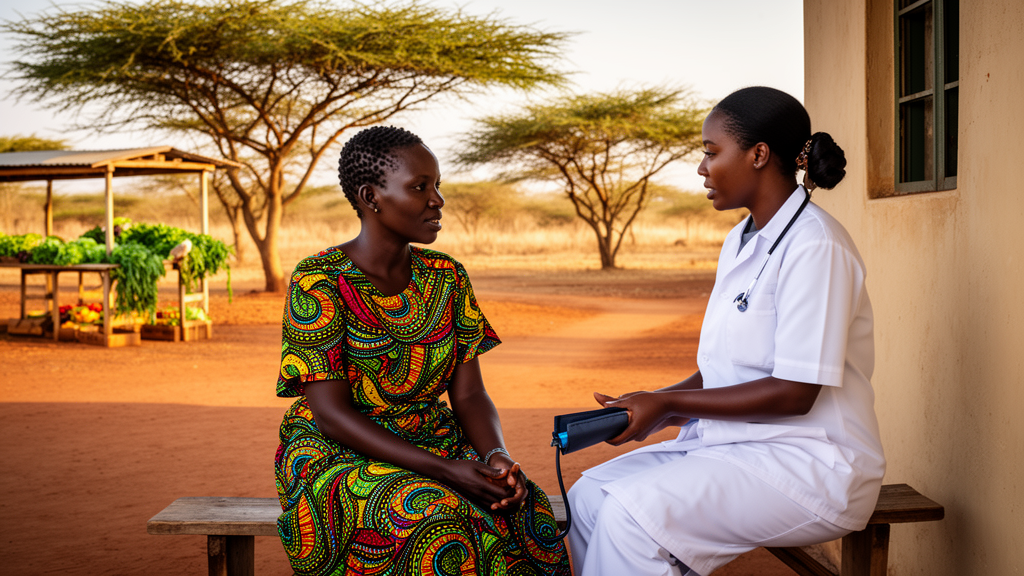
Adults with cardiovascular disease attending a cardiac clinic at Kilimanjaro Christian Medical Centre (KCMC) in northern Tanzania are willing to adopt healthier lifestyles when supported by healthcare providers, family members, and their own motivation, according to an exploratory qualitative study published in PLOS Global Public Health. The research, conducted between May and July 2024, identified both the facilitators that encourage lifestyle change and the barriers that hold patients back.
According to the study, ten participants were purposively recruited to capture variation in age, sex, and cardiovascular diagnosis. Data were collected through in-depth semi-structured interviews and analyzed manually using Braun and Clarke's six-phase thematic analysis. Thematic saturation was reached after eight interviews and confirmed through two additional interviews.
The analysis generated two overarching themes. The first, facilitators of lifestyle modification, comprised perceived benefits and outcomes; social, family, and spiritual support; and medical advice and counselling. Patients described how seeing positive results from dietary changes or exercise, encouragement from loved ones, and guidance from clinicians helped them sustain healthier habits.
The second theme, barriers to lifestyle modification, was broader and included lack of consistent motivation; psychological factors; physical limitations and health setbacks; social and environmental barriers; lack of guidance; misconceptions and beliefs; and financial constraints. These obstacles spanned cultural, psychological, physical, and financial domains, illustrating how difficult sustained behavior change can be even for patients who understand its importance.
Lifestyle modification is a cornerstone of cardiovascular disease management, yet the authors note that qualitative evidence on the influences shaping these practices among patients attending cardiac clinics in Tanzania has remained limited. Cardiovascular diseases are a significant cause of morbidity and mortality worldwide, making context-appropriate risk-reduction interventions an important public health priority.
Understanding what facilitates or hinders behavior change is essential for designing interventions that fit local realities. The findings highlight the need for culturally sensitive, patient-centered approaches that integrate lifestyle counseling, psychosocial support, and community involvement to improve long-term cardiovascular outcomes.
As an exploratory qualitative study with ten participants at a single referral hospital, the research offers depth rather than statistical generalizability.
The study’s central message is one of cautious optimism: despite facing multiple barriers, patients demonstrated genuine willingness to change when the right support was in place. For clinicians and policymakers in Tanzania and similar settings, that willingness represents a foundation on which feasible, locally grounded cardiovascular prevention programs can be built.
Subject of Research: Facilitators and barriers to lifestyle modification among adults with cardiovascular disease at a cardiac clinic in northern Tanzania
Article Title: Perceived facilitators and barriers influencing lifestyle modification among adults with cardiovascular disease attending a cardiac clinic at a referral hospital in northern Tanzania: An exploratory qualitative study
Article References: Mkawe, G. N., Mgala, B., Mawi, N., Buluba, S. E., Ndile, M., Malima, K., Tarimo, E., & Ramadhani, F. B. (2026). Perceived facilitators and barriers influencing lifestyle modification among adults with cardiovascular disease attending a cardiac clinic at a referral hospital in northern Tanzania: An exploratory qualitative study. PLOS Global Public Health, 6(10), e0007537. https://doi.org/10.1371/journal.pgph.0007537
Image Credits: AI Generated
DOI: 10.1371/journal.pgph.0007537
Keywords: cardiovascular disease, lifestyle modification, Tanzania, qualitative research, Kilimanjaro Christian Medical Centre, cardiac clinic, thematic analysis, patient barriers, social support, health behavior, Perceived, facilitators
News Source: Ophelia Keating. (October 27, 2026). Patients in Northern Tanzania Reveal What Helps and Hinders Heart-Healthy Living. Scienmag.