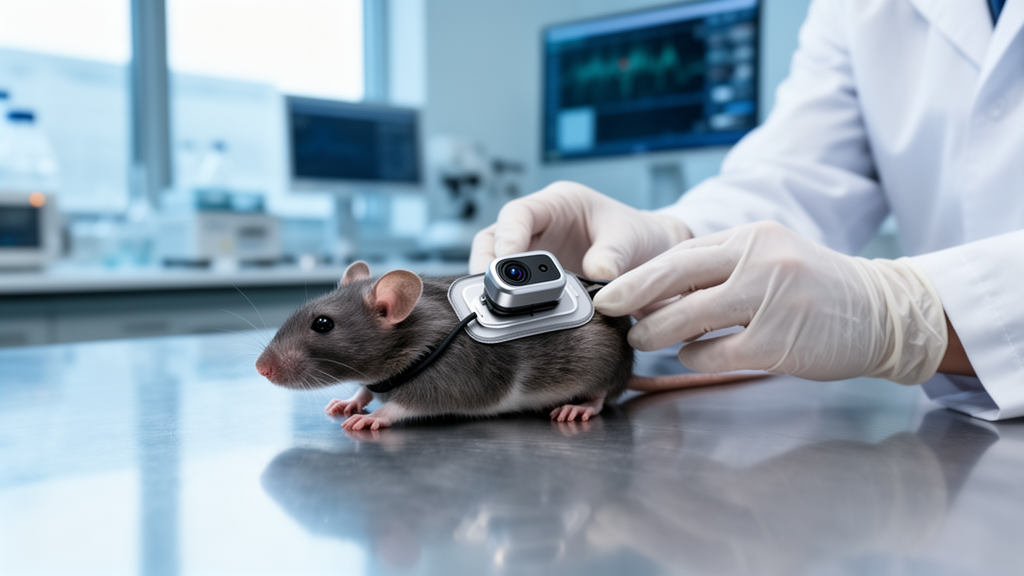
Researchers have unveiled a four-tier architecture called AIMSHA, the AI-Driven Multimodal Secure Health Monitoring Architecture, designed to combine continuous biosignal diagnostics with layered privacy and security protections for wearable health devices. The framework, described in an open-access paper published in Discover Computing on 27 October 2026, integrates deep learning diagnostics, explainable AI, federated learning, attribute-based encryption and a permissioned blockchain ledger into a single system spanning body sensors, edge gateways, fog servers and a secure cloud layer. The authors position the work as a preclinical baseline rather than a clinically validated platform, and all reported results come from benchmark datasets and simulated or testbed environments rather than real-world patient deployments.
At the heart of the system is MediFuse-DL, a cross-modal attention transformer that ingests four physiological signal types: electroencephalography, electromyography, electrocardiography and photoplethysmography. Each modality is processed by a dedicated encoder, with 1D convolutional networks handling the temporal waveforms and an adapted EEGNet backbone handling scalp EEG. The projected feature tokens are then fused by a four-layer cross-modal attention transformer with eight attention heads operating in a shared 256-dimensional latent space, comprising roughly 3.42 million trainable parameters. The model targets six clinically prioritized conditions: cardiac arrhythmia detection, ischaemic heart disease risk stratification, epileptic seizure detection, Parkinson’s disease tremor characterization, Type 2 diabetes early warning through PPG-derived glycaemic proxies, and obstructive sleep apnoea severity grading. All six classification heads share a common encoder trunk and are trained jointly under a multi-task objective that balances per-task cross-entropy losses with an inter-task orthogonality regularizer designed to prevent gradient interference between tasks.
Diagnostic performance was evaluated across six publicly available benchmark cohorts: the MIT-BIH Arrhythmia Database, the PTB Diagnostic ECG Database, the CHB-MIT Scalp EEG Database, the PhysioNet Parkinson’s Telemonitoring Dataset, MIMIC-III PPG waveforms with glycaemic labels, and the Sleep Heart Health Study polysomnography dataset. The evaluation used a strict 70/15/15 patient-level split to prevent data leakage, with signals segmented into standardized four-second epochs, or thirty-second epochs for polysomnography, yielding 458,306 processed windows after artifact rejection, baseline detrending and bandpass filtering. Across all tasks, the framework reported a mean diagnostic area under the ROC curve of 0.974, with a 95 percent confidence interval of 0.968 to 0.980, based on five-fold cross-validation repeated across five independent random initializations. Per-task AUCs ranged from 0.961 for the metabolic glycaemic proxy to 0.989 for epileptic seizure detection, with a mean multi-task accuracy of 95.8 percent, sensitivity of 96.0 percent and specificity of 97.1 percent. Two-sided paired t-tests reportedly confirmed statistically significant gains over decoupled single-modality baselines across every endpoint.
Comparative benchmarks under identical data partitions suggest the cross-modal attention mechanism is the main driver of that performance. Isolated single-modality convolutional networks achieved a mean AUC of only 0.912 despite the smallest resource footprint, while early fusion through concatenated networks and late-stage decision ensembling reached 0.931 and 0.942 respectively. Spatial graph convolutional networks reached 0.954. The full cross-modal design achieved 0.974 mean AUC with an F1-score of 0.961, and delivered a 23.5 percent latency reduction on an ARM Cortex testbed, completing inference in 52.3 milliseconds compared with 68.4 milliseconds for the graph convolutional alternative. An ablation study reinforced the point: disabling the fusion backbone dropped mean AUC from 0.974 to 0.927.
Because deep learning diagnostics remain opaque to clinicians, the authors co-designed a multi-tiered explainability layer into the architecture. The dashboard combines macro-level modality contribution percentages, Grad-CAM temporal saliency maps overlaid on raw waveforms, and SHAP feature attributions computed across 72 engineered biometric indicators. A template engine then translates detected attention clusters into natural-language physiological narratives. The team quantified explanation fidelity rather than relying on visual inspection alone: selectively masking the top 20 percent of timesteps flagged by Grad-CAM caused a 71.4 percent drop in diagnostic confidence, whereas random masking reduced confidence by only 11.2 percent. A blinded validation with three independent clinical reviewers produced an 86.4 percent consensus rate on the plausibility of highlighted signal regions, with a Cohen’s kappa of 0.79.
Privacy protection rests on a hierarchical federated learning protocol in which raw patient data never leaves the edge. Local gradients are clipped to an L2-norm threshold of 1.0, perturbed with calibrated Gaussian noise using a multiplier of 1.85, and transmitted under ciphertext-policy attribute-based encryption with pairwise masked secure aggregation, so the fog server can inspect only the aggregate sum of updates rather than individual client vectors. Privacy loss is tracked with Rényi differential privacy accounting, accumulating to a formal guarantee of epsilon equal to 1.97 at delta of 10 to the power of minus 5 over 100 federated communication rounds, within the predefined epsilon-below-2.0 design constraint. The simulation involved 50 clients with non-IID data partitioned via a Dirichlet distribution, 20 percent client participation per round, and a 10 percent simulated dropout rate. Under a white-box membership inference attack with a balanced member and non-member cohort, the adversary achieved an AUC of just 0.532, an advantage of only 3.2 percentage points over random guessing.
Security extends beyond cryptography to network defense and auditability. A lightweight 1D-CNN autoencoder intrusion detection system running on each edge gateway was trained and evaluated on the Edge-IIoTset benchmark across 12 attack classes, including SYN floods, man-in-the-middle exploits and falsified gradient payload injection. The classifier achieved 98.2 percent detection accuracy with a 0.7 percent false-positive rate. In simulated adversarial scenarios with up to five compromised gateways injecting malicious gradients, the IDS intercepted anomalous payloads before they reached the aggregation pool, whereas disabling it allowed approximately 94 percent of malicious packets through, corrupting global model updates. Meanwhile, a permissioned Hyperledger Fabric ledger operated by a four-organization consortium sustained an average of 847 transactions per second with a mean commit latency of 210 milliseconds during 30-minute Caliper stress runs, recording model checkpoint hashes, access authorizations and patient consent updates as tamper-resistant provenance.
Energy and communication efficiency figures come from hardware testbeds rather than deployed devices. Edge inference handled 89 percent of inference requests locally, with only 11 percent escalated to fog or cloud tiers. Hierarchical federated learning reduced total communication volume by 41.3 percent compared with centralized transmission baselines, cutting per-client data exchange over 100 training rounds to 12.0 megabytes from 20.4 megabytes under uncompressed FedAvg. On an integrated Nordic Semiconductor nRF5340 testbed, the compressed MobileNetV3 feature extraction module drew 18.7 milliwatts during active inference windows, and under a duty cycle of 5 percent active inference and 95 percent standby the overall average draw was 9.8 milliwatts, yielding approximately 151 hours of continuous monitoring on a standard 450 milliampere-hour lithium-ion battery, exceeding the project’s 72-hour benchmark target. Omitting 8-bit quantization in the ablation study quadrupled the communication payload, raised processing latency to 184.2 milliseconds and increased active power consumption to 39.4 milliwatts.
The authors are explicit that these are simulation and testbed results, not clinical evidence. The diagnostic engine and interpretability layers were fully implemented in PyTorch, but the federated protocol ran in the Flower framework with simulated clients, the SDN traffic management was verified in an emulated Mininet-WiFi environment, and no patient data were collected. Acknowledged limitations include validation only on English-language clinical metadata, the lowest per-task performance on the PPG-derived glycaemic proxy reflecting signal-to-label ambiguity, the absence of long-term sensor drift correction, and blockchain performance that has been tested only at consortium scale rather than in national health system deployments. On the regulatory side, the paper outlines how MediFuse-DL would fall under the FDA’s Software as a Medical Device framework as a Class II device requiring 510(k) premarket notification per classification head, with the Predetermined Change Control Plan mechanism potentially allowing post-market updates accompanied by explainability documentation, and European MDR equivalents requiring clinical evaluation reports. The team lists future work including quantum-resistant cryptography, integration with large language model clinical reasoning, digital twin physiological modelling and real-world clinical pilot studies with hospital networks. Until such pilots occur, AIMSHA remains a proposed architecture whose accuracy, efficiency and privacy figures describe controlled benchmarks rather than bedside performance.
Subject of Research: An AI-driven secure wearable health monitoring architecture evaluated on physiological benchmark datasets in preclinical simulation
Article Title: AI-Driven multimodal sensing and secure data frameworks for next-generation biomedical wearable health monitoring systems
Article References: Murala, D. K., Kethineni, K., Nizampatnam, P., Rao, K. V., Chunduri, K. K., & Mohamud, A. K. (2026). AI-Driven multimodal sensing and secure data frameworks for next-generation biomedical wearable health monitoring systems. Discover Computing, 29(1), Article 810. https://doi.org/10.1007/s10791-026-10682-0
Image Credits: AI Generated
DOI: 10.1007/s10791-026-10682-0
Keywords: wearable health monitoring, federated learning, differential privacy, explainable AI, biosignal fusion, blockchain, intrusion detection, edge computing, electrocardiography, electroencephalography, photoplethysmography, software as a medical device
News Source: Denise Maddox. (October 27, 2026). AI Wearable Framework Aims for Secure Multimodal Health Monitoring in Preclinical Testing. Scienmag.