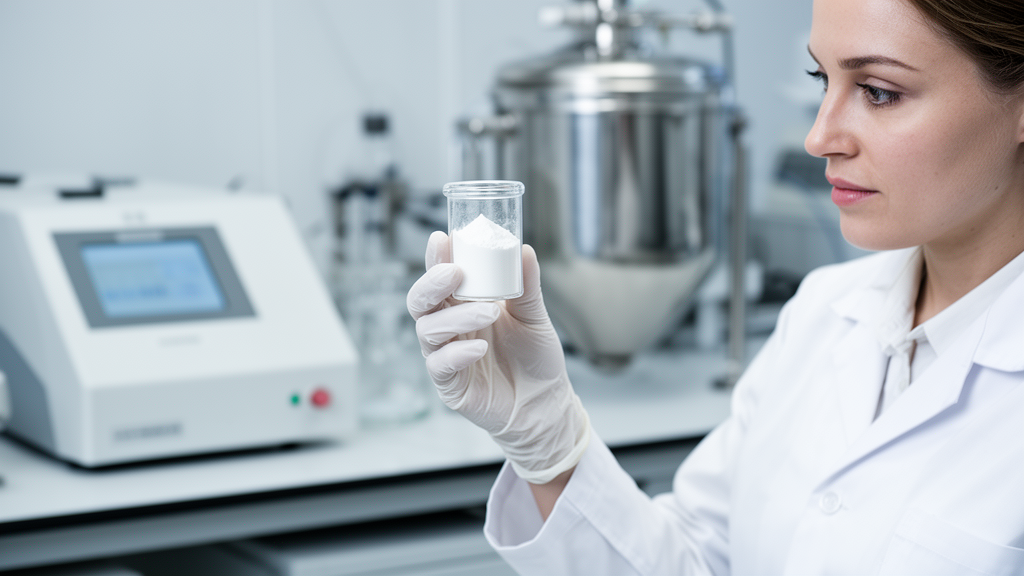
A major new special issue of the Journal of Pharmaceutical Investigation is set to spotlight one of the most consequential yet underappreciated frontiers in modern medicine: the science of turning drug molecules into medicines that actually work in patients. Titled Translational Advances in Pharmaceutical Dosage Form Development Based on Particle Engineering and Formulation Science, the collection will be published in January 2027 under the guidance of three guest editors based in South Korea, and it arrives at a moment when the pharmaceutical industry faces a widening gap between the molecules discovered in laboratories and the dosage forms that reach the clinic. The submission deadline for contributors is June 30, 2026, giving research groups worldwide a defined window to submit work that could shape how the next generation of drug products is designed, manufactured, and delivered.
The special issue is led by Sung-Joo Hwang of Yonsei University, Min-Soo Kim of Pusan National University, and Heejun Park of Duksung Women’s University, three formulation scientists whose institutions anchor much of Korea’s pharmaceutical development research. Their call for contributions lays out a sweeping agenda that covers the full life cycle of a dosage form, from the manipulation of particles at the micrometer and nanometer scale to the regulatory frameworks that govern how those particles are controlled during commercial production. The scope signals a deliberate effort to bridge disciplines that have too often operated in parallel: the physical chemistry of solids, the engineering of manufacturing processes, and the clinical imperative of getting therapeutically effective doses into patients safely and reproducibly.
At the heart of the issue is particle engineering, the discipline devoted to designing the physical characteristics of drug particles rather than simply accepting the crystals that emerge from a synthesis vessel. This matters because the vast majority of drug candidates emerging from discovery pipelines today are poorly soluble in water, a property that can render an otherwise potent molecule biologically useless. When a drug dissolves too slowly or too incompletely in the gastrointestinal tract, only a fraction of the administered dose reaches the bloodstream, forcing higher doses, more frequent administration, or outright abandonment of the compound. Particle engineering attacks this problem directly by reducing particle size to the micron or nano range, transforming crystalline material into amorphous solid dispersions, or engineering crystal habits and surface properties that accelerate dissolution and improve wetting.
The physics behind these strategies is exacting. Reducing a particle’s diameter increases its surface-area-to-volume ratio, and because dissolution rate is proportional to surface area, smaller particles dissolve faster. Nanocrystal suspensions stabilized by surfactants or polymers can push dissolution rates dramatically upward, but they introduce new challenges: nanoparticles tend to aggregate through the same high surface energy that makes them dissolve well, and they must remain physically stable through months or years of storage. Amorphous materials sidestep the crystal lattice energy barrier entirely and can deliver apparent solubilities many times higher than their crystalline counterparts, yet they are thermodynamically unstable and prone to recrystallization, which erases the solubility advantage. The special issue’s emphasis on solubility, stability, and bioavailability enhancement reflects precisely this tension, where every gain on one axis risks a loss on another.
Equally central is the solid-state dimension of formulation science. A single drug molecule can exist in multiple crystalline forms, known as polymorphs, each with a distinct arrangement of molecules in the lattice and therefore distinct solubility, melting point, mechanical behavior, and stability profile. The most notorious cautionary tale in this arena involved an early HIV protease inhibitor whose more thermodynamically stable polymorph appeared after launch, dissolving so much more slowly that the product had to be withdrawn and reformulated. Solid-state characterization, using techniques such as powder X-ray diffraction, differential scanning calorimetry, dynamic vapor sorption, and spectroscopic methods, is therefore not an academic luxury but a regulatory and commercial necessity. The special issue’s explicit call for work on solid-state characterization and control underscores that knowing exactly which form of a drug is present, and ensuring it stays that way from first manufacture to final expiry, remains one of the most demanding tasks in pharmaceutical development.
Beyond the solid state, the issue invites contributions on advanced formulation strategies across an unusually broad range of delivery routes. Oral solid dosage forms remain the workhorse of the industry, but injectable, inhalable, and transdermal systems each impose their own particle-level requirements. Inhaled medicines, for example, demand particles in a narrow aerodynamic size range, typically around one to five micrometers, to deposit in the deep lung rather than being exhaled or trapped in the throat; achieving that range while maintaining flowability and dose uniformity is a classic particle engineering problem. Injectable formulations must balance drug solubility against physiological tolerability, often relying on particle-based depots or nanosuspensions to extend release over weeks. Transdermal systems must coax molecules across the skin’s formidable barrier, and advanced drug delivery systems, from lipid nanoparticles to long-acting injectables, increasingly borrow tools from across all of these domains.
Perhaps the most distinctive feature of the special issue is its insistence on translation, the unglamorous but decisive passage from a promising laboratory formulation to a product that can be manufactured at scale, consistently, and within regulatory limits. Many elegant nanoparticle systems that perform beautifully in a beaker fail at the pilot plant, where mixing regimes, drying kinetics, and equipment surfaces behave differently. Scale-up of drug products requires that the critical quality attributes identified in early development, such as particle size distribution, crystallinity, and blend uniformity, remain within specification when batch sizes grow by orders of magnitude. The guest editors’ framing of translational formulation science suggests they are seeking work that documents this passage honestly, including the process understanding and risk assessments that make scale-up predictable rather than heroic.
That theme connects directly to the issue’s final two topic areas: emerging manufacturing technologies and the application of Quality by Design and Process Analytical Technology, known respectively as QbD and PAT. QbD is a regulatory philosophy, now embedded in international guidelines, that treats quality as something designed into a product rather than tested in afterward. It requires developers to identify critical quality attributes, map the process parameters that influence them, and establish a design space within which the product can be reliably manufactured. PAT complements this by installing real-time analytical sensors, such as near-infrared spectroscopy and Raman probes, directly into production lines, allowing operators to monitor and adjust processes as they run rather than waiting for laboratory results on finished batches. Together, these approaches enable continuous manufacturing, a paradigm that replaces the traditional sequential batch process with a flowing, integrated production line and is steadily gaining regulatory acceptance.
For the broader research community, the January 2027 issue promises to serve as a snapshot of where pharmaceutical formulation science stands as it absorbs pressures from several directions at once. Drug pipelines are increasingly dominated by poorly soluble small molecules and complex biologics; personalized and long-acting therapies demand delivery systems that were science fiction a generation ago; and regulators continue to raise expectations for process understanding and control. The guest editors’ decision to gather particle engineering, formulation design, solid-state science, manufacturing technology, and quality systems under a single translational umbrella is a statement that these are not separate fields but stages of one continuum, and that progress for patients depends on advances flowing across it. Researchers intending to contribute have until June 30, 2026, to prepare submissions, and the resulting collection will offer a detailed map of how the medicines of the coming decade are being engineered, one particle at a time.
Subject of Research: Translational pharmaceutical dosage form development based on particle engineering and formulation science
Article Title: Special Issue: Translational Advances in Pharmaceutical Dosage Form Development Based on Particle Engineering and Formulation Science
Article References: Special Issue: Translational Advances in Pharmaceutical Dosage Form Development Based on Particle Engineering and Formulation Science. (n.d.). Original publication
Image Credits: AI Generated
DOI: Not provided
Keywords: particle engineering, formulation science, drug delivery, bioavailability, solid-state characterization, Quality by Design, Process Analytical Technology, pharmaceutical manufacturing, scale-up, special issue, Journal of Pharmaceutical Investigation, dosage forms
News Source: Denise Maddox. (October 9, 2026). Particle Engineering Takes Center Stage as Pharmaceutical Formulation Science Pushes Toward Translational Breakthroughs. Scienmag.