Credit: Matt Miller
Children as young as 3 can be clinically depressed, and often that depression recurs as kids get older and go to school. It also can reappear during adolescence and throughout life.
But new research from Washington University School of Medicine in St. Louis demonstrates that an interactive therapy involving parents and their depressed children can reduce rates of depression and lower the severity of children's symptoms.
"By identifying depression as early as possible and then helping children try to change the way they process their emotions, we believe it may be possible to change the trajectory of depression and perhaps reduce or prevent recurrent bouts of the disorder later in life," said principal investigator Joan L. Luby, MD, director of the university's Early Emotional Development Program.
The findings are published June 20 in The American Journal of Psychiatry.
Luby's team adapted a treatment known as Parent-Child Interaction Therapy (PCIT) that was developed in the 1970s to correct disruptive behavior in preschoolers. The adaptation involved adding a series of sessions focused on emotions.
"We consider depression to be an impairment of the ability to experience and regulate emotions," said Luby, the Samuel and Mae S. Ludwig Professor of Psychiatry.
The 18-week, 20-session therapy program begins with a truncated version of the traditional PCIT program, then focuses more on enhancing emotional development.
"For example, we coach parents how to manage a child's emotional responses to stressful situations," Luby said.
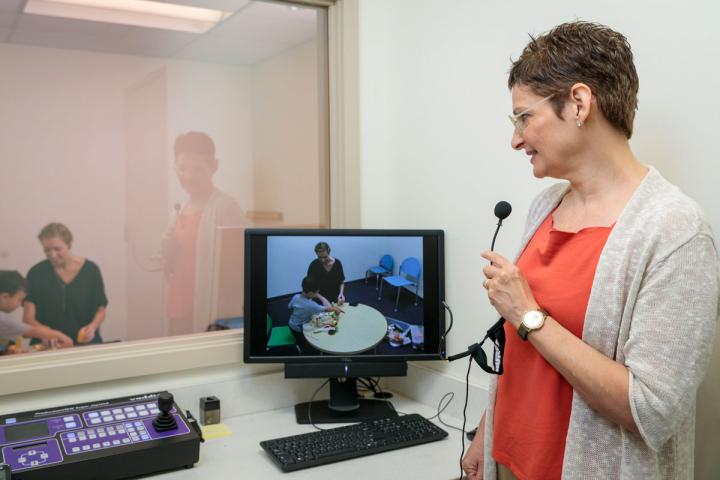
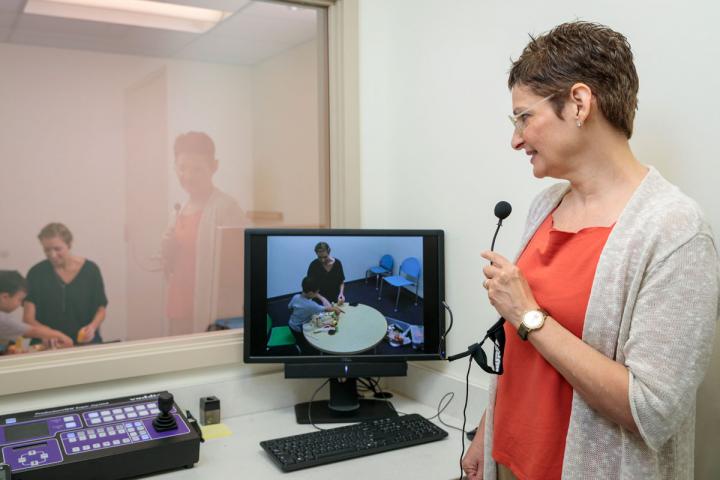
Among the ways of doing so is an activity in which researchers place a package for a child in a room and then make the child wait to open it. The parent wears an earpiece and is coached by a therapist observing through a one-way mirror. The idea is to give children tools to keep their emotions under control, and to train parents to help their children reinforce those tools.
Luby's team studied 229 parent-child pairs. Children in the study were 3 to 7 years old and had been diagnosed with depression. Half received the adapted therapy, called PCIT-ED.
Compared with children who were placed on a wait list before starting the therapy, those who received the intervention right away had lower rates of depression after 18 weeks and less impairment overall. If depression continued after the treatment, it tended to be less severe than that seen in the kids who had not yet received therapy.
Luby said children in the study will be followed to see how long the effects of the therapy last. Her team is analyzing data gathered three months after treatment ended to see whether improvements were maintained or whether any depression symptoms had returned by that point. The researchers hope to follow the children into adolescence to see whether intervention in early childhood provides sustained benefits.
They also are conducting brain-imaging as part of the study. In previous research, Luby and her colleagues found that brain changes linked to depression can alter the brain's structure and function, making the children potentially vulnerable to future problems. Now they want to learn whether this interactive therapy might prevent or reverse those previously identified brain changes.
Interestingly, the researchers also found that symptoms of clinical depression improved in the parents who worked with their children during the study.
"Even without targeting the parent directly, if a parent has been depressed, his or her depression improves," Luby said. "It previously had been demonstrated that if you treat a parent's depression, a child's depression improves, but this is powerful new data suggesting that the reverse also is true."
Luby added that the therapy program doesn't require a psychiatrist and can be delivered by master's degree-level clinicians.
"This is a therapy that could be widely disseminated," she said. "Since it only takes 18 weeks and doesn't require a child psychologist or psychiatrist, we think it would be highly feasible to deliver in community clinics from a practical standpoint and in terms of cost."
###
Luby JL, Barch DM, Whalen D, Tillman R, Freedland KE. A randomized controlled trial of parent-child psychotherapy targeting emotion development for early childhood depression. The American Journal of Psychiatry, published online June 20, 2018. ajp.psychiatryonline.org doi: 10.1176/appi.ajp.2018.18030321
This work was supported by the National Institute of Mental Health of the National Institutes of Health (NIH), grant number 5R01 MH098454-04.
Washington University School of Medicine's 1,300 faculty physicians also are the medical staff of Barnes-Jewish and St. Louis Children's hospitals. The School of Medicine is a leader in medical research, teaching and patient care, ranking among the top 10 medical schools in the nation by U.S. News & World Report. Through its affiliations with Barnes-Jewish and St. Louis Children's hospitals, the School of Medicine is linked to BJC HealthCare.
Media Contact
Jim Dryden
[email protected]
314-286-0110
@WUSTLmed
Original Source
https://medicine.wustl.edu/?p=61206&preview=1&_ppp=b0b08a45cc http://dx.doi.org/10.1176/appi.ajp.2018.18030321