• HOME
  • NEWS
  • EXPLORE
    • CAREER
      • Companies
      • Jobs
    • EVENTS
    • iGEM
      • News
      • Team
    • PHOTOS
    • VIDEO
    • WIKI
  • BLOG
  • COMMUNITY
    • FACEBOOK
    • INSTAGRAM
    • TWITTER
Tuesday, May 19, 2026
BIOENGINEER.ORG
No Result
View All Result
  • Login
  • HOME
  • NEWS
  • EXPLORE
    • CAREER
      • Companies
      • Jobs
        • Lecturer
        • PhD Studentship
        • Postdoc
        • Research Assistant
    • EVENTS
    • iGEM
      • News
      • Team
    • PHOTOS
    • VIDEO
    • WIKI
  • BLOG
  • COMMUNITY
    • FACEBOOK
    • INSTAGRAM
    • TWITTER
  • HOME
  • NEWS
  • EXPLORE
    • CAREER
      • Companies
      • Jobs
        • Lecturer
        • PhD Studentship
        • Postdoc
        • Research Assistant
    • EVENTS
    • iGEM
      • News
      • Team
    • PHOTOS
    • VIDEO
    • WIKI
  • BLOG
  • COMMUNITY
    • FACEBOOK
    • INSTAGRAM
    • TWITTER
No Result
View All Result
Bioengineer.org
No Result
View All Result
Home NEWS Science News Biology

Papers concludes that incentives to afforestation can be harmful to the environment

Bioengineer by Bioengineer
June 25, 2020
in Biology
Reading Time: 3 mins read
0
IMAGE
Share on FacebookShare on TwitterShare on LinkedinShare on RedditShare on Telegram

IMAGE

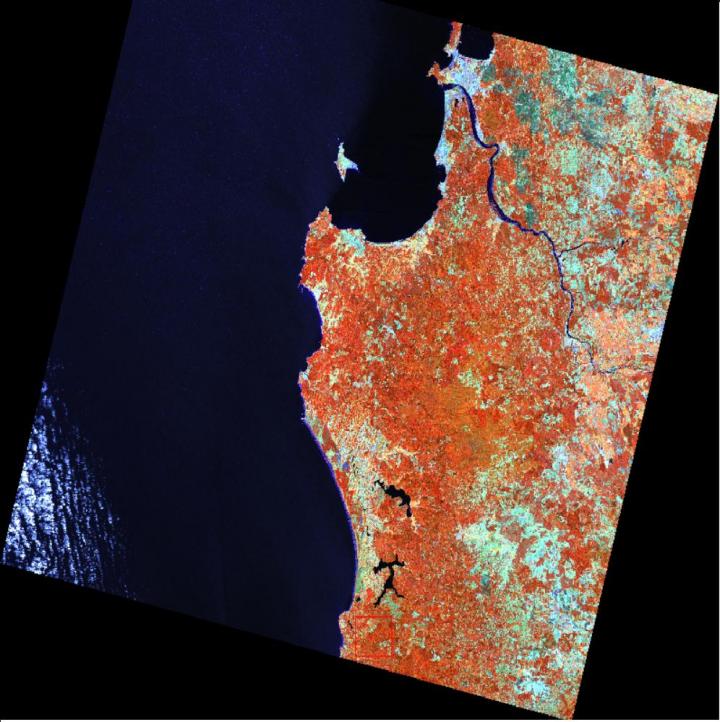
Credit: Cristian Echeverría

“Through a counterfactual analysis, we showed that between 1986 and 2011 the incentives to afforestation in Chile caused an increase in forest plantations, but reduced the extent of native forests”, explains the academic from the Faculty of Forest Sciences at the Universidad de Concepción, UdeC, Dr. Cristian Echeverría, about the main conclusions of the paper Impacts of Chilean forest subsidies on forest cover, carbon and biodiversity, published by the journal Nature Sustainability, co-written with academicians Robert Heilmayr from the U. of California, and Eric F. Lambin of Stanford University, both from the United States.

For the UdeC researcher, this international collaboration was of the “highest scientific standard, with great strictness and close cooperation in the stages of formulation of the idea, preparation of the manuscript and data analysis”, he sustains and explains that the idea of the study emerged “about seven years ago, when the other authors got interested in my research related to deforestation in Chile. After publishing a joint paper about land use changes in Chile, we decided to continue the collaboration between the Landscape Ecology Laboratory, LEP, and U. Stanford to answer new scientific questions”

In the same way, the study -which aims to assess the impacts of an incentive to afforestation on carbon sequestration, forest cover and biodiversity- was possible thanks to various sources of financing and information, given that “having classified maps of satellite images was an immense task of the three universities”, says Echeverría, adding that they had “financing from various Fondecyt projects and from the LEP’s own resources and other funds obtained by the leading author, Robert Heilmayr, during his PhD studies”, he details.

Regarding the main scientific conclusions of the recent study, Echeverría details that the increasing establishment of exotic plantations caused “small negative impacts on the total carbon stored in the above-ground biomass. Additionally, the policy produced the substitution of native forests for plantation which resulted in a significant decrease in the richness of species of flora and fauna”.

In the researcher’s opinion, based on the results of this study, it is possible to “strengthen research in the evaluation of the impact of environmental policies on other components, such as, for example, ecosystem services; evaluating current policies on native forests and other environmental matters; identifying the most critical areas of biodiversity loss for the design of restoration plans. In addition, contributing with new evidence on the future impacts that the NdC (Nationally Determined Contributions) of Chile would have on the design of mitigation measures and adaptation to climate change”.

“The reforestation and restoration policies that the country is currently pursuing need to be carefully designed and firmly applied to ensure the protection of natural ecosystems. Such safeguards can improve the benefits of a policy, as well as its impacts on carbon sequestration and biodiversity conservation”, states the UdeC academician.

###

Media Contact
Cristian Echeverría
[email protected]

Original Source

http://www.udec.cl/vrid/?q=node/1382

Related Journal Article

http://dx.doi.org/10.1038/s41893-020-0547-0

Tags: AgricultureBiodiversityClimate ChangeEarth ScienceForestryNaturePlant Sciences
Share12Tweet8Share2ShareShareShare2

Related Posts

Fischer’s Blue Butterflies Less Attractive on Non-Native Diet, Study Finds — Biology

Fischer’s Blue Butterflies Less Attractive on Non-Native Diet, Study Finds

May 19, 2026

How One Protein Uses Embryonic Brain Language to Maintain Plasticity in Adult Neurons

May 19, 2026

Scientists Can Now Monitor America’s Dolphin Populations Using DNA Floating in Seawater

May 19, 2026

New Insights into How Smoking Causes Lung Stiffness

May 19, 2026
Please login to join discussion

POPULAR NEWS

  • Research Indicates Potential Connection Between Prenatal Medication Exposure and Elevated Autism Risk

    845 shares
    Share 338 Tweet 211
  • New Study Reveals Plants Can Detect the Sound of Rain

    731 shares
    Share 292 Tweet 182
  • Salmonella Haem Blocks Macrophages, Boosts Infection

    62 shares
    Share 25 Tweet 16
  • Breastmilk Balances E. coli and Beneficial Bacteria in Infant Gut Microbiomes

    58 shares
    Share 23 Tweet 15

About

We bring you the latest biotechnology news from best research centers and universities around the world. Check our website.

Follow us

Recent News

Fischer’s Blue Butterflies Less Attractive on Non-Native Diet, Study Finds

How One Protein Uses Embryonic Brain Language to Maintain Plasticity in Adult Neurons

One in Five Pregnant Individuals Miss Proper Syphilis Screening, Study Finds

Subscribe to Blog via Email

Enter your email address to subscribe to this blog and receive notifications of new posts by email.

Join 82 other subscribers
  • Contact Us

Bioengineer.org © Copyright 2023 All Rights Reserved.

Welcome Back!

Login to your account below

Forgotten Password?

Retrieve your password

Please enter your username or email address to reset your password.

Log In
No Result
View All Result
  • Homepages
    • Home Page 1
    • Home Page 2
  • News
  • National
  • Business
  • Health
  • Lifestyle
  • Science

Bioengineer.org © Copyright 2023 All Rights Reserved.