

• HOME
  • NEWS
  • EXPLORE
    • CAREER
      • Companies
      • Jobs
    • EVENTS
    • iGEM
      • News
      • Team
    • PHOTOS
    • VIDEO
    • WIKI
  • BLOG
  • COMMUNITY
    • FACEBOOK
    • INSTAGRAM
    • TWITTER
Thursday, June 4, 2026
BIOENGINEER.ORG
No Result
View All Result
  • Login
  • HOME
  • NEWS
  • EXPLORE
    • CAREER
      • Companies
      • Jobs
        • Lecturer
        • PhD Studentship
        • Postdoc
        • Research Assistant
    • EVENTS
    • iGEM
      • News
      • Team
    • PHOTOS
    • VIDEO
    • WIKI
  • BLOG
  • COMMUNITY
    • FACEBOOK
    • INSTAGRAM
    • TWITTER
  • HOME
  • NEWS
  • EXPLORE
    • CAREER
      • Companies
      • Jobs
        • Lecturer
        • PhD Studentship
        • Postdoc
        • Research Assistant
    • EVENTS
    • iGEM
      • News
      • Team
    • PHOTOS
    • VIDEO
    • WIKI
  • BLOG
  • COMMUNITY
    • FACEBOOK
    • INSTAGRAM
    • TWITTER
No Result
View All Result
Bioengineer.org
No Result
View All Result
Home NEWS Science News Biology

Oxygen levels impact on species’ ability and willingness to fight

Bioengineer by Bioengineer
October 31, 2018
in Biology
Reading Time: 2 mins read
0
Share on FacebookShare on TwitterShare on LinkedinShare on RedditShare on Telegram
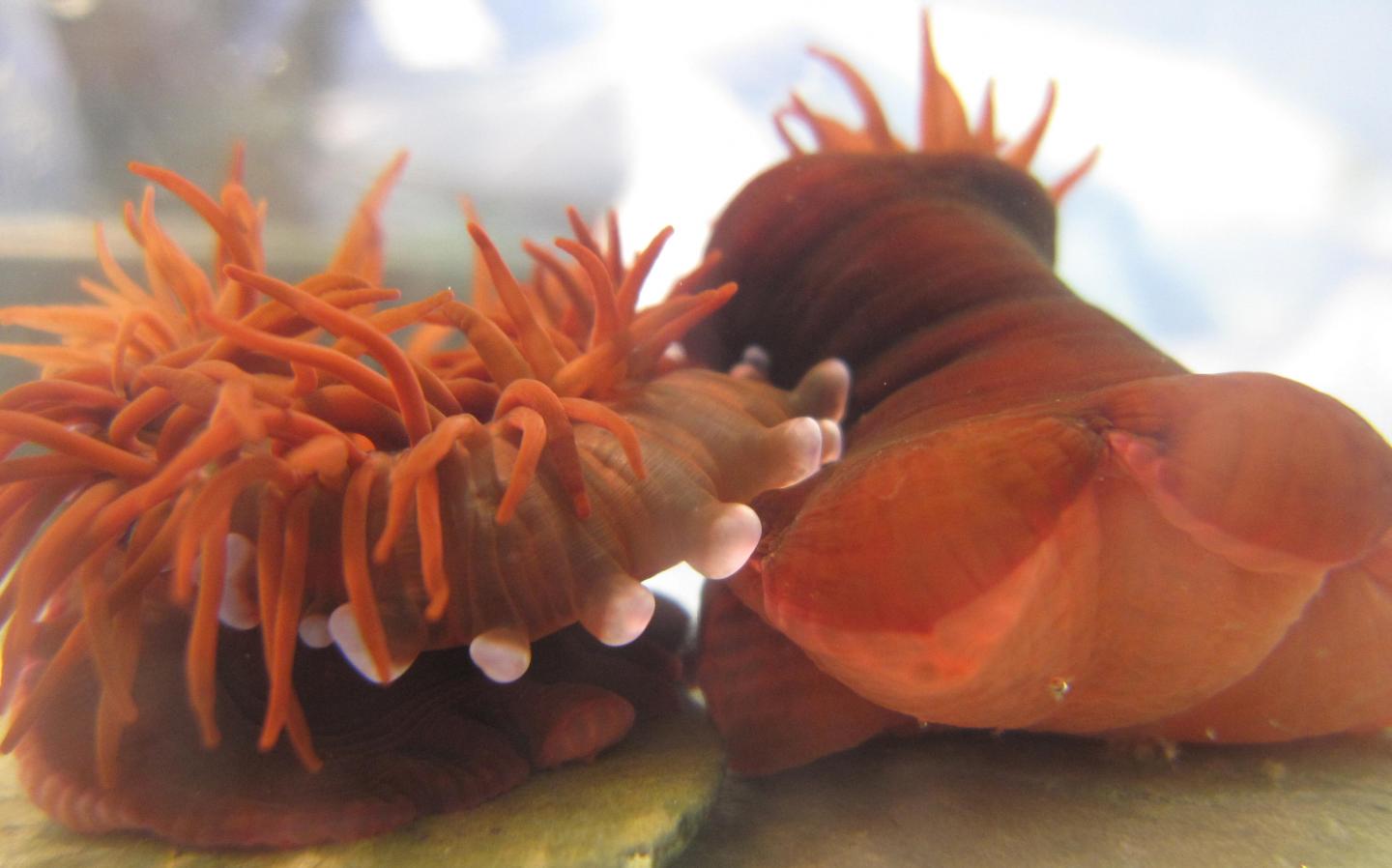
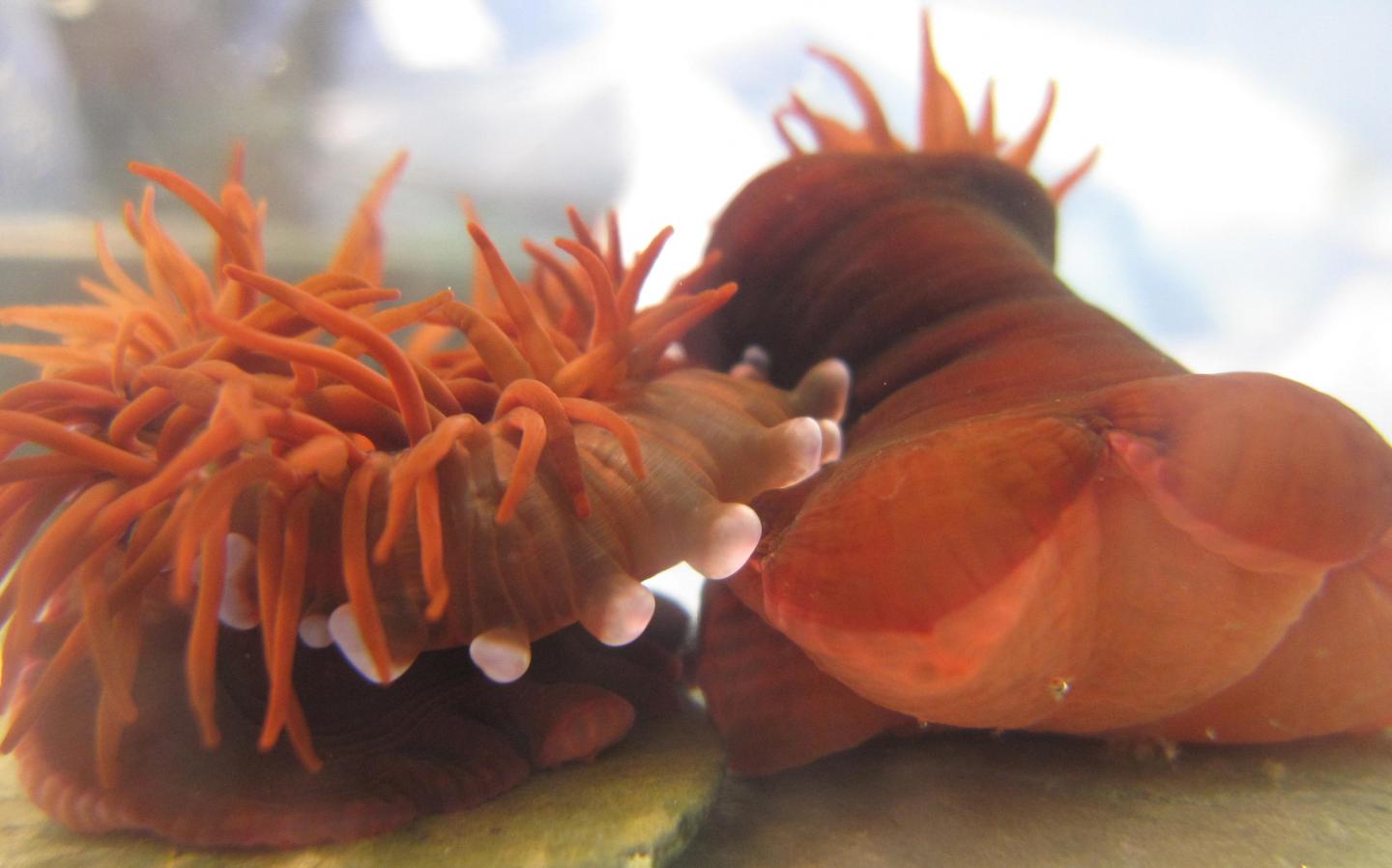
IMAGE

Credit: Fabian Rudin/University of Plymouth

Environmental conditions could play a major role in the instigation of fights within the animal kingdom, according to new research.

Scientists at the University of Plymouth have discovered that different flow regimes and oxygen levels within the marine environment are likely to result in conflict.

Writing in the Journal of Experimental Biology, they say that conditions also play a key role in an individual's resources of strength and stamina and – consequently – their success in such battles.

The study is part of a long-term investigation into the behaviour of sea anemones, funded through a grant from the Biotechnology and Biological Sciences Research Council.

Professor Mark Briffa and Dr Sarah Lane, from the University's Marine Biology and Ecology Research Centre, have previously demonstrated the influence of both immune function and prior experience on the likelihood of fighting success.

They have also shown that creatures who instigate fights are just as likely to suffer long term harm as those defending themselves.

However, the current study could be particularly relevant amid continuing changes to the marine environment brought on by global warming.

Dr Lane, a Post-Doctoral Research Fellow, said: "The coastal environment that these sea anemones live in is rarely stable. We wanted to understand how such changes might affect the fights which take place in the wild. Our results revealed conditions can not only prompt fights but completely alter both an individual's ability to fight and its motivation."

The study focused on the beadlet sea anemone Actinia equina, which is found in large quantities on coastlines across the UK.

Scientists exposed some creatures to decreased levels of oxygen (hypoxia) within tanks and then examined their willingness to fight over a prize they would encounter in the wild, fast-flowing water.

The results showed those anemones who had been living in aerated water were more likely to initiate combat, and more successful in it, than their oxygen-deprived rivals.

However, those housed in hypoxic conditions were still willing to start fights – and succeeded in them – against those from similar conditions.

Professor Briffa, who has been studying animal behaviour within the marine environment for more than 20 years, added: "Typically we think of fighting prowess as an intrinsic trait of individual animals. Our new study shows that external conditions can cause differences in fighting ability, in a way that influences the outcome of a fight and has the potential to be seen throughout the animal kingdom."

###

Media Contact

Alan Williams
[email protected]
44-175-258-8004
@PlymUni

http://www.plymouth.ac.uk

Original Source

https://www.plymouth.ac.uk/news/oxygen-levels-impact-on-species-ability-and-willingness-to-fight http://dx.doi.org/10.1242/jeb.187740

Share12Tweet8Share2ShareShareShare2

Related Posts

Offspring Inherit Moms’ Learned Fear of Snakes in Critically Endangered Mouse — Biology

Offspring Inherit Moms’ Learned Fear of Snakes in Critically Endangered Mouse

June 4, 2026
Thundering Footsteps Alert Minute Caterpillars to Deadly Ladybeetle Attacks — Biology

Thundering Footsteps Alert Minute Caterpillars to Deadly Ladybeetle Attacks

June 4, 2026

Costly River Reopening Projects for Fish Yield Mixed Results — A Guide for Smarter Investment in Conservation Planning

June 3, 2026

New Moth Species Discovered and Named in Honor of the Orixás

June 3, 2026
Please login to join discussion

POPULAR NEWS

  • ESMO 2025: mRNA COVID Vaccines Enhance Efficacy of Cancer Immunotherapy

    321 shares
    Share 128 Tweet 80
  • Multi-Hospital Study Reveals Long Covid Burden Is Twice as High as Current Estimates

    87 shares
    Share 34 Tweet 22
  • Saying Goodbye to PGY-6: Pediatric Fellowship Realities

    72 shares
    Share 29 Tweet 18
  • Common Food Preservatives Associated with Elevated Blood Pressure and Increased Heart Disease Risk

    57 shares
    Share 23 Tweet 14

About

We bring you the latest biotechnology news from best research centers and universities around the world. Check our website.

Follow us

Recent News

Spinal Cord Stimulation Enhances Arm Mobility in Stroke Survivors

ATP Binding Remodels Amyloid Fibrils, Reduces Toxicity

Cooperation Challenges Equality in Public Goods Allocation

Subscribe to Blog via Email

Enter your email address to subscribe to this blog and receive notifications of new posts by email.

Join 83 other subscribers
  • Contact Us

Bioengineer.org © Copyright 2023 All Rights Reserved.

Welcome Back!

Login to your account below

Forgotten Password?

Retrieve your password

Please enter your username or email address to reset your password.

Log In
No Result
View All Result
  • Homepages
    • Home Page 1
    • Home Page 2
  • News
  • National
  • Business
  • Health
  • Lifestyle
  • Science

Bioengineer.org © Copyright 2023 All Rights Reserved.
