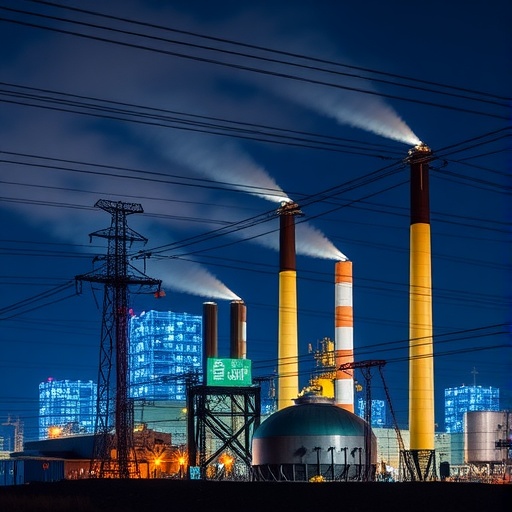
Industrial electrification is rapidly emerging as a critical intersection of economic security and decarbonisation efforts, according to a comprehensive analysis conducted by researchers at the University of Oxford. The global industrial sector, which currently depends heavily on fossil fuels, faces unparalleled risks associated with volatile energy markets. These price instabilities, exacerbated by geopolitical tensions and supply chain disruptions, underscore the urgent necessity of shifting towards electrification, providing a more stable and resilient energy framework for industry worldwide.
Recent geopolitical events have starkly illustrated the vulnerabilities tethered to fossil fuel dependency. The dispute surrounding the Strait of Hormuz, a vital global chokepoint for petroleum transport, has reignited concerns over the fragility of energy supplies. This scenario follows closely on the heels of the 2022 Russian gas crisis, which caused extensive factory shutdowns and operational disruptions across Europe and other continents, reverberating through energy-intensive sectors. Such disruptions are not sporadic anomalies but are increasingly recognized as manifestations of an entrenched structural weakness embedded in the fossil-fuel-reliant industrial paradigm.
The consequences of these energy disruptions extend globally, with significant impacts observed in Asia amid the 2022 spike in liquefied natural gas (LNG) prices. Industrial hubs in Pakistan and Bangladesh were forced to halt operations temporarily, while manufacturers in Japan and South Korea grappled with soaring energy costs. The recurring energy price surges, stimulated by the Strait of Hormuz’s volatility, continue to exert pressure on industrial producers, underscoring the cyclical nature of fossil fuel market shocks and their global ramifications.
Professor Jan Rosenow, an expert in Energy and Climate Policy at Oxford, articulates a critical viewpoint: industry has endured two major fossil fuel shocks within a span of three years—the Russian gas crisis and the ongoing tensions near Hormuz. This repeated pattern of disruption calls into question the sustainability of current energy systems and demands a radical reevaluation of industrial energy infrastructure. The critical interrogation is not if but when such systemic transformation will take precedence over the reactive responses of the past.
The industrial sector’s profound reliance on fossil fuels makes it particularly susceptible to energy market volatility, yet paradoxically, it has been one of the slowest to transition towards cleaner energy alternatives. This inertia stems partly from the complexity of industrial processes that demand high-temperature heat and continuous energy supply, traditionally fulfilled by fossil fuel combustion. Nevertheless, emerging electrification technologies are increasingly capable of meeting these industrial energy demands while also facilitating a transition to a decarbonised, resilient energy future.
Recent technological advancements signal a pivotal shift in industrial energy systems. Notably, BASF’s chemical site in Ludwigshafen has introduced one of the world’s most powerful industrial heat pumps, equipped with a massive 95-tonne, 16-metre evaporator. In Southeast Asia, the commissioning of the first industrial heat battery in Saraburi, Thailand, entirely built with local supply chains within an eight-month timeline, exemplifies a move beyond pilot projects towards scalable industrial electrification solutions. These developments affirm the technical viability of electrification at industrial scales.
Despite the availability of these technologies, the transition to industrial electrification has been stymied by a lack of cohesive political will and inadequate infrastructure. Professor Rosenow emphasizes that while technical capacity is no longer the limiting factor, systemic issues such as flawed price signals and insufficient grid capacity inhibit widespread adoption. Correcting these systemic deficiencies through policy reforms and infrastructure investments is imperative to unlock electrification’s full potential.
The recently published Oxford report, titled “High Voltage,” leverages an extensive dataset of over 1,600 global climate scenarios and a rigorous engineering review to establish that as much as 90% of industrial energy demand could be electrified using current and emerging technologies. This convergence of evidence from entirely independent methodological approaches signals robust confidence in the feasibility of an electrified industrial sector.
Cassandra Etter-Wenzel, a researcher at Oxford’s Environmental Change Institute, highlights the remarkable consistency across the analytical lines of evidence. Both climate scenario modeling and detailed engineering assessments converge on the same breakthrough insight—electrification at scale is within reach for the industrial sector. The primary obstacle, therefore, is not technical feasibility but the pace and decisiveness of policy implementation to accelerate this transition before energy market shocks persist indefinitely.
Key electrification technologies such as electric heat pumps, resistance heating, electric boilers, and thermal storage solutions like heat batteries have matured to commercial readiness. Yet, policy and market distortions continue to hamper their deployment. Across many regions, electricity remains artificially expensive compared to natural gas due to legacy taxation and levies disproportionately impacting electricity costs. Overcoming this imbalance through comprehensive electricity pricing reform and enhanced carbon pricing mechanisms is critical to motivating industrial adoption of electrification.
Grid integration presents an equally formidable challenge. Industrial projects, especially those involving electrification, are often sidelined by protracted connection timelines and regulatory impediments. To unlock industrial electrification’s potential, governments must prioritize streamlined permitting processes, enable anticipatory investments in grid capacity, and expedite connection protocols. Without such infrastructural modernization, the shift to electrified industrial energy will remain bottlenecked regardless of technological advances.
Financing first-of-kind industrial electrification investments carries inherent technological and integration risks. Private capital alone is reluctant to shoulder these risks without supportive mechanisms. Public financial instruments such as Carbon Contracts for Difference (CCfDs), which played a role in supporting BASF’s heat pump project, as well as grants and concessional financing, are indispensable. These instruments not only de-risk pioneering projects but also catalyze cost reductions through learning curves and economies of scale for subsequent investments.
Beyond decarbonisation, reducing fossil fuel dependence fundamentally enhances industrial resilience. Each unit of fossil fuel displaced by domestically generated clean electricity diminishes vulnerability to global geopolitical disruptions, supply chain shocks, and price volatility. Professor Rosenow voices a stark reality: industries that accelerate electrification will effectively insulate themselves from future crises triggered by pipeline closures, maritime chokepoints, or drastic price surges, transforming energy security into a competitive advantage for industrial stakeholders.
In essence, industrial electrification embodies a transformative pathway that integrates economic security with environmental imperatives. The convergence of technological readiness, systemic vulnerabilities in fossil fuel dependence, and mounting policy imperatives signals the dawn of a global industrial revolution in energy systems. Realizing this revolution demands accelerated policy action, infrastructural commitment, and innovative financing to transition from fossil fuel hostage to clean energy empowerment.
Subject of Research: Industrial Electrification and Energy Security
Article Title: Industrial Electrification: A Strategic Imperative for Economic Security and Decarbonisation
News Publication Date: April 22, 2024
Web References: Not provided
References: Oxford University Report “High Voltage”
Image Credits: Not provided
Keywords
Renewable energy, Green energy, Alternative energy, Energy resources, Energy infrastructure, Industrial production, Industrial plants, Manufacturing, Power plants, Industrial engineering
Tags: 2022 Russian gas crisis effectsdecarbonisation in heavy industryenergy stability through electrificationfossil fuel dependency risksgeopolitical tensions and energy supplyindustrial electrification and economic securityindustrial shutdowns in Asialiquefied natural gas price spikesresilient energy frameworks for industryStrait of Hormuz petroleum transport riskssupply chain disruptions in industryvolatile energy markets impact