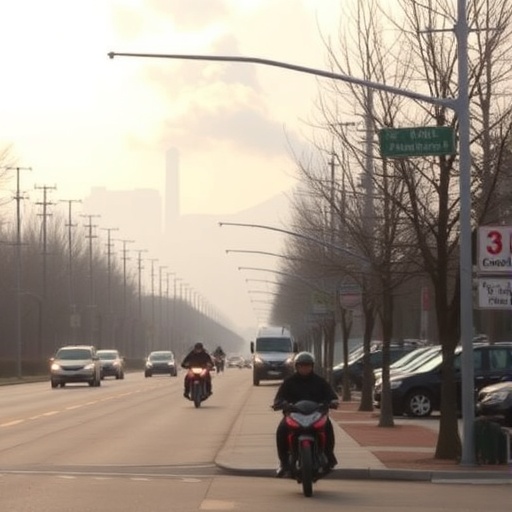
In a groundbreaking study poised to redefine our understanding of environmental carcinogenesis, researchers have established a compelling association between long-term exposure to outdoor air pollutants and an elevated risk of pancreatic cancer. This research, emerging from one of the largest prospective U.S.-based cohorts ever analyzed, delivers critical insights into how the air quality we often take for granted might be silently influencing one of the deadliest cancers known today. The investigation’s scale, depth, and novel focus on pancreatic malignancy mark a significant step forward in environmental epidemiology and cancer prevention strategies.
The study meticulously tracked a diverse cohort over several years, systematically cataloging their environment-based air pollutant exposure alongside the incidence of pancreatic cancer diagnoses. Utilizing advanced monitoring techniques that integrate satellite data, ground-based air sensors, and personal exposure assessments, the researchers were able to quantify pollutant levels with unprecedented accuracy. Notably, components such as particulate matter (PM2.5), nitrogen dioxide (NO2), and ozone—which have previously been implicated in respiratory and cardiovascular diseases—were scrutinized for their carcinogenic potential with respect to pancreatic tissue.
One of the key technical breakthroughs of this study was the application of sophisticated statistical models that adjusted for confounding factors like smoking, diet, socioeconomic status, and genetic predispositions. Such rigorous control measures lend robustness to the findings, ensuring the correlations observed are unlikely to be spurious. By integrating time-weighted exposure patterns and geographic mobility data, the team could precisely delineate individual pollutant burden—that is, the cumulative dose delivered to the pancreas over time—thereby transcending simplistic proximity-based exposure estimations.
Intriguingly, the research unveiled a dose-response relationship, demonstrating that individuals subject to higher concentrations of fine particulate matter had significantly elevated risks of developing pancreatic adenocarcinoma. This association persisted even after excluding participants with pre-existing diabetes or pancreatitis, conditions traditionally linked with pancreatic cancer, suggesting that air pollution independently imposes carcinogenic stress on pancreatic cellular microenvironments. Mechanistically, this likely involves chronic systemic inflammation, oxidative stress, and epigenetic modifications induced by inhaled pollutants that eventually reach pancreatic tissue via the bloodstream.
Moreover, the study sheds light on the latency period of pancreatic carcinogenesis following pollutant exposure, revealing a temporal gradient spanning multiple decades. This finding emphasizes the insidious and cumulative nature of environmental insults—highlighting why early intervention in air quality regulation could yield significant long-term reductions in cancer incidence. The research further delineates regional disparities, with metropolitan areas exhibiting the highest relative risks due to dense traffic emissions and industrial activities, reinforcing the public health imperative to target urban air pollution.
On a molecular level, the researchers propose pathways through which airborne toxins might contribute to malignant transformation in pancreatic cells. Specifically, they hypothesize that polycyclic aromatic hydrocarbons (PAHs) and heavy metals present in particulate matter induce DNA adduct formation, leading to mutagenesis and subsequent oncogene activation. This is coupled with impaired DNA repair mechanisms triggered by oxidative damage, creating an environment conducive to tumor initiation and progression. Such insights pave the way for future translational research, potentially identifying biomarkers for early detection or therapeutic targets that mitigate pollution-induced carcinogenesis.
Public health implications stemming from this study are profound. Pancreatic cancer remains notoriously difficult to detect early and has one of the lowest survival rates among cancers. As such, identifying modifiable risk factors is crucial for curbing its mortality burden. The findings bolster calls for stricter air quality standards and comprehensive urban planning that reduces pollutant emissions. Furthermore, clinical recommendations might soon incorporate environmental exposure history as a factor in pancreatic cancer risk assessments, thereby refining individual prognosis and screening strategies.
Beyond risk assessment, the study also contributes to the evolving narrative of environmental justice. Vulnerable communities—often characterized by lower socioeconomic status and higher exposure to pollution sources—emerge disproportionately affected by this newly recognized risk. This revelation demands policy frameworks that prioritize air quality improvements in underserved areas, ensuring equity in environmental health protections. The intersection of epidemiology, social determinants of health, and environmental science thus challenges stakeholders to adopt nuanced, multisectoral approaches to cancer prevention.
From a global health perspective, these findings resonate beyond the United States, where similar pollutant profiles are ubiquitous. Rapid urbanization and industrial growth in many countries amplify the dangers posed by outdoor air pollutants, potentially escalating pancreatic cancer rates worldwide. The research sets a crucial precedent for integrating environmental factors into international cancer control programs, advocating for a paradigm shift that acknowledges pollution as a vital component in oncologic risk matrices.
The study’s methodology also represents a significant leap forward in exposure science. Employing cutting-edge geographic information systems (GIS) and machine learning algorithms, the investigators created dynamic models capable of real-time pollutant exposure prediction on an individual level. This technological innovation allows for more refined epidemiological studies in the future and opens doors for personalized environmental health interventions that could proactively minimize pollutant-related cancer risk.
Critical to the translational relevance of this work is the interdisciplinary collaboration between epidemiologists, environmental scientists, oncologists, and data scientists. By synergizing expertise across these domains, the research team constructed a comprehensive framework that robustly addresses the multifactorial nature of pollution-induced carcinogenesis. Such collaborative models represent the future of complex disease research and serve as blueprints for tackling other environmentally linked conditions.
This publishment not only advances scientific knowledge but also ignites public discourse on the hidden perils of air pollution. As the general population becomes increasingly aware of environmental determinants of health, advocacy for stricter pollution control could gain momentum, accelerating policy enactment and technological innovation in pollution abatement. It is hoped that heightened awareness, catalyzed by studies like this, will translate into concrete actions that safeguard public health on both national and global scales.
In conclusion, the landmark study elucidates a previously underappreciated link between prolonged exposure to outdoor air pollution and pancreatic cancer risk. Its rigorous approach, extensive cohort, and comprehensive pollutant profiling establish a new paradigm in environmental oncology. By highlighting the carcinogenic threat of commonplace air contaminants, this research underscores the urgent necessity for integrated strategies encompassing environmental control, clinical vigilance, and social equity to combat one of the world’s deadliest cancers.
The ramifications of these findings ripple through public health policy, clinical medicine, and scientific inquiry, heralding a new era wherein air quality is recognized not merely as an environmental concern but as a fundamental determinant of cancer risk. As efforts to improve air standards intensify, this study provides an essential evidentiary foundation, ensuring that decisions are rooted in robust scientific understanding and dedicated to preserving human health for generations to come.
Subject of Research: Long-term exposure to outdoor air pollutants and its relationship to pancreatic cancer risk.
Article Title: Long-term exposure to outdoor air pollutants and risk of pancreatic cancer in a large prospective U.S.-based cohort.
Article References:
Chtourou, A., Marcus Post, L., Fisher, J.A. et al. Long-term exposure to outdoor air pollutants and risk of pancreatic cancer in a large prospective U.S.-based cohort. J Expo Sci Environ Epidemiol (2026). https://doi.org/10.1038/s41370-026-00929-9
Image Credits: AI Generated
DOI: 10.1038/s41370-026-00929-9 (16 June 2026)
Tags: advanced air quality monitoring techniquesconfounding factors in environmental health studiesenvironmental carcinogenesis researchenvironmental epidemiology cancer preventionlarge-scale prospective cohort study on pollutionlong-term air pollutant exposure health effectsnitrogen dioxide NO2 pancreatic malignancyoutdoor air pollution and pancreatic cancerozone exposure and cancerparticulate matter PM2.5 cancer risksatellite data in pollution studiesstatistical models in cancer risk assessment