• HOME
  • NEWS
  • EXPLORE
    • CAREER
      • Companies
      • Jobs
    • EVENTS
    • iGEM
      • News
      • Team
    • PHOTOS
    • VIDEO
    • WIKI
  • BLOG
  • COMMUNITY
    • FACEBOOK
    • INSTAGRAM
    • TWITTER
Sunday, June 28, 2026
BIOENGINEER.ORG
No Result
View All Result
  • Login
  • HOME
  • NEWS
  • EXPLORE
    • CAREER
      • Companies
      • Jobs
        • Lecturer
        • PhD Studentship
        • Postdoc
        • Research Assistant
    • EVENTS
    • iGEM
      • News
      • Team
    • PHOTOS
    • VIDEO
    • WIKI
  • BLOG
  • COMMUNITY
    • FACEBOOK
    • INSTAGRAM
    • TWITTER
  • HOME
  • NEWS
  • EXPLORE
    • CAREER
      • Companies
      • Jobs
        • Lecturer
        • PhD Studentship
        • Postdoc
        • Research Assistant
    • EVENTS
    • iGEM
      • News
      • Team
    • PHOTOS
    • VIDEO
    • WIKI
  • BLOG
  • COMMUNITY
    • FACEBOOK
    • INSTAGRAM
    • TWITTER
No Result
View All Result
Bioengineer.org
No Result
View All Result
Home NEWS Science News Biology

Out of sync: Ecologists report climate change affecting bee, plant life cycles

Bioengineer by Bioengineer
August 19, 2020
in Biology
Reading Time: 2 mins read
0
IMAGE
Share on FacebookShare on TwitterShare on LinkedinShare on RedditShare on Telegram

In NSF-funded community-wide assessment of data collected from sites around Colorado’s Rocky Mountain Biological Laboratory, bee emergence is advancing with snowmelt timing, but bee phenology is less sensitive than flower phenology
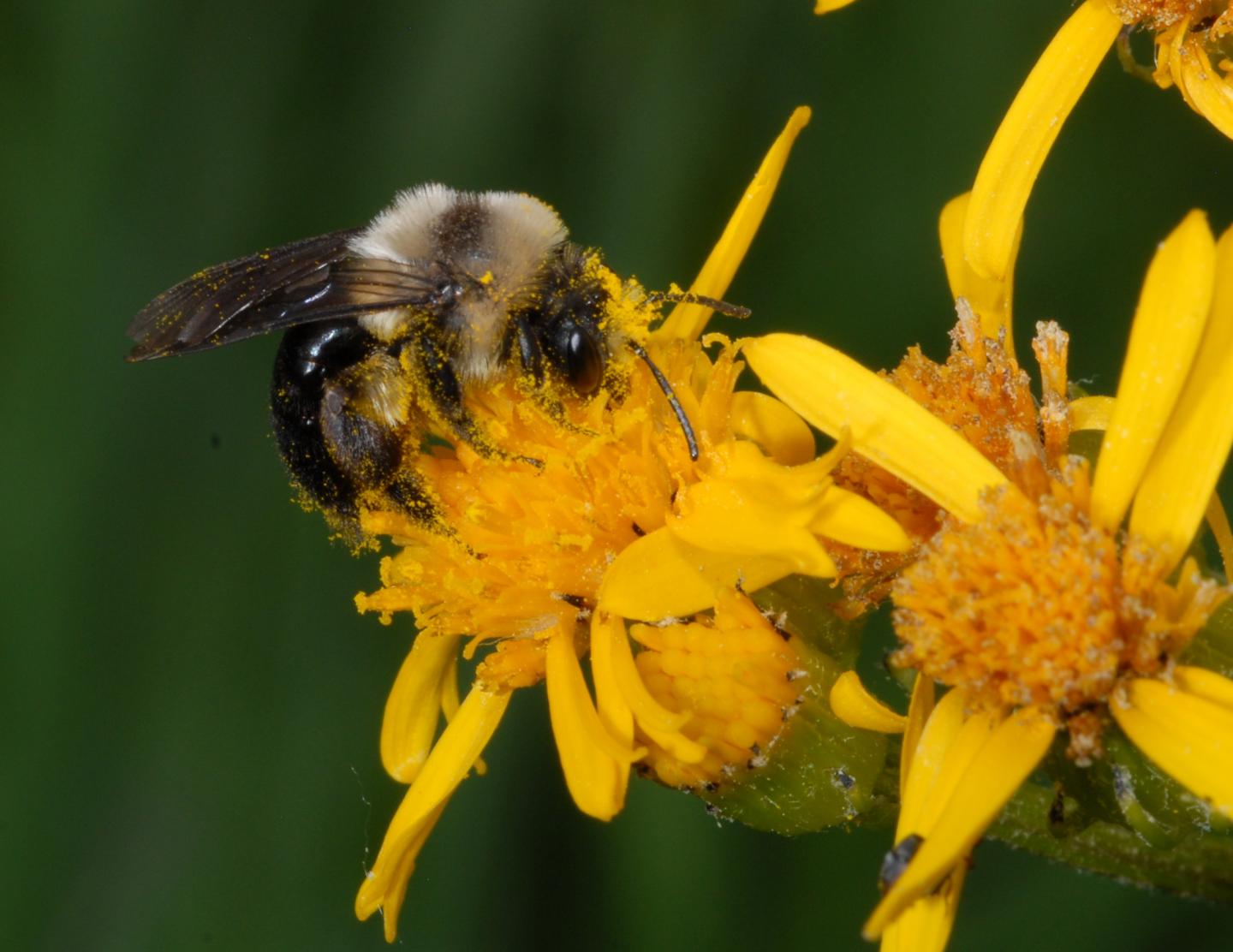
IMAGE

Credit: David Inouye, RMBL

LOGAN, UTAH, USA – Bees and flowers seem inseparable harbingers of spring, but what happens when pollinators emerge later than their sources of nectar and pollen? Reporting on the first community-wide assessment of 67 bee species of the Colorado Rockies, ecologists Michael Stemkovski of Utah State University and Rebecca Irwin of North Carolina State University say “phenological mismatch,” changing timing of life cycles between bees and flowers, caused by climate change, has the potential to disrupt a mutually beneficial relationship.

“We analyzed time-series abundance data collected at 18 sites around the Rocky Mountain Biological Laboratory (RMBL) in the Elk Mountains of western Colorado during a nine-year, National Science Foundation-funded bee monitoring project,” says Stemkovski, doctoral student in USU’s Department of Biology and the USU Ecology Center.

He and Irwin, senior author, along with colleagues from RMBL, University of Texas at Austin, Imperial College London, University of Manitoba, USDA-ARS Pollinating Insects Research Unit at USU, Central Texas Melittological Institute, Royal Saskatchewan Museum, Texas A&M University, Florida State University and University of Maryland, published findings in the August 19, 2020 issue of Ecology Letters.

“We find bee emergence timing is advancing with snowmelt timing, but bee phenology – timing of emergence, peak abundance and senescence – is less sensitive than flower phenology,” says Irwin, professor of applied ecology at NCSU. “Given global concerns about pollinator declines, the research provides important insight into the potential for reduced synchrony between flowers and their pollinators under climate change.”

Previous studies focused primarily on temperature, Stemkovski says, but this study probed the effects of topography and bee species traits, as well.

“Elevation played a large role in when bees start foraging, as well as the bees’ functional traits, such as whether bees nested below or above ground, and the life stage in which they overwintered,” he says. “We found all of these factors predicted bee emergence, but the most important factor was snowmelt timing.”

If bees begin foraging later than spring plants reach their flowering peak, consequences could be reduced abundance of pollinators, from limited sustenance, and reduced abundance of plants, from limited pollination.

“In the short-term, we expect mutualist species to suffer fitness losses,” Stemkovski says. “In the long-term, bees and plants may be able to adapt and reestablish some synchrony, unless climate change outpaces the rate of adaptation.”

###

Media Contact
Michael Stemkovski
[email protected]

Related Journal Article

http://dx.doi.org/10.1111/ele.13538

Tags: BiologyClimate ChangeEcology/EnvironmentEntomology
Share12Tweet8Share2ShareShareShare2

Related Posts

Natural Hallucinogens: Evolution’s Ecological Tools, Not Mere Chemical Byproducts

June 25, 2026

This Famous Butterfly Revealed: Three Distinct Species Hidden in One

June 25, 2026

Scientists Attack Soybean Cyst Nematode by Starving Its Food Source

June 25, 2026

Decoding the Secret Code of a Crucial Immune Sensor

June 24, 2026
Please login to join discussion

POPULAR NEWS

  • Saying Goodbye to PGY-6: Pediatric Fellowship Realities

    103 shares
    Share 41 Tweet 26
  • Multi-Hospital Study Reveals Long Covid Burden Is Twice as High as Current Estimates

    92 shares
    Share 36 Tweet 23
  • Detection of EDCs in Breast Milk and Infant Urine Up to Six Months Highlights Early Exposure Risks

    77 shares
    Share 31 Tweet 19
  • New Drug Candidate Developed at McMaster Shows Potential for Treating Brain Cancer

    58 shares
    Share 23 Tweet 15

About

We bring you the latest biotechnology news from best research centers and universities around the world. Check our website.

Follow us

Recent News

Tracking Lanthanide-Labeled Microplastics in Plants

POSTECH Researchers Slash Cost of Reconstituted Cell-Free Systems by 95%

AI and Physics Collaborate to Design Advanced Hydrogen Storage Materials

Subscribe to Blog via Email

Success! An email was just sent to confirm your subscription. Please find the email now and click 'Confirm' to start subscribing.

Join 82 other subscribers
  • Contact Us

Bioengineer.org © Copyright 2023 All Rights Reserved.

Welcome Back!

Login to your account below

Forgotten Password?

Retrieve your password

Please enter your username or email address to reset your password.

Log In
No Result
View All Result
  • Homepages
    • Home Page 1
    • Home Page 2
  • News
  • National
  • Business
  • Health
  • Lifestyle
  • Science

Bioengineer.org © Copyright 2023 All Rights Reserved.