• HOME
  • NEWS
  • EXPLORE
    • CAREER
      • Companies
      • Jobs
    • EVENTS
    • iGEM
      • News
      • Team
    • PHOTOS
    • VIDEO
    • WIKI
  • BLOG
  • COMMUNITY
    • FACEBOOK
    • INSTAGRAM
    • TWITTER
Friday, May 15, 2026
BIOENGINEER.ORG
No Result
View All Result
  • Login
  • HOME
  • NEWS
  • EXPLORE
    • CAREER
      • Companies
      • Jobs
        • Lecturer
        • PhD Studentship
        • Postdoc
        • Research Assistant
    • EVENTS
    • iGEM
      • News
      • Team
    • PHOTOS
    • VIDEO
    • WIKI
  • BLOG
  • COMMUNITY
    • FACEBOOK
    • INSTAGRAM
    • TWITTER
  • HOME
  • NEWS
  • EXPLORE
    • CAREER
      • Companies
      • Jobs
        • Lecturer
        • PhD Studentship
        • Postdoc
        • Research Assistant
    • EVENTS
    • iGEM
      • News
      • Team
    • PHOTOS
    • VIDEO
    • WIKI
  • BLOG
  • COMMUNITY
    • FACEBOOK
    • INSTAGRAM
    • TWITTER
No Result
View All Result
Bioengineer.org
No Result
View All Result
Home NEWS Science News Biology

OU study finds insects crave salt and search grasslands for the limiting nutrient

Bioengineer by Bioengineer
February 6, 2019
in Biology
Reading Time: 2 mins read
0
IMAGE
Share on FacebookShare on TwitterShare on LinkedinShare on RedditShare on Telegram

IMAGE

Credit: University of Oklahoma


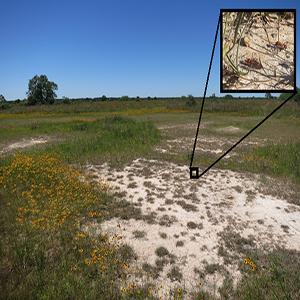
A University of Oklahoma team from the Geographical Ecology Group has published a new study in the journal Ecology on the nutritional preferences of diverse insect communities from Texas to Minnesota. The OU team conducted 54 experiments in both grazed and ungrazed grasslands to determine the salt cravings of insects and the types of insects that crave salt. The OU team found that insects not only crave salt, but will search for it in their grassland habitats.

“Sodium is relatively unique among the elements in that it is required by all animals, but not used by plant life,” said Ellen Welti, lead author on the study and postdoctoral researcher in the OU Department of Biology. “Sodium is a critical nutrient for animal cell membrane functions while sodium is generally a stressor for plants. In other words, plants don’t need salt and plant eaters do.”

OU team members conducted a simple experiment containing plots receiving water only and the other half of the plots receiving a solution of table salt or simulated cow urine. This experiment was repeated at 54 grassland sites across the United States. Two days after setting up each experiment, a team member would literally vacuum the bugs from the plots. The bugs captured in the bag would then be frozen, sorted, counted and compared between salted and unsalted plots. At each site, plant and soil samples were taken to characterize the spectrum of grasslands from ‘bland to salty.’

A total of 32,430 insects were identified from 120 taxa. Naturally, grasslands near the Gulf of Mexico tended to have saltier plants, but surprisingly had less salty soils, likely due to their sandy composition. The experimental plots splashed with the simulated cow urine attracted an average of 70 percent more bugs than those splashed with water. Additionally, the study found that grasslands were less salty hosted insects with keener cravings for salt.

“This study highlights the knowledge gap in understanding nutrient limitation for animal communities and the importance of sodium,” said Welti. “While sodium attraction across a broad geographic gradient suggest widespread sodium limitation, it is not known how long-term changes in sodium levels translate into changes in animal abundances and shifts in community composition.”

###

The paper, “A distributed experiment demonstrates widespread sodium limitations in grassland food webs,” published by Welti and Michael Kaspari, senior author and professor of biology in the OU College of Arts and Sciences, is available at https://esajournals.onlinelibrary.wiley.com/doi/10.1002/ecy.2600.

The National Science Foundation funded this research with a $545,733 grant for a period of three years. Welti will continue to conduct studies on the limiting nutrient sodium in insect communities in North America. For more information about this study and future research on this topic, please contact Ellen Welti at [email protected].

Media Contact
Jana Smith
[email protected]
405-325-1322

Original Source

https://bit.ly/2Szkumz

Tags: BiodiversityBiologyEcology/Environment
Share12Tweet8Share2ShareShareShare2

Related Posts

Excessive Neuronal Activity Initiates Severe Autoimmune Brain Disorder — Biology

Excessive Neuronal Activity Initiates Severe Autoimmune Brain Disorder

May 15, 2026
Precision Anti-Aging Strategies Focus on Eliminating Harmful Senescent Cells While Preserving Beneficial Ones — Biology

Precision Anti-Aging Strategies Focus on Eliminating Harmful Senescent Cells While Preserving Beneficial Ones

May 15, 2026

Root-Knot Nematodes Hijack Plant Signaling Peptides

May 15, 2026

61 Newly Discovered Beetle Species Highlight How Much We Still Have to Learn About Biodiversity

May 15, 2026
Please login to join discussion

POPULAR NEWS

  • Research Indicates Potential Connection Between Prenatal Medication Exposure and Elevated Autism Risk

    843 shares
    Share 337 Tweet 211
  • New Study Reveals Plants Can Detect the Sound of Rain

    729 shares
    Share 291 Tweet 182
  • Salmonella Haem Blocks Macrophages, Boosts Infection

    62 shares
    Share 25 Tweet 16
  • Breastmilk Balances E. coli and Beneficial Bacteria in Infant Gut Microbiomes

    58 shares
    Share 23 Tweet 15

About

BIOENGINEER.ORG

We bring you the latest biotechnology news from best research centers and universities around the world. Check our website.

Follow us

Recent News

High-Dimensional Study Reveals Immune Drivers of Severe Pediatric ARDS

New Study Reveals Key Differences Between Healthy and Unhealthy Ultra-Processed Foods

Bacteria Could Unlock New Clues for Cancer Treatment

Subscribe to Blog via Email

Enter your email address to subscribe to this blog and receive notifications of new posts by email.

Join 82 other subscribers
  • Contact Us

Bioengineer.org © Copyright 2023 All Rights Reserved.

Welcome Back!

Login to your account below

Forgotten Password?

Retrieve your password

Please enter your username or email address to reset your password.

Log In
No Result
View All Result
  • Homepages
    • Home Page 1
    • Home Page 2
  • News
  • National
  • Business
  • Health
  • Lifestyle
  • Science

Bioengineer.org © Copyright 2023 All Rights Reserved.