• HOME
  • NEWS
  • EXPLORE
    • CAREER
      • Companies
      • Jobs
    • EVENTS
    • iGEM
      • News
      • Team
    • PHOTOS
    • VIDEO
    • WIKI
  • BLOG
  • COMMUNITY
    • FACEBOOK
    • INSTAGRAM
    • TWITTER
Sunday, October 4, 2026
BIOENGINEER.ORG
No Result
View All Result
  • Login
  • HOME
  • NEWS
  • EXPLORE
    • CAREER
      • Companies
      • Jobs
        • Lecturer
        • PhD Studentship
        • Postdoc
        • Research Assistant
    • EVENTS
    • iGEM
      • News
      • Team
    • PHOTOS
    • VIDEO
    • WIKI
  • BLOG
  • COMMUNITY
    • FACEBOOK
    • INSTAGRAM
    • TWITTER
No Result
View All Result
Bioengineer.org
No Result
View All Result
Home NEWS Science News Chemistry

OU researcher receives Department of Energy Early Career Award

Bioengineer by Bioengineer
June 24, 2020
in Chemistry
Reading Time: 2 mins read
0
IMAGE
Share on FacebookShare on TwitterShare on LinkedinShare on RedditShare on Telegram

IMAGE

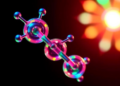
Credit: Provided by Dr. Bayram Saparov, University of Oklahoma

Bayram Saparov, an assistant professor in the Department of Chemistry and Biochemistry, University of Oklahoma College of Arts and Sciences, was selected for a 2020 Early Career Research Award from the Department of Energy’s Office of Science.

“The College of Arts and Sciences is thrilled to learn of Dr. Bayram Saparov’s receipt of a highly prestigious, five-year DOE Early Career Research Award to support his research, which has major implications for the advancement of renewable energy,” said David Wrobel, dean of the College of Arts and Sciences. “Dr. Saparov’s work encapsulates the research mission of the college to discover new knowledge that makes our human communities and our natural environment stronger and more sustainable.”

Saparov’s project explores metal halide materials that could lead to more efficient and lower-cost solar panels and energy-saving light emitting-diodes (LEDs) technology.

“Perhaps the most exciting breakthrough in materials chemistry in the past decade has been the discovery of the outstanding optical and electronic properties of metal halides,” Saparov said. “Control of the preparation routes of various metal halides will allow us to custom design materials with properties tailored for specific applications with the goal of ensuring America’s security and prosperity by addressing its energy and environmental challenges, which is the mission of the U.S. Department of Energy.”

Saparov was one of 76 researchers from 50 universities to receive this award. Under the program, university-based researchers will receive at least $150,000 per year, with research grants spanning five years.

“The Department of Energy is proud to support funding that will sustain America’s scientific workforce and create opportunities for our researchers to remain competitive on the world stage,” said Under Secretary for Science for Paul Dabbar. “By bolstering our commitment to the scientific community, we invest into our nation’s next generation of innovators.”

The Early Career Research Program is described as working to bolster the nation’s scientific workforce by providing support to exceptional researchers during crucial early career years, when many scientists do their most formative work.

###

Media Contact
Chelsea Julian
[email protected]

Original Source

http://ou.edu/research-norman/news-events/2020/ou-researcher-receives-doe-early-career-award

Tags: Chemistry/Physics/Materials SciencesEnergy/Fuel (non-petroleum)MaterialsSuperconductors/Semiconductors
Share12Tweet8Share2ShareShareShare2

Related Posts

Solvent Polarity Steers Double Proton Transfer in a Promising OLED Fluorophore

Solvent Polarity Steers Double Proton Transfer in a Promising OLED Fluorophore

October 4, 2026
AI Digital Twins Could Transform Intensive Care in Landmark $38 Million Federal Project

AI Digital Twins Could Transform Intensive Care in Landmark $38 Million Federal Project

October 4, 2026

Ancient Chinese Medicine Compounds Turned Into Next-Generation Antibiotic Candidates by AI

October 4, 2026

How Bacteria Wire Themselves to Electrodes: The Electron Transfer Secrets Powering Microbial Fuel Cells

October 4, 2026
Please login to join discussion

POPULAR NEWS

  • Alloys That Shrink Their Own Grains: New PIX Mechanism Refines Metals With Heat Alone

    Alloys That Shrink Their Own Grains: New PIX Mechanism Refines Metals With Heat Alone

    29 shares
    Share 12 Tweet 7
  • Endurance Exercise Reshapes the Liver in Males and Females Through Distinct Molecular Routes

    29 shares
    Share 12 Tweet 7
  • Single Transcription Factor PU.1 Rapidly Converts Fibroblasts into Macrophage-Lineage Cells

    29 shares
    Share 12 Tweet 7
  • New Scale Measures How Ready Nurse Educators Really Are for the AI Era

    29 shares
    Share 12 Tweet 7

About

We bring you the latest biotechnology news from best research centers and universities around the world. Check our website.

Follow us

Recent News

Alloys That Shrink Their Own Grains: New PIX Mechanism Refines Metals With Heat Alone

Endurance Exercise Reshapes the Liver in Males and Females Through Distinct Molecular Routes

Single Transcription Factor PU.1 Rapidly Converts Fibroblasts into Macrophage-Lineage Cells

Subscribe to Blog via Email

Success! An email was just sent to confirm your subscription. Please find the email now and click 'Confirm' to start subscribing.

Join 85 other subscribers
  • Contact Us

Bioengineer.org © Copyright 2023 All Rights Reserved.

Welcome Back!

Login to your account below

Forgotten Password?

Retrieve your password

Please enter your username or email address to reset your password.

Log In
No Result
View All Result
  • Homepages
    • Home Page 1
    • Home Page 2
  • News
  • National
  • Business
  • Health
  • Lifestyle
  • Science

Bioengineer.org © Copyright 2023 All Rights Reserved.