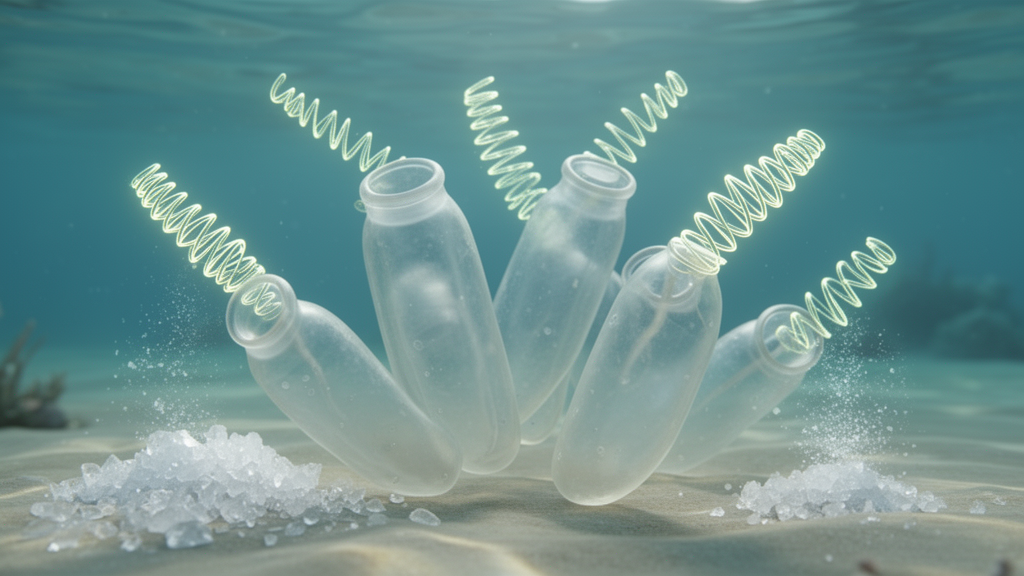
The invasive ascidian Ciona robusta, a sea squirt that has spread through coastal waters worldwide, appears to draw part of its invasive success from an unusually flexible layer of gene regulation. A study published in BMC Ecology and Evolution reports that when these animals face osmotic stress, individual microRNA loci rapidly generate variant molecules known as isomiRs, and that these variants do not merely mirror the functions of their canonical counterparts. Instead, they take on new, partially shared, or even opposite regulatory roles, reshaping the animal’s molecular response to changing salinity.
MicroRNAs are short RNA molecules that regulate gene expression after transcription, fine-tuning how genetic instructions are carried out without altering the underlying DNA. Increasing evidence indicates that a single microRNA locus can produce multiple variants, the isomiRs, which may diversify regulatory functions and enhance environmental resilience. According to the researchers, however, the expression dynamics and functional significance of these variants under environmental stress had remained largely unexplored in the context of biological invasions. Phenotypic plasticity, the capacity of organisms to respond rapidly to environmental fluctuations, plays a crucial role in invasion success, and microRNAs are among the molecular regulators that mediate stress adaptation through post-transcriptional gene regulation.
To probe this regulatory layer, the team used the highly invasive ascidian Ciona robusta as a model and examined how its microRNA isoforms respond dynamically to osmotic stress. The approach combined two genome-wide readouts: an analysis of the animal’s miRNAome, the complete set of microRNAs and their variants, and a transcriptome analysis capturing the activity of the broader gene network. This integrative design allowed the researchers to link changes in microRNA variant abundance with shifts in the genes those molecules are predicted to regulate.
The analysis revealed 10 microRNAs that produced 5′ isomiRs, variants differing at the molecule’s functionally critical 5′ end, with expression patterns that changed over time and differed according to the specific stress condition. That time-dependent, stress-specific behavior suggests the variant pool is not a static byproduct of microRNA processing but a responsive component of the animal’s stress physiology, adjusting as the osmotic challenge unfolds.
Functional predictions added a second layer of complexity. Both canonical microRNAs and their isomiRs were predicted, in silico, to target overlapping yet distinct gene sets, with particular enrichment in pathways related to free amino acid metabolism and ion transport. The findings indicate that the variant molecules broaden the regulatory reach of each microRNA locus precisely in the functional space most relevant to salinity adaptation.
The most striking result concerns how the functions of the variants diverge from those of the original microRNAs. Functional analysis demonstrated that isomiRs underwent neo-functionalization, sub-functionalization, or mixed functional shifts relative to their canonical counterparts. In neo-functionalization, a variant acquires regulatory roles the canonical molecule does not perform; in sub-functionalization, the ancestral functions are partitioned between the two forms; and mixed shifts combine elements of both. In some cases, the study found, isomiRs exerted opposite regulatory effects on the same target genes, meaning the variant and the canonical microRNA could push the same gene in different regulatory directions.
Taken together, the authors conclude that osmotic stress induces rapid diversification and functional transformation of microRNA isoforms, forming a flexible and dynamic regulatory network. Rather than a fixed set of microRNA-target relationships, the animal appears to deploy a shifting repertoire whose composition changes with the stress it faces. Such plasticity in isomiR regulation, the researchers argue, likely contributes to enhanced stress tolerance and environmental adaptability, thereby promoting invasion success across diverse, harsh, or rapidly changing environments.
The work carries broader implications for understanding biological invasions, whose frequency and ecological and economic impacts are rapidly increasing worldwide.
The study also adds a mechanistic dimension to a growing research area on isomiRs, which have been documented across organisms but rarely examined as active participants in an invasion scenario.
In the molecular economy of an invader, flexibility itself may be the resource that matters most.
Subject of Research: MicroRNA isoform dynamics and functional transformation under osmotic stress in the invasive ascidian Ciona robusta
Article Title: Dynamic expression and functional transformation of microRNA isoforms induced by osmotic stress in invasive Ciona robusta
Article References: Yan, W., Fu, R., Huang, X., & Zhan, A. (2026). Dynamic expression and functional transformation of microRNA isoforms induced by osmotic stress in invasive Ciona robusta. BMC Ecology and Evolution. https://doi.org/10.1186/s12862-026-02583-z
Image Credits: AI Generated
DOI: 10.1186/s12862-026-02583-z
Keywords: Ciona robusta, microRNA, isomiRs, osmotic stress, phenotypic plasticity, biological invasion, post-transcriptional regulation, miRNAome, transcriptome, ion transport, free amino acid metabolism, stress tolerance
News Source: Patricia Pace. (October 30, 2026). Osmotic stress reshapes microRNA isoforms in the invasive sea squirt Ciona robusta. Scienmag.