


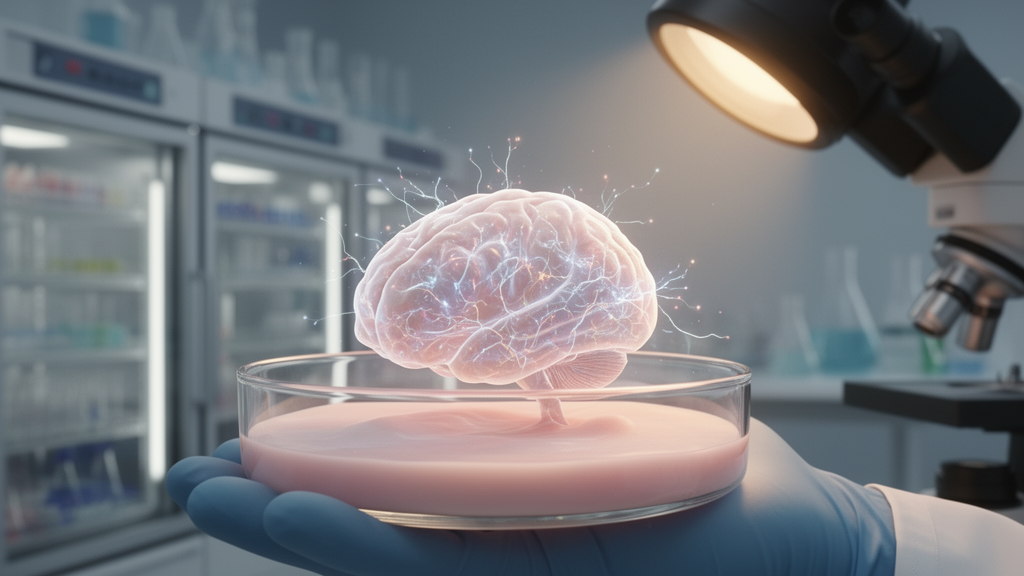
Using patient-derived brain organoids, researchers have uncovered how mutations in GATOR1 genes—the most common monogenic cause of non-acquired focal epilepsy—disrupt brain development in a way that does not involve the pathway scientists had long suspected. The study, published in Nature Communications, shows that the key damage occurs in inhibitory interneurons that arise from the ventral part of the developing brain, and points to a transcription factor called MAFB as the underlying culprit.
The team generated neuron-type-specific organoids from patients with genetic focal epilepsy, comparing ventral GABAergic organoids, which model interneuron-producing regions, with other neuronal lineages. Transcriptional dysregulation associated with the disease was far more pronounced in the ventral GABAergic organoids than elsewhere. Patient-derived ventral organoids showed significant impairments in three linked processes: the differentiation of GABAergic interneurons, their migration, and their functional release of GABA, the brain’s principal inhibitory neurotransmitter.
Mechanistically, the findings challenge the canonical view of GATOR1-related disease. GATOR1 mutations are known to hyperactivate the mTOR signaling pathway, but the interneuron defects observed in the organoids proved independent of this mTOR hyperactivation. Instead, they were driven by a deficiency of MAFB, a transcription factor whose expression was significantly decreased both in patient-derived ventral GABAergic organoids and in patient brain tissue. When the researchers knocked down MAFB in otherwise normal organoids, the same interneuron defects appeared, confirming that loss of MAFB is sufficient to produce the phenotype.
Most importantly, the defects were reversible. Overexpressing MAFB in patient-derived ventral GABAergic organoids rescued the abnormal differentiation, migration and GABA-release phenotypes, demonstrating a causal role rather than a mere correlation. Because the pathology operates through a non-canonical mechanism, the results suggest that therapies aimed solely at dampening mTOR activity may not address the full epileptogenic process in these patients, and that restoring MAFB-dependent interneuron development could offer a more precise therapeutic target.
The work carries the usual caveats of organoid research: the models capture specific developmental cell types and do not reproduce a complete human brain, and the study was released as an accepted manuscript ahead of final version-of-record edits. Nevertheless, by pinpointing MAFB deficiency as a driver of interneuron failure in GATOR1-related focal epilepsy, the study provides a mechanistic basis for precision therapy in a condition whose pathogenic mechanisms have remained underexplored.
Subject of Research: Interneuron developmental defects underlying GATOR1-related genetic focal epilepsy studied in patient-derived brain organoids
Article Title: Human brain organoids reveal MGE interneuron defects independent of mTOR-hyperactivation in genetic focal epilepsy
Article References: Yang, Y., Yan, Y., Wang, H., Wang, Q., Cai, Y., Yu, X., Xu, J., Zhao, Y., Cai, L., Wang, X., Shao, Z., & Ding, J. (2026). Human brain organoids reveal MGE interneuron defects independent of mTOR-hyperactivation in genetic focal epilepsy. Nature Communications. https://doi.org/10.1038/s41467-026-78547-0
Image Credits: AI Generated
DOI: 10.1038/s41467-026-78547-0
Keywords: focal epilepsy, GATOR1, brain organoids, interneurons, MAFB, mTOR, GABAergic, ventral organoids, genetic epilepsy, transcriptional dysregulation, Human, brain
News Source: Juliet Wilcox. (October 29, 2026). Organoids Reveal Interneuron Defects Drive Genetic Focal Epilepsy. Scienmag.



