• HOME
  • NEWS
  • EXPLORE
    • CAREER
      • Companies
      • Jobs
    • EVENTS
    • iGEM
      • News
      • Team
    • PHOTOS
    • VIDEO
    • WIKI
  • BLOG
  • COMMUNITY
    • FACEBOOK
    • INSTAGRAM
    • TWITTER
Thursday, July 2, 2026
BIOENGINEER.ORG
No Result
View All Result
  • Login
  • HOME
  • NEWS
  • EXPLORE
    • CAREER
      • Companies
      • Jobs
        • Lecturer
        • PhD Studentship
        • Postdoc
        • Research Assistant
    • EVENTS
    • iGEM
      • News
      • Team
    • PHOTOS
    • VIDEO
    • WIKI
  • BLOG
  • COMMUNITY
    • FACEBOOK
    • INSTAGRAM
    • TWITTER
  • HOME
  • NEWS
  • EXPLORE
    • CAREER
      • Companies
      • Jobs
        • Lecturer
        • PhD Studentship
        • Postdoc
        • Research Assistant
    • EVENTS
    • iGEM
      • News
      • Team
    • PHOTOS
    • VIDEO
    • WIKI
  • BLOG
  • COMMUNITY
    • FACEBOOK
    • INSTAGRAM
    • TWITTER
No Result
View All Result
Bioengineer.org
No Result
View All Result
Home NEWS Science News Biology

Organellogenesis still a work in progress in novel dinoflagellates

Bioengineer by Bioengineer
March 23, 2020
in Biology
Reading Time: 2 mins read
0
IMAGE
Share on FacebookShare on TwitterShare on LinkedinShare on RedditShare on Telegram

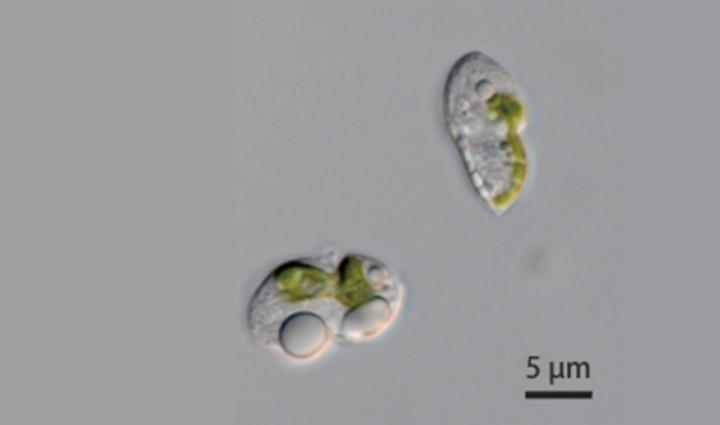
Researchers led by the University of Tsukuba identify two novel dinoflagellates containing relic nuclei from endosymbiont algae, making them perfect models for studying organellogenesis
IMAGE

Credit: University of Tsukuba


Tsukuba, Japan – Many algae and plant species contain photosynthetic membrane-bound organelles called plastids that are actually remnants of a free-living cyanobacterium. At some point in evolutionary history, a cyanobacterium was engulfed by an ancestral alga, trapping it forever as a host-controlled endosymbiont in a process called organellogenesis. All modern algae and plants are the descendants of this ancestral alga containing the first plastid. But as if by karmic intervention, some of these algae were themselves engulfed during secondary endosymbiotic events, generating what are known as complex algae.

In most cases, endosymbionts lose large portions of their genomes as well as most other cellular components except plastids during organellogenesis. However, in rare cases, the relic endosymbiont nucleus is retained within the host cell, forming a nucleomorph. While researchers know that endosymbiont genes are integrated into the host genome, there are currently only a few model systems in which to study the process of organellogenesis, meaning that it is still somewhat of a mystery.

However, in a study published last month in PNAS, researchers led by the University of Tsukuba reported an exciting discovery that may shed light on the process of organellogenesis.

The team discovered two novel dinoflagellates, strains MGD and TGD, containing nucleomorphs that were undergoing endosymbiont-host DNA transfer. In cryptophytes and chlorarachniophytes, the only other algal groups known to contain nucleomorphs, all DNA transfer events have ceased, implying that organellogenesis at the genetic level is complete. This has made it impossible to discover the closest relatives of the endosymbiotic algae or to determine how their genomes are altered during the transition process.

“Morphologically, MGD and TGD were obviously distinct, which was supported by molecular phylogenetic analyses,” says senior author Professor Yuji Inagaki. “However, both strains contained green alga-derived plastids with nucleus-like structures containing DNA.”

Even though the researchers showed that the endosymbiotic algae had already been transformed into plastids, gene sequence analysis suggested that DNA transfer from the nucleomorph to the host genome was still in progress in both MGD and TGD. Given the relatively intact state of the endosymbiont genomes, the researchers successfully identified the origins of the algae to the genus level.

“Genomic analysis of these novel dinoflagellates showed that they are both nucleomorph-containing algal strains carrying plastids derived from endosymbiotic green algae, most likely of the genus Pedinomonas,” explains Professor Inagaki.

“Based on the level of integration of the endosymbiont and host genomes in MGD and TGD, we concluded that the process of organellogenesis is less advanced in these strains than that in cryptophytes and chrorarachniophytes. This important distinction will allow us to use these organisms as models to better understand the process of organellogenesis.”

###

Media Contact
Naoko Yamashina
[email protected]
81-298-532-066

Related Journal Article

http://dx.doi.org/10.1073/pnas.1911884117

Tags: BiologyCell BiologyEvolutionMarine/Freshwater BiologyPlant Sciences
Share12Tweet8Share2ShareShareShare2

Related Posts

New Study Reveals How to Reduce Risk of Dangerous Wildlife Encounters This Summer — Biology

New Study Reveals How to Reduce Risk of Dangerous Wildlife Encounters This Summer

July 2, 2026
Hepatic IFRD1 Alleviates Metabolic Dysfunction-Linked Steatohepatitis Through the GLUD1/α-KG Pathway — Biology

Hepatic IFRD1 Alleviates Metabolic Dysfunction-Linked Steatohepatitis Through the GLUD1/α-KG Pathway

July 2, 2026

Intricate Food Webs Support Ecosystem Health and Stability

July 2, 2026

Fatty Liver Accelerates Aggressive Cancer Metastasis

July 2, 2026
Please login to join discussion

POPULAR NEWS

  • Detection of EDCs in Breast Milk and Infant Urine Up to Six Months Highlights Early Exposure Risks

    77 shares
    Share 31 Tweet 19
  • Saying Goodbye to PGY-6: Pediatric Fellowship Realities

    103 shares
    Share 41 Tweet 26
  • New Drug Candidate Developed at McMaster Shows Potential for Treating Brain Cancer

    58 shares
    Share 23 Tweet 15
  • KTU Researchers Explore Ultrasound’s Role in Enhancing Blood Flow Beyond Diagnostics

    53 shares
    Share 21 Tweet 13

About

We bring you the latest biotechnology news from best research centers and universities around the world. Check our website.

Follow us

Recent News

Linking Single-Cell Transcriptomes to Mouse Visual Circuits

Graz University of Technology Deciphers the Structural Secrets of MOF Thin Films

Apelin-APLNR Pathway: Endothelial Roles in Health

Subscribe to Blog via Email

Enter your email address to subscribe to this blog and receive notifications of new posts by email.

Join 82 other subscribers
  • Contact Us

Bioengineer.org © Copyright 2023 All Rights Reserved.

Welcome Back!

Login to your account below

Forgotten Password?

Retrieve your password

Please enter your username or email address to reset your password.

Log In
No Result
View All Result
  • Homepages
    • Home Page 1
    • Home Page 2
  • News
  • National
  • Business
  • Health
  • Lifestyle
  • Science

Bioengineer.org © Copyright 2023 All Rights Reserved.