• HOME
  • NEWS
  • EXPLORE
    • CAREER
      • Companies
      • Jobs
    • EVENTS
    • iGEM
      • News
      • Team
    • PHOTOS
    • VIDEO
    • WIKI
  • BLOG
  • COMMUNITY
    • FACEBOOK
    • INSTAGRAM
    • TWITTER
Wednesday, October 28, 2026
BIOENGINEER.ORG
No Result
View All Result
  • Login
  • HOME
  • NEWS
  • EXPLORE
    • CAREER
      • Companies
      • Jobs
        • Lecturer
        • PhD Studentship
        • Postdoc
        • Research Assistant
    • EVENTS
    • iGEM
      • News
      • Team
    • PHOTOS
    • VIDEO
    • WIKI
  • BLOG
  • COMMUNITY
    • FACEBOOK
    • INSTAGRAM
    • TWITTER
No Result
View All Result
Bioengineer.org
No Result
View All Result
Home NEWS Science News Technology

Orange Peel and Hemp Waste Turned into Cellulose Hydrogels That Support Stem Cell Growth

by
October 28, 2026
in Technology
Reading Time: 2 mins read
0
Orange Peel and Hemp Waste Turned into Cellulose Hydrogels That Support Stem Cell Growth

Orange Peel and Hemp Waste Turned into Cellulose Hydrogels That Support Stem Cell Growth

Share on FacebookShare on TwitterShare on LinkedinShare on RedditShare on Telegram

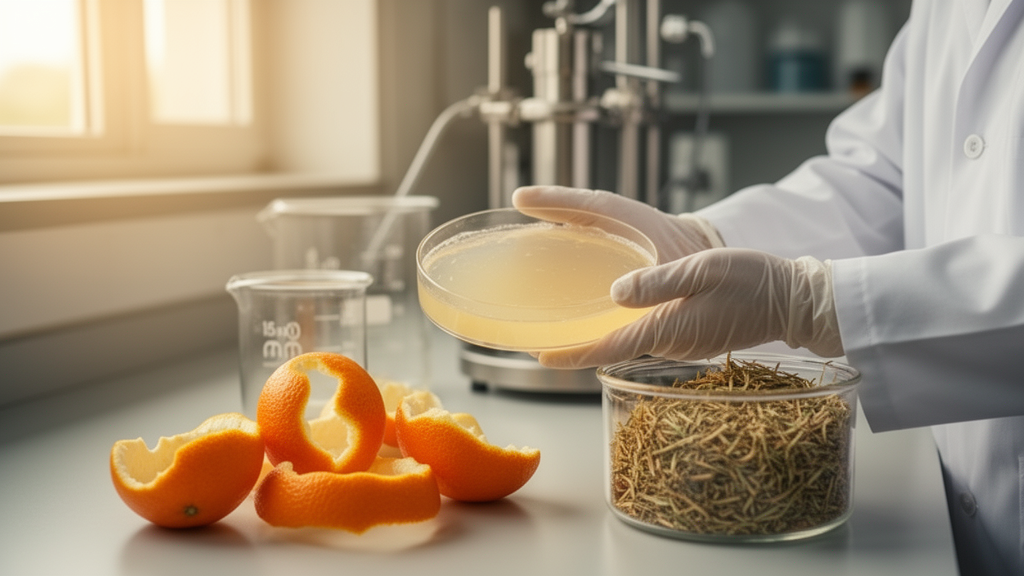
Researchers have transformed two abundant agroindustrial wastes, orange peel and hemp stems, into cellulose hydrogels designed as porous platforms for mesenchymal stem cell culture, and reported that the orange-derived material outperformed both a hemp-based version and a microcrystalline cellulose control in supporting cell adhesion and growth.

The team prepared hydrogels from the two plant wastes and compared them with hydrogels made from microcrystalline cellulose. All materials were systematically characterized for morphology, crystallinity, three-dimensional porosity, swelling and degradation behavior, thermal stability, protein adsorption and in vitro biocompatibility.

Imaging with scanning electron microscopy and micro-computed tomography revealed a fibrous, interconnected porous architecture.

The hydrogels displayed a three-stage thermal degradation profile and high swelling capacity. After three hours of immersion, the orange-derived hydrogels absorbed roughly 1000 percent of their weight in fluid, while the hemp-derived hydrogels reached about 600 percent, a property the researchers link to fluid uptake and retention relevant to wound dressing applications.

All formulations showed evidence of protein adsorption, together with antibacterial effects.

In vitro testing showed mesenchymal stem cell viabilities above 80 percent for all formulations, with metabolic activity increasing over time. The authors interpret this as non-cytotoxic behavior that supports cell proliferation, with the orange-derived hydrogels providing the most favorable substrate for adhesion and growth among the three systems tested.

Based on these results, the team proposes two potential applications. The high porosity and swelling capacity support potential use as wound dressings by facilitating fluid uptake and retention, while the porous architecture and cytocompatibility support potential use as scaffolds for mesenchymal stem cell culture in tissue engineering. The findings are presented as supporting waste-derived cellulose as a sustainable source for biomedical hydrogel applications, though the reported results are from in vitro characterization and early cell culture testing rather than clinical studies.

Subject of Research: Cellulose hydrogels made from orange peel and hemp stem waste as scaffolds for mesenchymal stem cell culture

Article Title: Waste plant‑derived cellulose hydrogels from orange peel and hemp stems as tailored porous platforms for mesenchymal stem cell culture

Article References: Zamora-Ledezma, C., Solano-Orrala, D., García-Remesal, B., Negrete-Bolagay, D., Molleja, J. G., Hermoso-Gil, J., Baquero, M. R., Romero-Pozuelo, J., Gomez-Castillo, N., Guerrero, V. H., & Alexis, F. (2026). Waste plant‑derived cellulose hydrogels from orange peel and hemp stems as tailored porous platforms for mesenchymal stem cell culture. Discover Materials. https://doi.org/10.1007/s43939-026-01052-0

Image Credits: AI Generated

DOI: 10.1007/s43939-026-01052-0

Keywords: cellulose hydrogels, orange peel, hemp stems, agroindustrial waste, mesenchymal stem cells, tissue engineering, wound dressings, porosity, biocompatibility, micro-CT, swelling capacity, scaffolds

News Source: Drew Townsend. (October 27, 2026). Orange Peel and Hemp Waste Turned into Cellulose Hydrogels That Support Stem Cell Growth. Scienmag.


Tags: agroindustrial wastebiocompatibilitycellulose hydrogelshemp stemsmesenchymal stem cellsmicro-CTorange peelporosityscaffoldsswelling capacityTissue Engineeringwound dressings
Share12Tweet7Share2ShareShareShare1

Related Posts

New Augmented Multiscale Method Sharpens Simulations of Incompressible Fluid Flow

New Augmented Multiscale Method Sharpens Simulations of Incompressible Fluid Flow

October 28, 2026
Magnetic Dipoles Reshape Heat and Mass Transfer in Nanofluid Flow Over Curved Surfaces

Magnetic Dipoles Reshape Heat and Mass Transfer in Nanofluid Flow Over Curved Surfaces

October 28, 2026

Lightweight hybrid transformer model detects plant diseases with over 99% accuracy

October 28, 2026

Research report: Multimodal detection of cyber-physical attacks against intelligent traffic signal controllers

October 28, 2026

POPULAR NEWS

  • Adolescents With Self-Injury Linger Longer on NSSI-Related Social Media Posts, Eye-Tracking Study Finds

    Adolescents With Self-Injury Linger Longer on NSSI-Related Social Media Posts, Eye-Tracking Study Finds

    29 shares
    Share 12 Tweet 7
  • Multi-omics study links autophagy and ER stress to PFOA toxicity in sperm precursor cells

    29 shares
    Share 12 Tweet 7
  • Single-center cohort maps real-world treatment sequencing in ovarian carcinosarcoma

    29 shares
    Share 12 Tweet 7
  • Ancient Chinese Formula Sini Decoction Rewires Immune Cells in Lab Study of Atherosclerosis

    29 shares
    Share 12 Tweet 7

About

We bring you the latest biotechnology news from best research centers and universities around the world. Check our website.

Follow us

Recent News

New Augmented Multiscale Method Sharpens Simulations of Incompressible Fluid Flow

Orange Peel and Hemp Waste Turned into Cellulose Hydrogels That Support Stem Cell Growth

Magnetic Dipoles Reshape Heat and Mass Transfer in Nanofluid Flow Over Curved Surfaces

Subscribe to Blog via Email

Enter your email address to subscribe to this blog and receive notifications of new posts by email.

Join 85 other subscribers
  • Contact Us

Bioengineer.org © Copyright 2023 All Rights Reserved.

Welcome Back!

Login to your account below

Forgotten Password?

Retrieve your password

Please enter your username or email address to reset your password.

Log In
No Result
View All Result
  • Homepages
    • Home Page 1
    • Home Page 2
  • News
  • National
  • Business
  • Health
  • Lifestyle
  • Science

Bioengineer.org © Copyright 2023 All Rights Reserved.