Periodontitis, the chronic inflammatory disease that quietly dissolves the tissues anchoring our teeth, has long been blamed on a handful of notorious oral pathogens. But a comprehensive new review published in Frontiers in Microbiology argues that this view is fundamentally incomplete. Drawing on hundreds of studies spanning microbiomics, metabolomics, immunomics and single-cell technologies, researchers Yelin Jin and Hua Xu of the First People’s Hospital of Wenling present a unified framework in which periodontitis emerges not from infection alone, but from a self-reinforcing feedback loop between a dysbiotic oral microbiota and a dysregulated host immune system — a crosstalk that, once established, actively drives the destruction of tooth-supporting tissues.
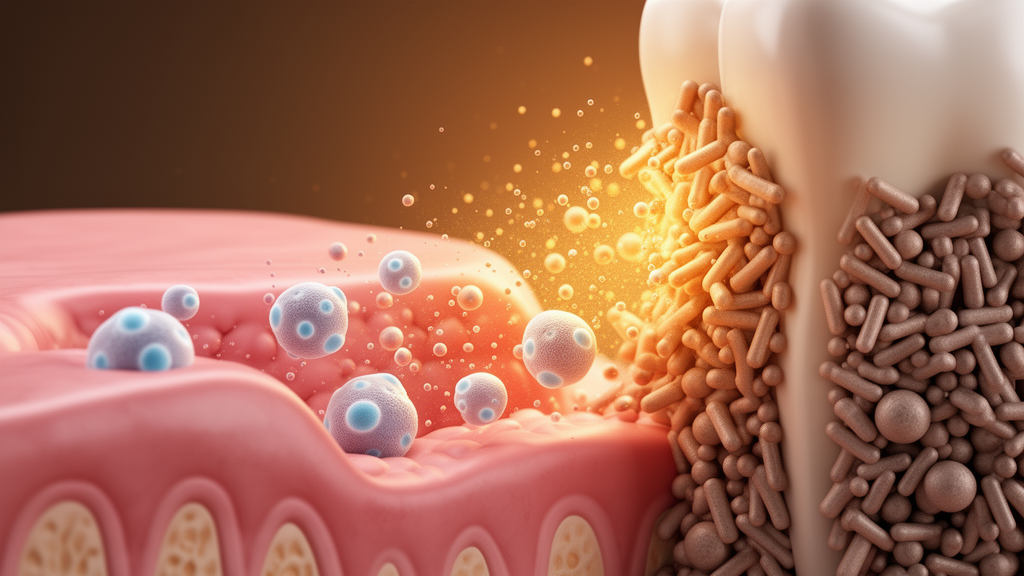
The review’s central thesis is that the oral microbiota and host immunity engage in a bidirectional molecular conversation. On one side, oral microorganisms modulate both innate and adaptive immune responses through three broad categories of signals: microbial structural components, biofilm-associated factors, and metabolites. On the other side, persistent immune-inflammatory responses reshape the composition and function of the oral microbiota by disrupting epithelial barrier integrity, altering the local metabolic milieu, and remodeling ecological niches. The result is a potential self-reinforcing cycle in which microbial dysbiosis amplifies inflammation, while the inflammatory microenvironment further favors the persistence of a disease-associated microbial community.
At the molecular level, the review details how microbe-associated molecular patterns are sensed by pattern-recognition receptors such as Toll-like receptors, activating innate immune pathways in macrophages, neutrophils and dendritic cells. Lipopolysaccharide derived from Gram-negative periodontitis-associated bacteria, particularly Porphyromonas gingivalis, promotes the expression of inflammatory mediators including TNF, IL-1β and IL-6, and enhances osteoclastogenesis — the formation of bone-resorbing cells — through TLR-associated signaling and KAT6A-mediated epigenetic regulation. Bacterial lipoproteins acting as TLR2 ligands induce immunoregulatory factors such as BAFF through a TLR2–MyD88–JNK/NF-κB signaling axis, while peptidoglycan fragments that penetrate a compromised gingival barrier activate NOD1–p38/MAPK signaling and impair the osteogenic differentiation of periodontal ligament stem cells.
Perhaps most striking is the role of P. gingivalis outer membrane vesicles, which can transport multiple effector molecules — including LPS, gingipains, DNA and small RNAs — deep into periodontal tissues. Cell-based and animal studies show that these vesicles activate MAPK, NF-κB and STING signaling, inducing inflammation and apoptosis in gingival epithelial cells and periodontal ligament cells. P. gingivalis gingipains, a family of proteases, further protect the bacterium from macrophage-mediated phagocytic clearance and can still induce proinflammatory mediators through EGFR–PI3K–AKT signaling even when catalytically inactive. Microbial extracellular DNA released from periodontal biofilms contributes to experimental periodontitis and alveolar bone loss through TLR9-associated nucleic acid sensing, while bacterial DNA CpG motifs and host-derived cell-free DNA promote dysregulated macrophage polarization.
Beyond individual microbial signals, the review emphasizes that periodontitis is fundamentally a biofilm disease driven by community-wide ecological restructuring rather than the independent expansion of a single species. Subgingival microorganisms establish spatially and functionally heterogeneous communities through interspecies adhesion, metabolic cross-feeding and cooperative growth. Extracellular polymeric substances — polysaccharides, extracellular DNA and proteins — enhance biofilm aggregation and stability, with some components experimentally linked to alveolar bone resorption. Quorum-sensing signals such as AI-2 regulate multispecies biofilm formation, virulence expression and osteoclast differentiation, and their disruption reduces the biomass of certain patient-derived biofilms. Fusobacterium nucleatum functions as a bridging organism, mediating coaggregation through the RadD/CarRS regulatory network and connecting early and late colonizers, while P. gingivalis may act as a keystone pathogen whose tryptophan–indole pathway coordinates virulence, biofilm formation and microbial dysbiosis in a strain- and context-dependent manner.
Microbial metabolites constitute a third mechanistic link between the functional state of the oral microbiota and host immunity, and their effects are often concentration-, source- and cell-type dependent. Short-chain fatty acids such as butyrate and propionate can suppress specific inflammatory responses in dendritic cells and macrophages, but the review cautions that they should not be uniformly regarded as protective. Succinate, in contrast, promotes inflammation and osteoclastogenesis through the succinate receptor SUCNR1, and blockade of this pathway attenuates experimental inflammation, microbial dysbiosis and bone loss. Tryptophan-derived indole metabolites show remarkable duality: indole-3-acetic acid promotes anti-inflammatory macrophage polarization through AhR/CYP1A1 signaling, while indole-3-aldehyde preserves gingival epithelial barrier integrity through AhR/Nrf2 signaling. Polyamines, hydrogen sulfide and ammonia-generating metabolism further modulate oxidative stress, local pH and intermicrobial competition within the periodontal microenvironment.
Crucially, the review documents the reciprocal arm of the crosstalk — how host inflammation reshapes the microbial ecosystem. In a human experimental gingivitis model, cessation of oral hygiene induced coordinated changes in plaque microbial composition, metabolic profiles and salivary cytokines within 24 to 72 hours, progressively shifting the microbiota toward a periodontitis-associated state. More direct causal evidence comes from CD69-deficient mice, in which enhanced IL-17A responses in gingival CD4+ T cells aggravated alveolar bone loss while markedly altering the composition of ligature-associated biofilms. Inflammation-induced changes in the local nutrient environment appear to be a key link: proteomic profiles of gingival crevicular fluid at clinically progressing sites are enriched for catabolism, lipid metabolism and hemoglobin- and haptoglobin-binding processes, suggesting that active inflammation alters the availability of host-derived substrates within periodontal pockets. P. gingivalis preferentially acquires dipeptides through the proton-dependent oligopeptide transporter Pot, and loss of Pot markedly impairs bacterial growth.
Neutrophil-mediated oxidative stress and neutrophil extracellular traps constitute another inflammatory amplification pathway. In experimental periodontitis, fibrin deposition promotes mitochondrial reactive oxygen species production in neutrophils and induces the formation of NETs enriched in mitochondrial DNA; scavenging mitochondrial reactive oxygen species reduces NET formation and periodontal inflammation. Human studies further indicate that NETs and extracellular histones enhance IL-17/Th17 responses and promote alveolar bone destruction, while NET-associated complexes are markedly increased in local lesions and peripheral blood from patients with severe periodontitis. Bacteria within dental plaque biofilms can render NET-derived DNA resistant to DNase-mediated degradation, facilitating apatite nucleation and calculus formation — suggesting that microorganisms can in turn influence the persistence and stability of NETs within the local microenvironment. Neutrophil elastase cleaves junctional proteins including desmoglein-1, occludin and E-cadherin, increasing epithelial permeability and facilitating the penetration of periodontal pathogens, while complement activation amplifies periodontal inflammation, as demonstrated by a phase IIa clinical trial in which local administration of the C3 inhibitor AMY-101 significantly reduced gingival inflammation scores and bleeding on probing.
The review organizes these interactions across a conceptual disease-phase framework — inflammatory initiation, maintenance of chronic inflammation, tissue destruction and advanced disease persistence — while carefully distinguishing it from the formal Stage I–IV clinical classification. During initiation, single-cell and spatial analyses of human gingival tissues reveal altered differentiation states of sulcular and junctional epithelial keratinocytes, enhanced JAK–STAT and NF-κB signaling in vascular endothelial cells, and an early-emerging fibroblast population specialized in directing leukocyte migration through chemokine expression and neutrophil recruitment. During chronic inflammation, single-cell atlases show that gingival stromal cells actively participate in local leukocyte recruitment, macrophages co-express pro-inflammatory and anti-inflammatory markers, and mucosal-associated invariant T cells exhibit enhanced IL-17 and TNF-α production. During tissue destruction, PIEZO1 promotes a pro-inflammatory macrophage phenotype that induces MMP-8 and MMP-13 expression and degrades type I and type III collagen, while osteoclast-intrinsic pathways involving FoxO1, the NLRP3 inflammasome and cathepsin K drive alveolar bone resorption through the immune–RANKL axis. In advanced disease, deep amplicon sequencing of individual periodontal pockets identifies three distinct microbial community types associated with probing depth and clinical attachment loss, with Tannerella forsythia approximately 16- to 17-fold more abundant at diseased sites than at healthy ones.
On the therapeutic front, the review maps a growing arsenal of microbiota-modulating strategies according to their evidence base and translational maturity. Conventional scaling and root planing remains the established standard of care, mechanically disrupting subgingival biofilms and promoting ecological recovery toward a health-associated community, though deep periodontal biofilms may persist or recolonize and microbiome recovery is incomplete and heterogeneous among patients. Probiotics — strains of Lactobacillus, Bifidobacterium and selected Streptococcus species — represent the microbiota-modulating approach with the most substantial clinical evidence, offering competitive exclusion of periodontitis-associated microorganisms, production of antimicrobial metabolites and modulation of biofilm ecology, though results remain inconsistent across strains, regimens and patient populations. Prebiotic and dietary interventions, particularly nitrate-rich approaches, can modify oral microbial composition and nitrate-reduction capacity, though evidence for periodontal clinical benefit remains limited. Adjunctive antimicrobial therapy provides additional clinical benefits in selected patient groups but carries risks of disrupting commensal communities and promoting antimicrobial resistance. Bacteriophage-based approaches, exploiting high host specificity to selectively lyse target bacteria while minimizing disruption of non-target members of the microbiota, remain confined to in vitro proof-of-concept studies. Engineered microorganisms and precision microbiota-targeted interventions — including oral microbiota transplantation, targeted elimination of F. nucleatum and bioengineered probiotics expressing guided antimicrobial peptides — are at preclinical or experimental stages, with unresolved questions of ecological stability, biosafety, controllability and regulatory requirements.
Host and environmental factors further modulate the magnitude and direction of oral microbiota–immune crosstalk. Longitudinal studies show that smokers exhibit distinct subgingival microbial community structures even at comparable probing depths, with some ecological shifts preceding overt clinical disease progression. Diabetes and hyperglycemia affect both the microbial and immune environments, with population-based studies identifying distinct subgingival microbial profiles in patients with diabetes and periodontitis, and experimental studies indicating that hyperglycemia expands γδ T cells, reduces regulatory T cells and increases pro-inflammatory neutrophil populations. Age represents another important host-modifying factor, with aged animals exhibiting greater alveolar bone loss, increased cellular senescence and enhanced expression of inflammation-related genes alongside alterations in the oral microbiota. Medication use — including statins, proton pump inhibitors and bisphosphonates — is associated with differences in salivary microbial community composition in older adults, with the explanatory effects of some medications exceeding those of age, sex or oral health status itself.
Looking forward, the review identifies multi-omics integration, precision microbiota modulation and individualized therapeutic strategies as the field’s next conceptual frontier. Future studies should emphasize longitudinal, multicenter and standardized designs that integrate microbiomic, metabolomic, immunomic, spatial and single-cell technologies to enable repeated dynamic assessment within the same individuals. Host and environmental factors — smoking, glycemic status, age, oral hygiene, diet, medication use and systemic diseases — should be incorporated into analytical frameworks to improve reproducibility and enhance the generalizability of patient-stratification models. Importantly, the authors caution that identification of multi-omics signatures should not be equated with the achievement of precision therapy: true biomarker-guided clinical intervention will require independent validation of candidate signatures, assessment of their longitudinal stability, standardization of analytical procedures and decision thresholds, and demonstration that they provide incremental predictive value beyond established clinical parameters. Only when treatment selection based on prospectively validated molecular features leads to superior patient outcomes compared with conventional treatment strategies can multi-omics discoveries be considered successfully translated into precision clinical decision-making. For now, precision treatment of periodontitis remains better viewed as a future translational goal — but one that, by integrating microbial ecological features, host immune states and treatment-response profiles, may gradually move periodontal care from broadly uniform interventions toward more stratified and individualized therapeutic decision-making.
Subject of Research: Gum Disease Breakthrough: Scientists Reveal How Oral Bacteria and Immune Cells Fuel Each Other in Periodontitis
Article Title: Oral microbiota–immune crosstalk in the pathogenesis and progression of periodontitis: mechanisms and therapeutic potential
Article References: Jin, Y., & Xu, H. (2026). Oral microbiota–immune crosstalk in the pathogenesis and progression of periodontitis: mechanisms and therapeutic potential. Frontiers in Microbiology, 17, Article 1953464. https://doi.org/10.3389/fmicb.2026.1953464
Image Credits: AI Generated
DOI: 10.3389/fmicb.2026.1953464
Keywords: Oral, microbiota, immune, crosstalk, pathogenesis, progression, periodontitis, mechanisms, therapeutic, potential, scientific research
News Source: Morgan Morrow. (October 17, 2026). Oral microbiota–immune crosstalk in the pathogenesis and progression of periodontitis: mechanisms and therapeutic potential. Scienmag.