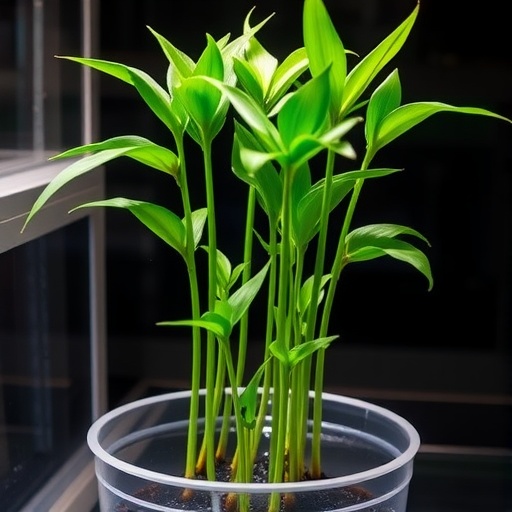
In a groundbreaking study published in the journal Discover Plants, researchers Shirin, Panika, and Saudagar, alongside their colleagues, delve into the complexities surrounding the in vitro propagation of Bambusa balcooa Roxb., a species of bamboo that holds significant ecological and economic importance. With bamboo being one of the fastest-growing plants on the planet, ensuring optimal growth conditions during its tissue culture propagation is a topic of great relevance for both researchers and environmentalists. Understanding how various genotypes respond to hormonal treatments can pave the way for more sustainable practices in bamboo cultivation, essential for reforestation and carbon sequestration efforts.
The study focuses on the pivotal roles played by auxins and cytokinins, two classes of plant hormones that orchestrate a wide range of growth processes. These hormones are critical for various physiological responses in plant tissues, including cell division, differentiation, and tissue culture establishment. The researchers meticulously examined how different genotypes of Bambusa balcooa interact with these growth regulators, providing insights that could transform propagation practices. The experimental conditions included varying concentrations and combinations of these hormones to identify the most effective treatments for optimal growth.
A primary aspect of the research centers around the selection of optimal genotypes for in vitro propagation. The study systematically evaluates multiple genotypes of Bambusa balcooa, each exhibiting distinct growth characteristics. By assessing their responses to varying concentrations of auxins and cytokinins, the researchers aimed to isolate specific genotypes that demonstrate superior growth rates and morphological traits. This selection process is crucial, as it can lead to the development of robust plantlets that thrive in natural environments.
The methodology employed in this research is equally noteworthy. The researchers utilized a completely randomized design to minimize bias, ensuring that their findings are statistically sound. This approach allowed them to draw clear conclusions about the impact of hormonal treatments on the various genotypes studied. In particular, the research highlights the importance of controlled environmental conditions during the tissue culture process, which can significantly influence the efficacy of hormonal treatments.
Auxins, primarily involved in cell elongation and root development, were tested in different concentrations to ascertain their optimal levels for promoting growth in Bambusa balcooa. The findings revealed that certain concentrations of auxins markedly improved root and shoot proliferation, crucial for successful in vitro propagation. These insights can contribute to more effective propagation strategies that enhance plant survival rates after replanting in natural habitats.
Cytokinins, which stimulate cell division and shoot formation, were equally scrutinized in this research. The team experimented with varying cytokinin concentrations and recorded their effects on shoot regeneration. The data obtained indicate that a precise balance of auxins and cytokinins can lead to remarkable growth enhancements, offering new avenues for bamboo cultivation strategies. These findings underscore the intricate interplay between these hormones and their significance in optimizing plant tissue culture processes.
The implications of this research extend beyond scientific inquiry; they resonate with global sustainability efforts focused on reforestation and biodiversity preservation. As bamboo constitutes a critical component of numerous ecosystems, enhancing its propagation techniques could not only fulfill commercial demands but also bolster environmental recovery initiatives. Increased bamboo cultivation can play a key role in mitigating climate change impacts, given bamboo’s ability to sequester carbon at impressive rates.
Moreover, the research serves as a reference point for future studies aimed at other plant species that benefit from in vitro propagation. By establishing a framework for evaluating genotypes alongside hormonal treatments, the study opens the door for improved methodologies that can be applied to various crops and forest species, catering to agricultural and ecological needs alike.
Overall, the findings underline the complexity of plant propagation and the necessity of understanding plant genetics and hormonal influences for achieving desirable outcomes. The authors advocate for broader adoption of their findings within agricultural practices, particularly in regions where bamboo serves as an invaluable resource for local communities and industries.
Looking ahead, the study sets the stage for further investigations into the genetic mechanisms leading to differences in growth responses among bamboo genotypes. Molecular techniques could yield even more precise insights into how specific genes interact with hormonal pathways during the propagation process. As researchers strive to cultivate resilient plant varieties and enhance biodiversity, understanding these interactions will be key.
This research exemplifies the critical link between plant biology and practical application in agriculture, urging stakeholders within this field to consider the ramifications of their work on both local ecosystems and global climate strategies. The study also emphasizes the need for more interdisciplinary collaboration, as aligning botanical sciences with socio-economic considerations can lead to innovative solutions that benefit both humanity and the environment.
In conclusion, the exploration of Bambusa balcooa propagation techniques amidst varying hormonal treatments demonstrates both the challenges and opportunities that exist within plant tissue culture research. By advancing our understanding of these dynamics, researchers can contribute to the sustainable practices that are necessary for future generations. As we move towards a world increasingly defined by environmental sustainability, the outcomes of such studies will be pivotal in shaping effective conservation strategies.
Subject of Research: The optimal growth conditions for in vitro propagation of Bambusa balcooa Roxb., focusing on the roles of genotypes, cytokinins, and auxins.
Article Title: Effect of genotypes, cytokinins and auxins for optimal growth during in vitro propagation of Bambusa balcooa Roxb.
Article References: Shirin, F., Panika, S., Saudagar, I.A. et al. Effect of genotypes, cytokinins and auxins for optimal growth during in vitro propagation of Bambusa balcooa Roxb. Discov. Plants 3, 10 (2026). https://doi.org/10.1007/s44372-026-00471-w
Image Credits: AI Generated
DOI: https://doi.org/10.1007/s44372-026-00471-w
Keywords: In vitro propagation, Bambusa balcooa, auxins, cytokinins, plant hormones, genotypes, bamboo cultivation, sustainability, environmental impact.
Tags: Auxins and Cytokinins in Bamboo GrowthEcological Importance of Bamboo SpeciesEconomic Benefits of Bamboo CultivationEnhancing Bamboo Growth through Hormonal AnalysisGenotype Response to Hormonal TreatmentsIn Vitro Propagation of Bambusa balcooaOptimizing Growth Conditions for BambooPlant Hormones in Tissue CultureReforestation and Carbon Sequestration with BambooResearch on Bamboo Propagation MethodsSustainable Bamboo Cultivation PracticesTissue Culture Techniques for Bambusa balcooa