• HOME
  • NEWS
  • EXPLORE
    • CAREER
      • Companies
      • Jobs
    • EVENTS
    • iGEM
      • News
      • Team
    • PHOTOS
    • VIDEO
    • WIKI
  • BLOG
  • COMMUNITY
    • FACEBOOK
    • INSTAGRAM
    • TWITTER
Wednesday, May 13, 2026
BIOENGINEER.ORG
No Result
View All Result
  • Login
  • HOME
  • NEWS
  • EXPLORE
    • CAREER
      • Companies
      • Jobs
        • Lecturer
        • PhD Studentship
        • Postdoc
        • Research Assistant
    • EVENTS
    • iGEM
      • News
      • Team
    • PHOTOS
    • VIDEO
    • WIKI
  • BLOG
  • COMMUNITY
    • FACEBOOK
    • INSTAGRAM
    • TWITTER
  • HOME
  • NEWS
  • EXPLORE
    • CAREER
      • Companies
      • Jobs
        • Lecturer
        • PhD Studentship
        • Postdoc
        • Research Assistant
    • EVENTS
    • iGEM
      • News
      • Team
    • PHOTOS
    • VIDEO
    • WIKI
  • BLOG
  • COMMUNITY
    • FACEBOOK
    • INSTAGRAM
    • TWITTER
No Result
View All Result
Bioengineer.org
No Result
View All Result
Home NEWS Science News Chemistry

On-demand glass is right around the corner

Bioengineer by Bioengineer
March 20, 2020
in Chemistry
Reading Time: 2 mins read
0
IMAGE
Share on FacebookShare on TwitterShare on LinkedinShare on RedditShare on Telegram

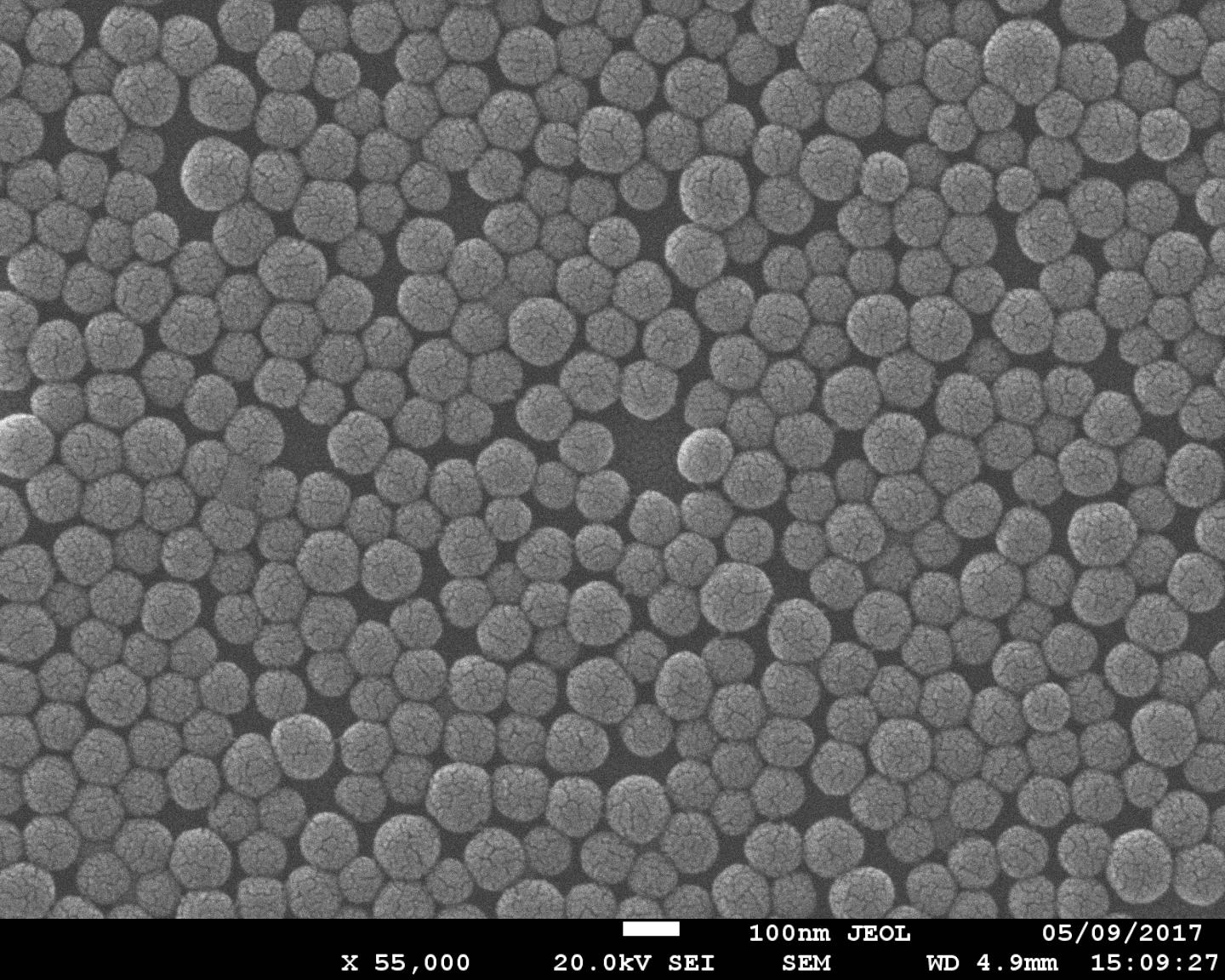
A project to create colloidal glasses characterized by a unidirectional stress
IMAGE

Credit: @GiulioMonaco UniTrento


Glasses used for camera lenses or reading glasses are not like those used to make windshields. They have a different degree of transparency and they break in a different way (the former break in large pieces, the latter in a multitude of tiny pieces). The techniques to obtain glasses with specific properties have long been known to the industry: a slow process for optical applications, tempering for glasses designed to break safely. These procedures determine the stress within the glass, which can therefore be easily minimized or maximized. But how to control the stress stored in a glass to adjusts it to our needs? If we could do that, we would be able to design new types of glass for new applications.

That is the question a research group of UniTrento, made up of physicists, tried to answer. The researchers focused on colloidal glasses, which are made up of microscopic particles dispersed in a solution at a concentration that allows the formation of a compact solid. The physicists of the University of Trento conducted a number of experiments at the Petra facility in Hamburg (Desy, Deutsches Elektronen-Synchrotron), Germany, and managed to create colloidal glasses characterised by a unidirectional stress, that is to say that the stresses stored locally in this material during the formation are all heading in the same direction. The results of the study were published in open access in Science Advances, the online peer-reviewed journal of the American Association for the Advancement of Science, based in Washington.

Giulio Monaco, director of the Department of Physics of the University of Trento and coordinator of the research work, explained: «Colloidal glasses are relatively stable. Think about window glass, that can last for centuries. However, locally, the atoms and particles are subject to heavy stresses, whose intensity, distribution and direction determine the mechanical properties of the material. It would be very useful if we could control those stresses».

He continued: «Measuring the intensity and direction of the stress stored in a glass is a crucial step to control these forces and therefore use them in industrial applications».

###

About the article

The authors of the article “Microscopic pathways for stress relaxation in repulsive colloidal glasses” are: Francesco Dallari, who is currently at Desy in Hamburg, and Alessandro Martinelli (principal authors), Federico Caporaletti and Giulio Monaco, of the University of Trento; and Michael Sprung and Gerhard Grübel for the Deutsches Elektronen-Synchrotron in Hamburg, Desy.

The research study was funded within the European project CALIPSOplus, Convenient Access to Light Sources Open to Innovation, Science and to the World (Horizon 2020).

The article was published today in Science Advances and is available in Open Access.

Media Contact
Alessandra Saletti
[email protected]
328-150-7260

Tags: Chemistry/Physics/Materials SciencesIndustrial Engineering/ChemistryMaterialsMechanical EngineeringMolecular PhysicsNanotechnology/MicromachinesParticle PhysicsPolymer ChemistryTechnology Transfer
Share12Tweet8Share2ShareShareShare2

Related Posts

Harnessing Neural Networks for Advances in Nonlinear Optics — Chemistry

Harnessing Neural Networks for Advances in Nonlinear Optics

May 12, 2026
Innovative Method Unveiled to Detect Signs of Dark Matter — Chemistry

Innovative Method Unveiled to Detect Signs of Dark Matter

May 12, 2026

Illuminating the Science Behind Historical Featherwork Art

May 12, 2026

Humans and Zebra Finches Share Similar Speech Learning Techniques #ASA190

May 11, 2026
Please login to join discussion

POPULAR NEWS

  • Research Indicates Potential Connection Between Prenatal Medication Exposure and Elevated Autism Risk

    842 shares
    Share 337 Tweet 211
  • New Study Reveals Plants Can Detect the Sound of Rain

    728 shares
    Share 290 Tweet 182
  • Salmonella Haem Blocks Macrophages, Boosts Infection

    62 shares
    Share 25 Tweet 16
  • Breastmilk Balances E. coli and Beneficial Bacteria in Infant Gut Microbiomes

    57 shares
    Share 23 Tweet 14

About

We bring you the latest biotechnology news from best research centers and universities around the world. Check our website.

Follow us

Recent News

Mayo Clinic to Undergo Leadership Transition, Honoring Dr. Gianrico Farrugia’s Transformational Impact

Study Finds Sustained Weight Loss Possible by Transitioning from Injectable Obesity Drugs to Daily Oral Orforglipron (ATTAIN-MAINTAIN)

Weight Loss Maintained Seven Times More Effectively with Continued Maximum Dose of Tirzepatide, Study Finds

Subscribe to Blog via Email

Enter your email address to subscribe to this blog and receive notifications of new posts by email.

Join 82 other subscribers
  • Contact Us

Bioengineer.org © Copyright 2023 All Rights Reserved.

Welcome Back!

Login to your account below

Forgotten Password?

Retrieve your password

Please enter your username or email address to reset your password.

Log In
No Result
View All Result
  • Homepages
    • Home Page 1
    • Home Page 2
  • News
  • National
  • Business
  • Health
  • Lifestyle
  • Science

Bioengineer.org © Copyright 2023 All Rights Reserved.