

• HOME
  • NEWS
  • EXPLORE
    • CAREER
      • Companies
      • Jobs
    • EVENTS
    • iGEM
      • News
      • Team
    • PHOTOS
    • VIDEO
    • WIKI
  • BLOG
  • COMMUNITY
    • FACEBOOK
    • INSTAGRAM
    • TWITTER
Sunday, August 23, 2026
BIOENGINEER.ORG
No Result
View All Result
  • Login
  • HOME
  • NEWS
  • EXPLORE
    • CAREER
      • Companies
      • Jobs
        • Lecturer
        • PhD Studentship
        • Postdoc
        • Research Assistant
    • EVENTS
    • iGEM
      • News
      • Team
    • PHOTOS
    • VIDEO
    • WIKI
  • BLOG
  • COMMUNITY
    • FACEBOOK
    • INSTAGRAM
    • TWITTER
  • HOME
  • NEWS
  • EXPLORE
    • CAREER
      • Companies
      • Jobs
        • Lecturer
        • PhD Studentship
        • Postdoc
        • Research Assistant
    • EVENTS
    • iGEM
      • News
      • Team
    • PHOTOS
    • VIDEO
    • WIKI
  • BLOG
  • COMMUNITY
    • FACEBOOK
    • INSTAGRAM
    • TWITTER
No Result
View All Result
Bioengineer.org
No Result
View All Result
Home NEWS Science News Biology

Omics technologies for analysis of precious rare biosamples

Bioengineer by Bioengineer
July 13, 2017
in Biology
Reading Time: 2 mins read
0
Share on FacebookShare on TwitterShare on LinkedinShare on RedditShare on Telegram
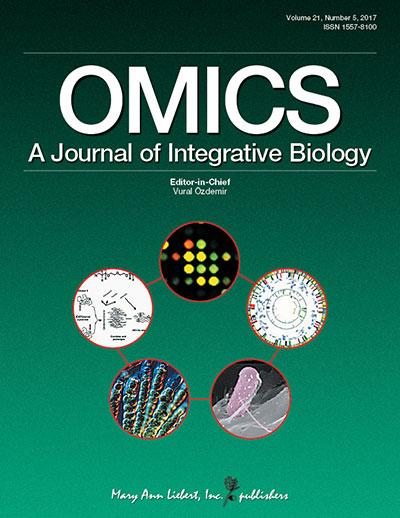
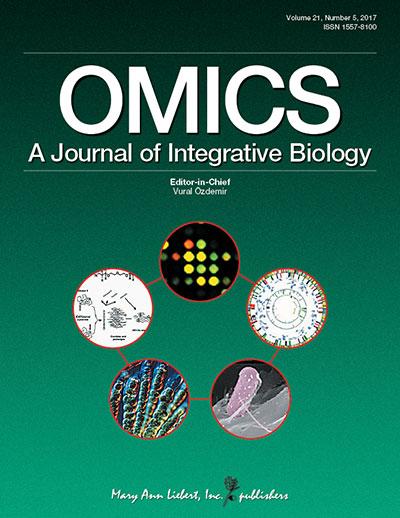
IMAGE

Credit: Mary Ann Liebert, Inc., publishers

New Rochelle, NY, July 13, 2017 — Omics technologies such as proteomics have far-reaching applications in diagnostics and clinical medicine, ecology, integrative biology research and beyond. Availability of sufficient quantities of biological samples might, however, pose a barrier for their use. In a collaborative study led by the University of Tarapacá (Chile), the Research and Restoration Centre for French Museums (Paris, France) and the Laboratory of Mass Spectrometry of Interactions and Systems, University of Strasbourg (France), researchers have developed and optimized a novel proteomics approach that utilizes an ancient archaeological hair sample from the Atacama Desert in Chile, dated to about 3,880 years ago. The study, which was able to identify 11 ancient hair proteins and visualize the preservation state of mummy's hair from only 500 micrograms of raw material, appears in OMICS: A Journal of Integrative Biology, a peer-reviewed publication from Mary Ann Liebert, Inc., publishers. The article is available free on the OMICS website until August 13, 2017.

Dr. Armelle Charrié-Duhaut, lead author of the study entitled "Omics for Precious Rare Biosamples: Characterization of Ancient Human Hair by a Proteomic Approach," notes that "this work could enable omics scientists to apply a proteomic approach to precious and rare samples, not only in the context of archaeometrical studies but also for future applications that would require the use of very small amounts of a sample."

"We are pleased to publish this innovative study that brings in fresh vistas, and adds to our understanding of hair protein alteration processes such as those due to ageing and ecological exposures," says OMICS Editor-in-Chief Vural Özdemir, MD, PhD, DABCP. "It also attests to the rise of proteomics applications in postgenomics biology."

###

About the Journal

OMICS: A Journal of Integrative Biology is an authoritative peer-reviewed interdisciplinary journal published monthly online, addressing the latest advances at the intersection of postgenomics medicine, biotechnology and global society, including the integration of multi-omics knowledge, data analyses and modeling, and applications of high-throughput approaches to study complex biological problems. Public policy, ethics and societal aspects of the large-scale biology and 21st century data-enabled sciences are also peer-reviewed. Complete tables of content and a sample issue may be viewed on the OMICS: A Journal of Integrative Biology website.

About the Publisher

Mary Ann Liebert, Inc., publishers is a privately held, fully integrated media company known for establishing authoritative peer-reviewed journals in many areas of science and biomedical research, including Journal of Computational Biology, ASSAY and Drug Development Technologies, and Zebrafish. Its biotechnology trade magazine, Genetic Engineering & Biotechnology News (GEN), was the first in its field and is today the industry's most widely read publication worldwide. A complete list of the firm's 80 journals, books, and newsmagazines is available on the Mary Ann Liebert, Inc., publishers website.

Media Contact

Kathryn Ryan
[email protected]
914-740-2250
@LiebertPub

http://www.liebertpub.com

Original Source

http://www.liebertpub.com/global/pressrelease/omics-technologies-for-analysis-of-precious-rare-biosamples/2217/ http://dx.doi.org/10.1089/omi.2017.0067

Share12Tweet8Share2ShareShareShare2

Related Posts

Delayed antiviral response in alveolar type 2 cells heightens influenza susceptibility

Delayed antiviral response in alveolar type 2 cells heightens influenza susceptibility

August 22, 2026
Genetic evidence links sleep disruption to hemorrhoidal disease, revealing a hidden connection

Genetic evidence links sleep disruption to hemorrhoidal disease, revealing a hidden connection

August 22, 2026

LASIK Versus Contact Lenses for Correcting Myopia

August 22, 2026

New Advances in Minimally Invasive Laryngeal Surgery

August 22, 2026
Please login to join discussion

POPULAR NEWS

  • KAIST Surface Defects Boost Droplet Formation, Removal, and Heat Transfer by 5.5-Fold

    29 shares
    Share 12 Tweet 7
  • Dual-oxygen pancreatic cancer organoids mirror basal-classical diversity, spatial transcriptomics confirms

    29 shares
    Share 12 Tweet 7
  • Tirzepatide Versus GLP-1 Agonists for Stroke Risk in Atrial Fibrillation and Diabetes

    29 shares
    Share 12 Tweet 7
  • Real-world study examines psychotic complications of subcutaneous foslevodopa/foscarbidopa infusions in 198 patients

    29 shares
    Share 12 Tweet 7

About

We bring you the latest biotechnology news from best research centers and universities around the world. Check our website.

Follow us

Recent News

KAIST Surface Defects Boost Droplet Formation, Removal, and Heat Transfer by 5.5-Fold

Dual-oxygen pancreatic cancer organoids mirror basal-classical diversity, spatial transcriptomics confirms

Tirzepatide Versus GLP-1 Agonists for Stroke Risk in Atrial Fibrillation and Diabetes

Subscribe to Blog via Email

Enter your email address to subscribe to this blog and receive notifications of new posts by email.

Join 85 other subscribers
  • Contact Us

Bioengineer.org © Copyright 2023 All Rights Reserved.

Welcome Back!

Login to your account below

Forgotten Password?

Retrieve your password

Please enter your username or email address to reset your password.

Log In
No Result
View All Result
  • Homepages
    • Home Page 1
    • Home Page 2
  • News
  • National
  • Business
  • Health
  • Lifestyle
  • Science

Bioengineer.org © Copyright 2023 All Rights Reserved.