• HOME
  • NEWS
  • EXPLORE
    • CAREER
      • Companies
      • Jobs
    • EVENTS
    • iGEM
      • News
      • Team
    • PHOTOS
    • VIDEO
    • WIKI
  • BLOG
  • COMMUNITY
    • FACEBOOK
    • INSTAGRAM
    • TWITTER
Monday, May 18, 2026
BIOENGINEER.ORG
No Result
View All Result
  • Login
  • HOME
  • NEWS
  • EXPLORE
    • CAREER
      • Companies
      • Jobs
        • Lecturer
        • PhD Studentship
        • Postdoc
        • Research Assistant
    • EVENTS
    • iGEM
      • News
      • Team
    • PHOTOS
    • VIDEO
    • WIKI
  • BLOG
  • COMMUNITY
    • FACEBOOK
    • INSTAGRAM
    • TWITTER
  • HOME
  • NEWS
  • EXPLORE
    • CAREER
      • Companies
      • Jobs
        • Lecturer
        • PhD Studentship
        • Postdoc
        • Research Assistant
    • EVENTS
    • iGEM
      • News
      • Team
    • PHOTOS
    • VIDEO
    • WIKI
  • BLOG
  • COMMUNITY
    • FACEBOOK
    • INSTAGRAM
    • TWITTER
No Result
View All Result
Bioengineer.org
No Result
View All Result
Home NEWS Science News Biology

Ocean acidification is damaging shark scales

Bioengineer by Bioengineer
January 8, 2020
in Biology
Reading Time: 2 mins read
0
IMAGE
Share on FacebookShare on TwitterShare on LinkedinShare on RedditShare on Telegram

HHU marine biologists publish article in Scientific Reports
IMAGE

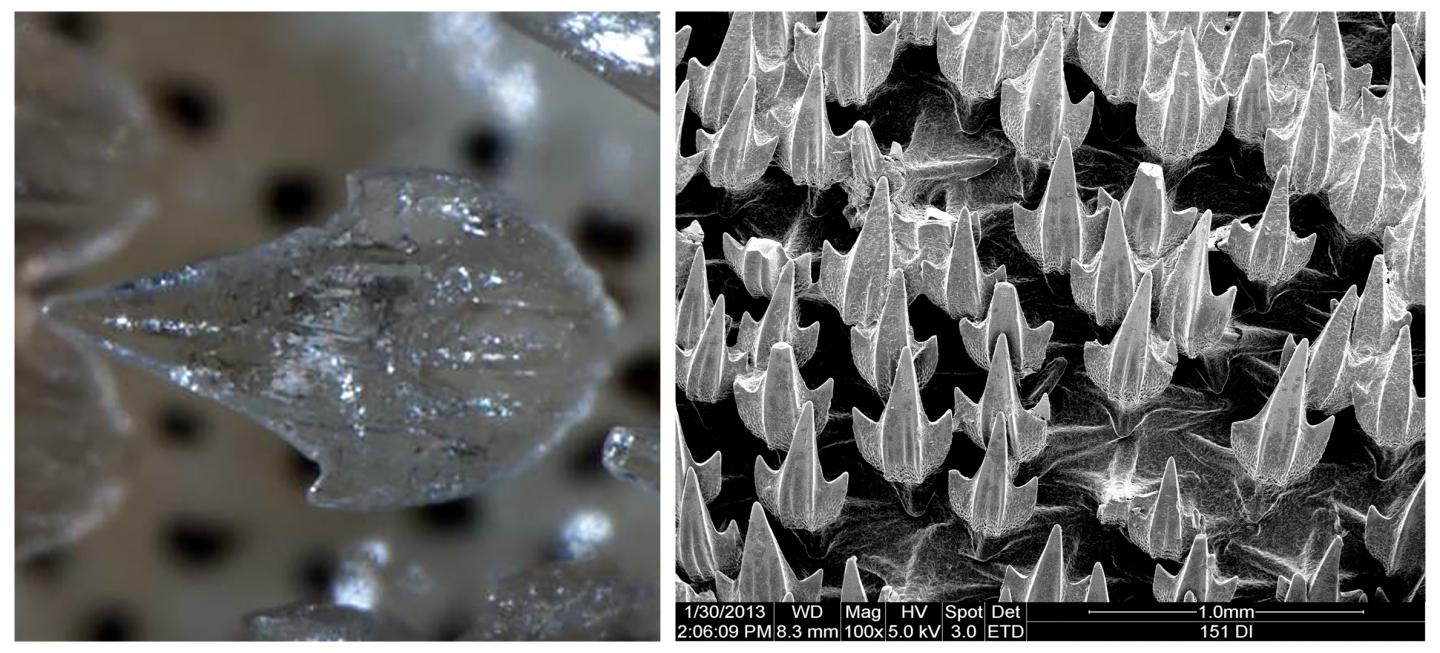
Credit: Lutz Auerswald (left) / Jacqueline Dziergwa (right)

While regular fish have flat scales, shark ‘scales’ look more like teeth. But their denticles also cover their body and in particular influence their ability to swim. The denticles are made up of a compounds containing calcium.

The increasing amount of carbon dioxide (CO2) in the atmosphere due to climate change has also led to a higher concentration of CO2 in the oceans. The CO2 dissolves in the seawater to create carbonic acid that acidifies the oceans.

This higher acidity has already been found to damage the calcium carbonate in corals and other animals with calcium-based structures. The research team from three South African research institutions, from the University of Duisburg-Essen and HHU has now examined whether the more acidic seawater is also affecting sharks.

The study was performed on puffadder shysharks, which live in the Atlantic Ocean off the coast of Cape Town and are also kept in aquariums in the DAFF Research Aquarium in Cape Town. A number of sharks were exposed to more acidic water over a period of several weeks and compared with control sharks in normal seawater. After that time, the researchers found that an average of around 25 percent of the denticles had been damaged compared to a figure of less than ten percent for sharks in a benchmark group living in normal water. The harm to the group exposed to acid can be so great that it limits their ability to swim. Because the sharks’ teeth are made from a similar material, they can also be negatively affected, which can in turn have an impact on their food intake.

In a further series of studies, the researchers analysed the blood of the animals kept in both acidic and normal seawater. They found that both CO2 and bi-carbonate concentrations were higher in the exposed group, with bi-carbonate preventing the blood itself from becoming more acidic. This means that sharks have acid-base regulatory mechanism for adapting to the environmental conditions.

Students in the HHU working group of Prof. Dr. Christopher Bridges from the Institute of Metabolic Physiology undertook several research trips to South Africa. They carried out experiments there and took samples which they brought back to Düsseldorf and then analysed the structure and chemistry of the samples at HHU.

###

The research is part of the comprehensive project “BIOACID – Biological Impacts of Ocean Acidification”, which was funded by the Federal Ministry of Education and Research and to which a number of German universities and research institutions are affiliated.

Further information on BIOACID. https://www.oceanacidification.de/

Original publication

Jacqueline Dziergwa, Sarika Singh, Christopher R Bridges, Sven E Kerwath, Joachim Enax, Lutz Auerswald, Acid-base adjustments and first evidence of denticle corrosion caused by ocean acidification conditions in a demersal shark species, Sci Rep. 2019

DOI: 10.1038/s41598-019-54795-7

Media Contact
Dr. Arne Claussen
[email protected]
49-021-181-10896

Related Journal Article

http://dx.doi.org/10.1038/s41598-019-54795-7

Tags: BiochemistryBiologyBiomechanics/BiophysicsClimate ChangeMarine/Freshwater Biology
Share12Tweet8Share2ShareShareShare2

Related Posts

Uncovering C. elegans Immunity via Genetic Screens — Biology

Uncovering C. elegans Immunity via Genetic Screens

May 16, 2026
Single mother must adapt swiftly — the survival of her colony depends on it — Biology

Single mother must adapt swiftly — the survival of her colony depends on it

May 15, 2026

Why Are Nearly Everyone Right-Handed? It Might Be Linked to How We Learned to Walk

May 15, 2026

Excessive Neuronal Activity Initiates Severe Autoimmune Brain Disorder

May 15, 2026
Please login to join discussion

POPULAR NEWS

  • Research Indicates Potential Connection Between Prenatal Medication Exposure and Elevated Autism Risk

    844 shares
    Share 338 Tweet 211
  • New Study Reveals Plants Can Detect the Sound of Rain

    731 shares
    Share 292 Tweet 182
  • Salmonella Haem Blocks Macrophages, Boosts Infection

    62 shares
    Share 25 Tweet 16
  • Breastmilk Balances E. coli and Beneficial Bacteria in Infant Gut Microbiomes

    58 shares
    Share 23 Tweet 15

About

We bring you the latest biotechnology news from best research centers and universities around the world. Check our website.

Follow us

Recent News

Controlling Surrounding Rock Failure in Coal Pillar Retreats

Gut Microbiome Nitrogen Shift Boosts Ulcerative Colitis Treatment

Sharpening Our View of Bacteria

Subscribe to Blog via Email

Enter your email address to subscribe to this blog and receive notifications of new posts by email.

Join 82 other subscribers
  • Contact Us

Bioengineer.org © Copyright 2023 All Rights Reserved.

Welcome Back!

Login to your account below

Forgotten Password?

Retrieve your password

Please enter your username or email address to reset your password.

Log In
No Result
View All Result
  • Homepages
    • Home Page 1
    • Home Page 2
  • News
  • National
  • Business
  • Health
  • Lifestyle
  • Science

Bioengineer.org © Copyright 2023 All Rights Reserved.