


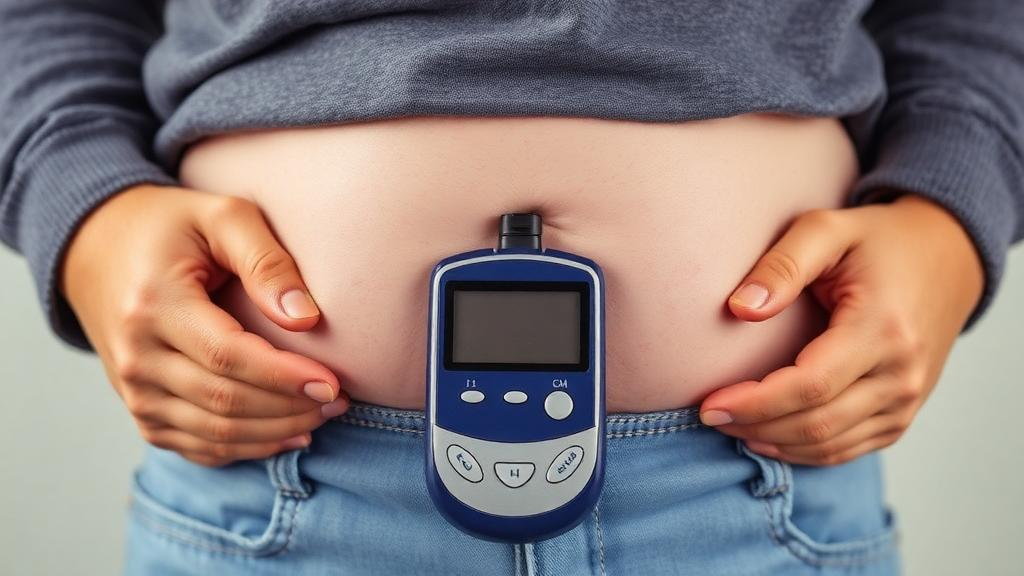
Obesity among people living with type 2 diabetes in Iran is disproportionately concentrated among those of higher socioeconomic status, according to a cross-sectional analysis of the DiaCare survey published in Archives of Public Health. The study, which analyzed data from 13,321 participants with complete records, found positive values of the Erreygers corrected concentration index for both waist circumference-defined and body mass index-defined obesity, indicating that the burden of obesity fell more heavily on wealthier individuals within this diabetic population.
The researchers used systematic, stratified, and cluster sampling to recruit people with type 2 diabetes across Iran. Socioeconomic status was captured with validated questionnaires, while anthropometric measurements assessed obesity. The team employed the Erreygers corrected concentration index and concentration curves to quantify socioeconomic-related disparities, and carried out a decomposition analysis to identify which factors contributed most to the observed inequalities, with all results stratified by sex.
One of the most striking findings was the gap in abdominal obesity between the sexes. The prevalence of waist circumference-defined obesity was significantly higher in women, at 84.2 percent, than in men, at 33.2 percent. This sex difference framed the rest of the analysis, because the factors driving socioeconomic inequality in obesity differed substantially between men and women, and also between the two obesity measures.
The concentration index values were positive for every combination of sex and obesity definition, but their magnitudes varied. For abdominal obesity, the index was 0.0331 in women and 0.0359 in men. For BMI-defined obesity, the values were larger, at 0.0786 in women and 0.0524 in men. Positive values in this framework indicate that obesity is concentrated among individuals of higher socioeconomic status, a pattern the authors describe as pro-rich inequality.
Decomposition analysis revealed sharply sex-specific patterns in what was driving these inequalities. Among men, belonging to the highest asset quintile was the dominant contributor, accounting for 72.2 percent of the inequality in abdominal obesity and 71.7 percent of the inequality in BMI-defined obesity. In other words, for men with type 2 diabetes, wealth status itself explained the largest share of why obesity clustered among the better-off.
Among women, the picture was different. Urban residence contributed most to inequality, accounting for 32.2 percent of the inequality in abdominal obesity and 38.5 percent of the inequality in BMI-defined obesity. This suggests that, in this sample, where a woman lived carried more explanatory weight for her position in the socioeconomic distribution of obesity than any other single factor measured.
Education and marital status also showed sex-specific effects. Higher education, defined as college or above, made a negative contribution to inequality, but only among men, at minus 12.1 percent for abdominal obesity and minus 11.3 percent for BMI-defined obesity. Older age, at 65 years or above, contributed negatively in specific subgroups. Marriage contributed positively to inequality only among men, at 11.8 percent for abdominal obesity. These patterns underline that the same socioeconomic characteristic can push in opposite directions depending on sex and on how obesity is defined.
The authors caution that the findings should be interpreted as associations and contributions to observed inequality rather than causal effects. The study is cross-sectional, meaning it captures a snapshot in time and cannot establish temporal ordering between socioeconomic factors and obesity. In addition, the analysis did not adjust for the complex survey design, which the authors note as a limitation. The decomposition results describe how measured factors relate to the observed socioeconomic distribution of obesity in this sample, not how changing those factors would alter obesity rates.
Within those limits, the study offers a detailed portrait of how obesity is distributed socioeconomically among people with type 2 diabetes in Iran, and it highlights sex-specific patterns that the authors suggest may help inform future research and context-specific approaches to addressing socioeconomic disparities in this population. Because the data come from a large national survey of people with diabetes, the results provide a basis for further investigation into why wealth, urban residence, education, age, and marital status relate differently to obesity in men and women living with the disease.
Subject of Research: Socioeconomic inequality in obesity among people with type 2 diabetes in Iran
Article Title: Socioeconomic inequality of obesity in people with type 2 diabetes: the results of DiaCare survey
Article References: Soltani, A., Aghakhani, A., Darvishi, A., Heshmat, R., & Shafiee, G. (2026). Socioeconomic inequality of obesity in people with type 2 diabetes: the results of DiaCare survey. Archives of Public Health. https://doi.org/10.1186/s13690-026-02093-w
Image Credits: AI Generated
DOI: 10.1186/s13690-026-02093-w
Keywords: type 2 diabetes, obesity, socioeconomic inequality, abdominal obesity, body mass index, concentration index, decomposition analysis, DiaCare survey, Iran, sex differences, urban residence, cross-sectional study
News Source: Daisy Hatcher. (October 29, 2026). Obesity in Type 2 Diabetes Concentrated Among Wealthier Iranians, Survey Finds. Scienmag.



