Scientists from the National University of Singapore (NUS) employed novel statistical methods to reveal the extent of biodiversity loss in Singapore over the past two centuries. The study paints the most accurate picture to date of the ecological impact of deforestation and urban development in the tropical city-state.
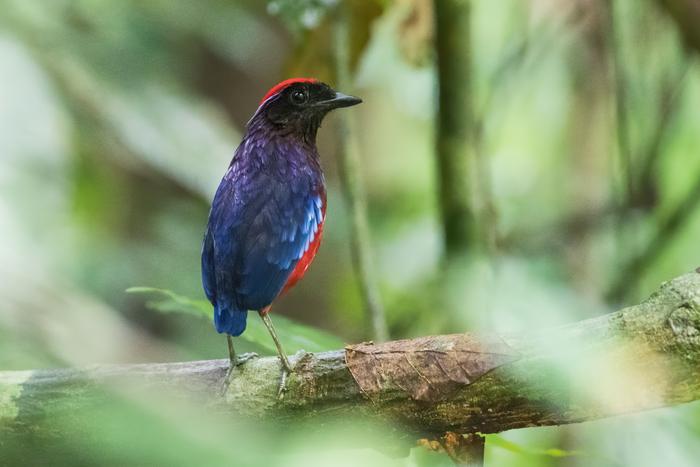
Credit: Keita Sin
Scientists from the National University of Singapore (NUS) employed novel statistical methods to reveal the extent of biodiversity loss in Singapore over the past two centuries. The study paints the most accurate picture to date of the ecological impact of deforestation and urban development in the tropical city-state.
Led by Associate Professor Ryan Chisholm from the NUS Department of Biological Sciences, the research team compiled over 200 years of biodiversity records for Singapore, encompassing more than 50,000 individual records and over 3,000 species across ten major taxonomic groups.
From this comprehensive dataset, the study estimated that Singapore has lost 37 per cent of its species. Importantly, the novel statistical models used by the team considered ‘dark extinctions’ — species that went extinct before they could be discovered and documented. Although 37 per cent is a high extinction rate, it is only half that of a previous 2003 estimate that also attempted to account for dark extinctions. The team also found that certain groups are particularly vulnerable to extinction, including larger mammals, forest-dependent birds, orchids and butterflies.
The findings were detailed in a scientific paper titled “Two centuries of biodiversity discovery and loss in Singapore”, published in the journal PNAS on 11 December 2023.
Using novel statistical models for more accurate estimation
“The use of statistical models developed in my lab allowed us account for species that have disappeared before we even knew they existed. The novel MODGEE (matrix-of-detections-gives-extinction-estimates) model is particularly powerful because it takes into account the entire detection history of each species,” said Assoc Prof Chisholm.
While earlier models estimated extinction rates using just each species’ first and last records, the MODGEE model takes a more detailed approach by using the full species-by-time detection matrix, facilitating a richer analysis. The MODGEE model provides estimated probabilities and dates of extinction for each species, and is suitable for application to groups of species with more comprehensive data records.
Prioritising charismatic species for conservation
The study’s findings are significant not only for Singapore but the broader Southeast Asian region. The researchers extrapolated Singapore’s historical experience to project that if current deforestation trends persist, Southeast Asia may lose 18 per cent of its species by 2100. They describe this as a ‘tropical Europe’ scenario, because although a large majority of species is projected to persist in the future human-dominated landscapes of the region, extinctions will be concentrated among large charismatic species.
Given these findings, the NUS researchers recommended a shift in conservation strategy, prioritising landscape-scale conservation centred around charismatic species — species that garner more public interest due to their aesthetic appeal or cultural significance.
“Adopting this approach not only benefits other species but also aligns with other conservation goals, such as the protection of carbon stocks, crucial in mitigating climate change,” added Assoc Prof Chisholm.
In urban settings like Singapore, the researchers suggested focusing on medium-sized species such as langurs, pangolins, hornbills and butterflies, which can adapt to urbanised landscapes with proper conservation support. For the larger Southeast Asian region, the focus expands to include species such as tigers, orangutans, elephants, rhinoceroses and other endangered large mammals.
Journal
Proceedings of the National Academy of Sciences
DOI
10.1073/pnas.2309034120
Method of Research
Data/statistical analysis
Subject of Research
Not applicable
Article Title
Two centuries of biodiversity discovery and loss in Singapore
Article Publication Date
11-Dec-2023