• HOME
  • NEWS
  • EXPLORE
    • CAREER
      • Companies
      • Jobs
    • EVENTS
    • iGEM
      • News
      • Team
    • PHOTOS
    • VIDEO
    • WIKI
  • BLOG
  • COMMUNITY
    • FACEBOOK
    • INSTAGRAM
    • TWITTER
Thursday, June 25, 2026
BIOENGINEER.ORG
No Result
View All Result
  • Login
  • HOME
  • NEWS
  • EXPLORE
    • CAREER
      • Companies
      • Jobs
        • Lecturer
        • PhD Studentship
        • Postdoc
        • Research Assistant
    • EVENTS
    • iGEM
      • News
      • Team
    • PHOTOS
    • VIDEO
    • WIKI
  • BLOG
  • COMMUNITY
    • FACEBOOK
    • INSTAGRAM
    • TWITTER
  • HOME
  • NEWS
  • EXPLORE
    • CAREER
      • Companies
      • Jobs
        • Lecturer
        • PhD Studentship
        • Postdoc
        • Research Assistant
    • EVENTS
    • iGEM
      • News
      • Team
    • PHOTOS
    • VIDEO
    • WIKI
  • BLOG
  • COMMUNITY
    • FACEBOOK
    • INSTAGRAM
    • TWITTER
No Result
View All Result
Bioengineer.org
No Result
View All Result
Home NEWS Science News Chemistry

NRL payloads deployed by SpaceX to study space weather and spacecraft propulsion

Bioengineer by Bioengineer
June 25, 2019
in Chemistry
Reading Time: 2 mins read
0
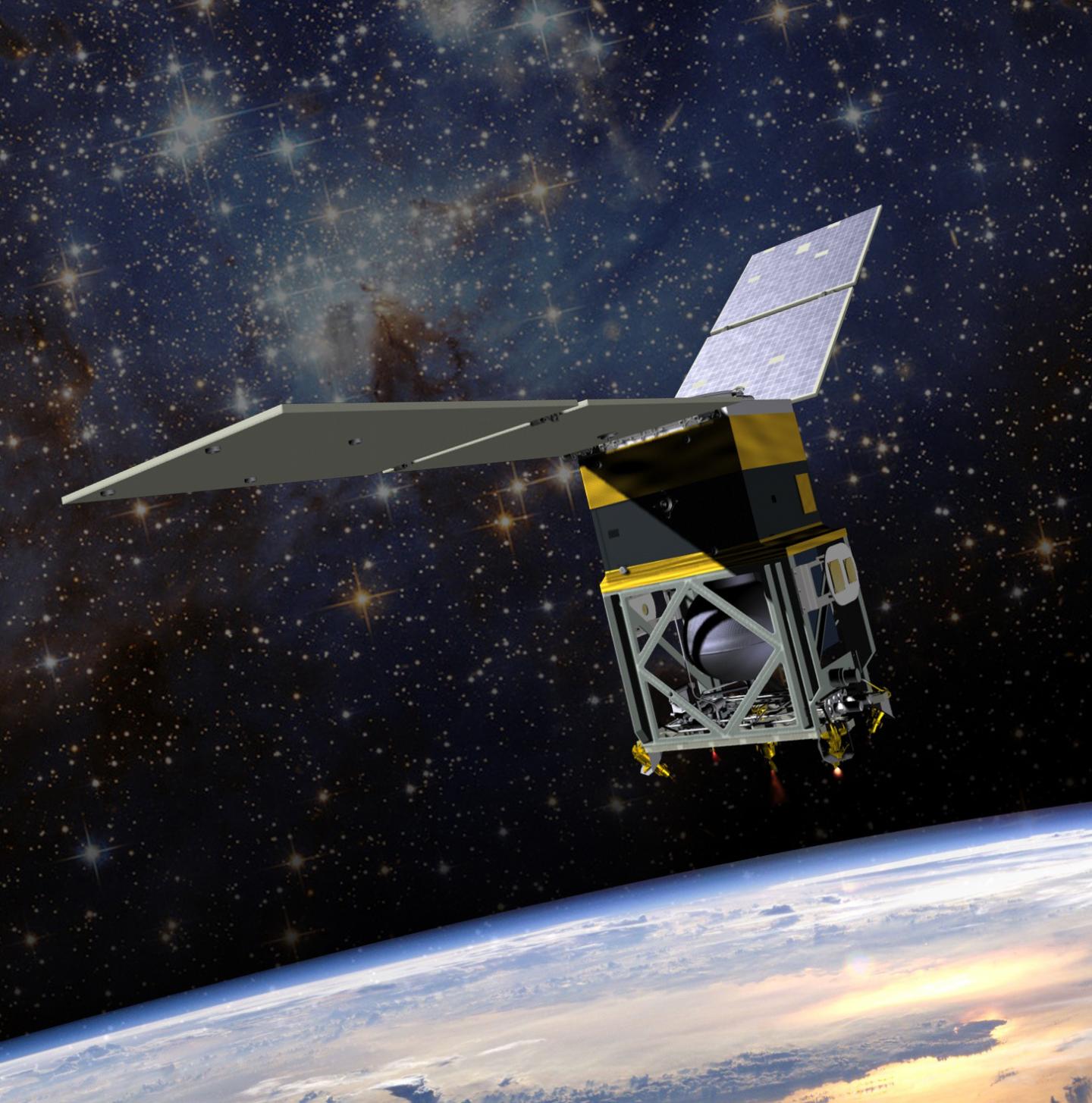
IMAGE
Share on FacebookShare on TwitterShare on LinkedinShare on RedditShare on Telegram

IMAGE

Credit: (Graphic courtesy of NASA/Ball Aerospace)

WASHINGTON – U.S. Naval Research Laboratory researchers designed and built two science payloads that went up with SpaceX’s Falcon 9 Heavy rocket launch on June 25.

The Small Wind and Temperature Spectrometer (SWATS) will help researchers understand the dynamics of the upper layers of Earth’s atmosphere, while the Tether Electrodynamic Propulsion CubeSat Experiment (TEPCE) will investigate orbital energy created by the Earth’s magnetic field that could propel future spacecraft.

Operating in low Earth orbit, SWATS will monitor atmospheric densities, winds and temperatures while traveling in an elliptical orbit at altitudes between 350 and 700 kilometers above the Earth’s surface. The payload rides aboard NASA’s Green Propellant Infusion Mission (GPIM).

“It’s important to have in situ [direct] measurements, as well as remote sensing measurements,” said Andy Nicholas, lead investigator for SWATS. “[Those measurements will] inform the models and improve predictions for the ionosphere.”

Navy researchers are studying the ionosphere because of its effects on over-the-horizon radar and other long-range communications technologies.

The other NRL passenger on this SpaceX mission, TEPCE is a miniaturized satellite, known as a CubeSat. Once in space, it will divide into two objects connected by a 1-kilometer-long tether. The system will collect electrons from the Earth’s space environment and transmit the electrons from one object to the other.

Its designers expect the Earth’s magnetic field to exert a force on the electrons in the tether, producing a velocity change that will affect both the magnitude and direction of the spacecraft.

“What this means is a possible new propulsion capability for spacecraft,” said Shannon Coffey, TEPCE’s principal investigator. “Which may decrease the amount of propellant that we have to use.”

In all, this SpaceX launch carried more than two dozen science payloads into orbit.

###

Media Contact
Mary Estacion
[email protected]

Original Source

https://edit-www.nrl.navy.mil/news/releases/us-naval-research-laboratory-payloads-launch-spacex-rocket-study-space-weather-and

Tags: AstrophysicsEarth ScienceEnergy SourcesExperiments in SpaceGeophysics/GravitySatellite Missions/ShuttlesSpace/Planetary Science
Share12Tweet8Share2ShareShareShare2

Related Posts

New Study Uncovers Key Factors Driving Water Chemistry in Nanoscale Environments

June 25, 2026

Plasma Technology Extends Catalyst Lifespan in Hydrogen Production

June 24, 2026

Electric Field and Oxygen Spillover Collaborate to Control Electrode Migration in SOECs

June 24, 2026

Innovative Speckle-Based Metrology System Advances Precision Measurement of Next-Generation X-Ray Mirrors

June 24, 2026
Please login to join discussion

POPULAR NEWS

  • Saying Goodbye to PGY-6: Pediatric Fellowship Realities

    103 shares
    Share 41 Tweet 26
  • Multi-Hospital Study Reveals Long Covid Burden Is Twice as High as Current Estimates

    92 shares
    Share 36 Tweet 23
  • Detection of EDCs in Breast Milk and Infant Urine Up to Six Months Highlights Early Exposure Risks

    77 shares
    Share 31 Tweet 19
  • New Drug Candidate Developed at McMaster Shows Potential for Treating Brain Cancer

    58 shares
    Share 23 Tweet 15

About

We bring you the latest biotechnology news from best research centers and universities around the world. Check our website.

Follow us

Recent News

How Socioeconomic Factors Shape Lung Cancer Screening Experiences

This Famous Butterfly Revealed: Three Distinct Species Hidden in One

GW250114 Uncovers Post-Merger Black Hole Clues

Subscribe to Blog via Email

Enter your email address to subscribe to this blog and receive notifications of new posts by email.

Join 82 other subscribers
  • Contact Us

Bioengineer.org © Copyright 2023 All Rights Reserved.

Welcome Back!

Login to your account below

Forgotten Password?

Retrieve your password

Please enter your username or email address to reset your password.

Log In
No Result
View All Result
  • Homepages
    • Home Page 1
    • Home Page 2
  • News
  • National
  • Business
  • Health
  • Lifestyle
  • Science

Bioengineer.org © Copyright 2023 All Rights Reserved.