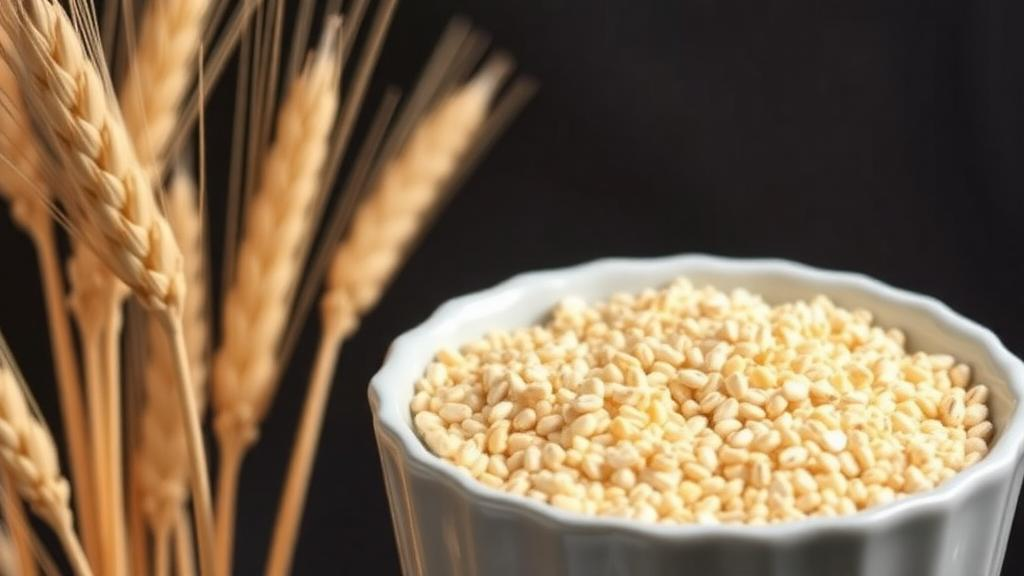
A cereal that barely existed a few decades ago is now stepping into the spotlight of food science, and the latest research suggests it may reshape how bakers, pasta makers, and nutritionists think about alternative grains. Tritordeum, a hexaploid hybrid created by crossing a wild perennial barley from Chile with durum wheat, was commercially released in 2013, but only recently have scientists systematically traced its journey from the mill to the gut. A new study published in Current Research in Food Science has done exactly that, following a single tritordeum variety and a bread wheat variety through industrial roller and stone milling, four different product lines, and a full simulated human digestion. The results reveal a grain that behaves in ways neither of its parents fully predicts.
The research team, led by Giovanni D’Auria and Massimo Blandino, worked at a genuinely industrial scale, milling 100 tonnes of each grain at a commercial plant in Italy. Roller milling produced refined flour at a 78 percent extraction rate, while stone milling yielded semi-whole flour at 90 percent extraction. This distinction matters because the degree of refinement determines how much bran, germ, and fiber remain in the flour, and those components interact with proteins and starch in ways that ripple through every downstream process, from dough mixing to enzymatic breakdown in the intestine.
At the molecular level, the two cereals told strikingly different stories. Tritordeum flour contained roughly 17 percent protein compared with about 13 percent in bread wheat, and its gluten content was substantially higher as well. Yet more protein did not translate into a stronger gluten network. Electrophoretic and chromatographic profiling showed that tritordeum carried a lower relative proportion of high-molecular-weight glutenin subunits, the protein building blocks responsible for elasticity and dough strength. It also harbored hordein proteins inherited from its wild barley parent, including C-hordeins that lack cysteine residues and therefore cannot form the disulfide bonds that stitch a resilient gluten network together. The result was a dough that aggregated quickly under shear but lacked the mixing stability and elastic recovery of wheat dough.
Rheological testing confirmed this paradox. In the GlutoPeak test, tritordeum reached its aggregation peak faster and with higher torque than wheat, suggesting a firm, consistent aggregate forming under high-shear conditions. But in the Farinograph, tritordeum dough needed longer to develop and held its optimal consistency for a shorter time under continuous mixing. Water absorption was notably higher for tritordeum under both milling systems, a consequence of its elevated fiber and protein content competing with gluten proteins for available water. The Alveograph showed that stone-milled tritordeum dough was more resistant to deformation but less extensible, while its elasticity index was significantly lower than wheat under both milling conditions, indicating a reduced ability to spring back after stretching.
Starch behavior added another layer of distinction. Tritordeum starch required higher pasting temperatures and longer heating times before viscosity developed, and it reached a lower maximum viscosity than wheat starch. Its breakdown and setback values were also significantly lower, pointing to granules that swell slowly, resist disruption during prolonged heating, and reassociate weakly during cooling. Previous work on isolated tritordeum starch attributed this behavior to small granule size and a high lipid content that forms starch-lipid complexes and restricts water diffusion. These are not trivial differences; they shape how a flour performs in the oven and, as the digestion experiments later showed, how quickly its carbohydrates surrender to pancreatic enzymes.
To test whether these flour-level differences mattered in real food, the researchers produced fresh pasta, breadsticks, bread, and pizza bases from both flours and both milling streams. The outcomes were product-specific in a way that defies any simple ranking of the two cereals. Tritordeum breadsticks were consistently harder and tougher than wheat versions, a denser structure that suits a low-moisture product where fracture resistance is a virtue rather than a flaw. Fresh pasta made from stone-milled tritordeum was firmer and required more work of shear, while roller-milled tritordeum pasta absorbed more water during cooking without losing more solids. Pizza bases made with tritordeum were markedly softer than wheat versions under both milling systems, demonstrating that a weaker, less elastic gluten network can be an advantage when the goal is tenderness rather than loft.
Bread told the most nuanced story. Roller-milled tritordeum bread achieved a specific volume about 20 percent lower than wheat bread and was firmer to the touch, consistent with its limited gas retention. But when stone milling entered the picture, the volume gap vanished entirely, as bran particles disrupted gluten continuity in both cereals and dragged wheat bread down to tritordeum’s level. Intriguingly, the stone-milled tritordeum bread was actually softer than its wheat counterpart despite identical volumes, suggesting that its restricted starch retrogradation slowed crumb firming during cooling. Color added a visible signature: tritordeum flour and products showed substantially higher yellowness, reflecting carotenoid levels three to five times those of wheat, dominated by the xanthophyll lutein, which protects the retina from photochemical damage.
The digestion experiments, conducted with the standardized INFOGEST protocol simulating oral, gastric, and intestinal phases, produced perhaps the most consequential findings. Bread and pizza showed the highest overall protein digestibility for both cereals, indicating that their porous, baked structures facilitate enzymatic access. More remarkably, tritordeum bread and fresh pasta were digested significantly more completely than their wheat counterparts, with a higher apparent release of essential amino acids in the intestinal phase. The researchers attribute this to the less interconnected protein network of tritordeum, which leaves storage proteins more exposed to digestive enzymes. Glutamine and proline dominated the released amino acids, as expected from gluten proteins, but the tritordeum bread and pizza formulations released more of the essential ones.
Starch digestion in bread revealed an even more dramatic divergence. After 300 minutes of simulated duodenal digestion, the free glucose release kinetics were similar between the two breads, but the residual hydrolysable starch fraction was significantly lower in tritordeum, and its resistant starch content reached 3.5 grams per 100 grams of bread, five times the 0.7 grams measured in wheat bread and well above the 0.8 grams typical of conventional wheat loaves. Combined digestible starch fractions totaled roughly 51 grams of starch equivalents per 100 grams for tritordeum versus 58 for wheat, hinting at a lower glycemic load, though the authors caution that a static in vitro model cannot confirm postprandial effects in living humans and that static protocols may underestimate starch hydrolysis by prematurely inactivating salivary amylase.
The study’s authors are careful to frame their conclusions within its limits: only one cultivar of each cereal was tested, and the observed differences reflect the combined effects of flour composition, hydration levels, and processing conditions rather than cereal identity alone. Still, the central message is clear and potentially transformative. The technological quality and nutritional fate of a cereal food cannot be predicted from flour composition or dough rheology alone; they emerge from the interplay of protein organization, fiber content, starch functionality, milling choice, and product structure. For tritordeum, that means it is neither a universal upgrade nor a downgrade relative to wheat, but a versatile raw material whose strengths, higher protein digestibility, dramatically more resistant starch, carotenoid richness, and softer textures in the right applications, must be matched to the right product. As consumers seek grains that are gentler on sensitive digestive systems, tritordeum has already shown tolerability in people with non-celiac wheat sensitivity and symptom improvement in irritable bowel syndrome patients, and this new matrix-level evidence gives the food industry a scientific roadmap for putting the golden hybrid to work.
Subject of Research: Matrix-driven effects of tritordeum and wheat flours on the technological quality and digestibility of cereal-based foods
Article Title: From milling to digestion: matrix-driven effects of tritordeum and wheat flours on the technological quality and digestibility of cereal-based foods
Article References: D’AURIA, G., SARDELLA, C., BRESCIANI, A., GRAZIUSO, F., NITRIDE, C., PELLEGRINO, L., FERRANTI, P., MARTI, A., & BLANDINO, M. (2026). From milling to digestion: matrix-driven effects of tritordeum and wheat flours on the technological quality and digestibility of cereal-based foods. Current Research in Food Science, Article 101595. https://doi.org/10.1016/j.crfs.2026.101595
Image Credits: AI Generated
DOI: 10.1016/j.crfs.2026.101595
Keywords: tritordeum, bread wheat, milling, gluten proteins, starch digestibility, resistant starch, in vitro digestion, food matrix, rheology, lutein, baking quality, fresh pasta
News Source: Alan Morgan. (October 12, 2026). Novel Hybrid Cereal Tritordeum Bakes and Digests Differently Than Wheat, Study Finds. Scienmag.